► The Kia Sportage has been facelifted for 2025
► Petrol, hybrid and plug-in hybrid models on offer
► Small but meaningful changes keep this a sensible family pick
Where once the Nissan Qashqai was the ubiquitous family SUV, it seems the Kia Sportage has now taken over. It’s the model that best embodies Kia’s transformation in the past couple of decades; from a rugged, backward 4×4 that was only acceptable because of its price to the very mainstream of the family car market.
You only need to look at the sales figures. It was the second best-selling car in the UK in 2024, only behind the Ford Puma, and it is retaining that title throughout 2025. Kia is now the fourth biggest car brand in Britain and given the Sportage alone accounts for 40 per cent of its sales, it’s an indication as to what a success story it’s been.
But the family SUV has changed quite a lot in the three years the latest fifth-generation Sportage has been around, not least with the arrival of the impressive new VW Tiguan. So it’s now facelift time, though – given its success – Kia didn’t need to reinvent the wheel when it refreshed the Sportage, but is back with mild changes that aim to keep it on top – both of our family car shortlist and sales chart overall.
At a glance
Pros: Refined and comfortable driving experience, diverse powertrain choices, spacious interior
Cons: Entry-level cars feel noticeably cheaper, interior not as versatile as rivals, weak PHEV electric range
What’s new?
The changes to the facelifted Kia Sportage aren’t groundbreaking, but they’re progressive and improve on a few of its previous (small) weaknesses.
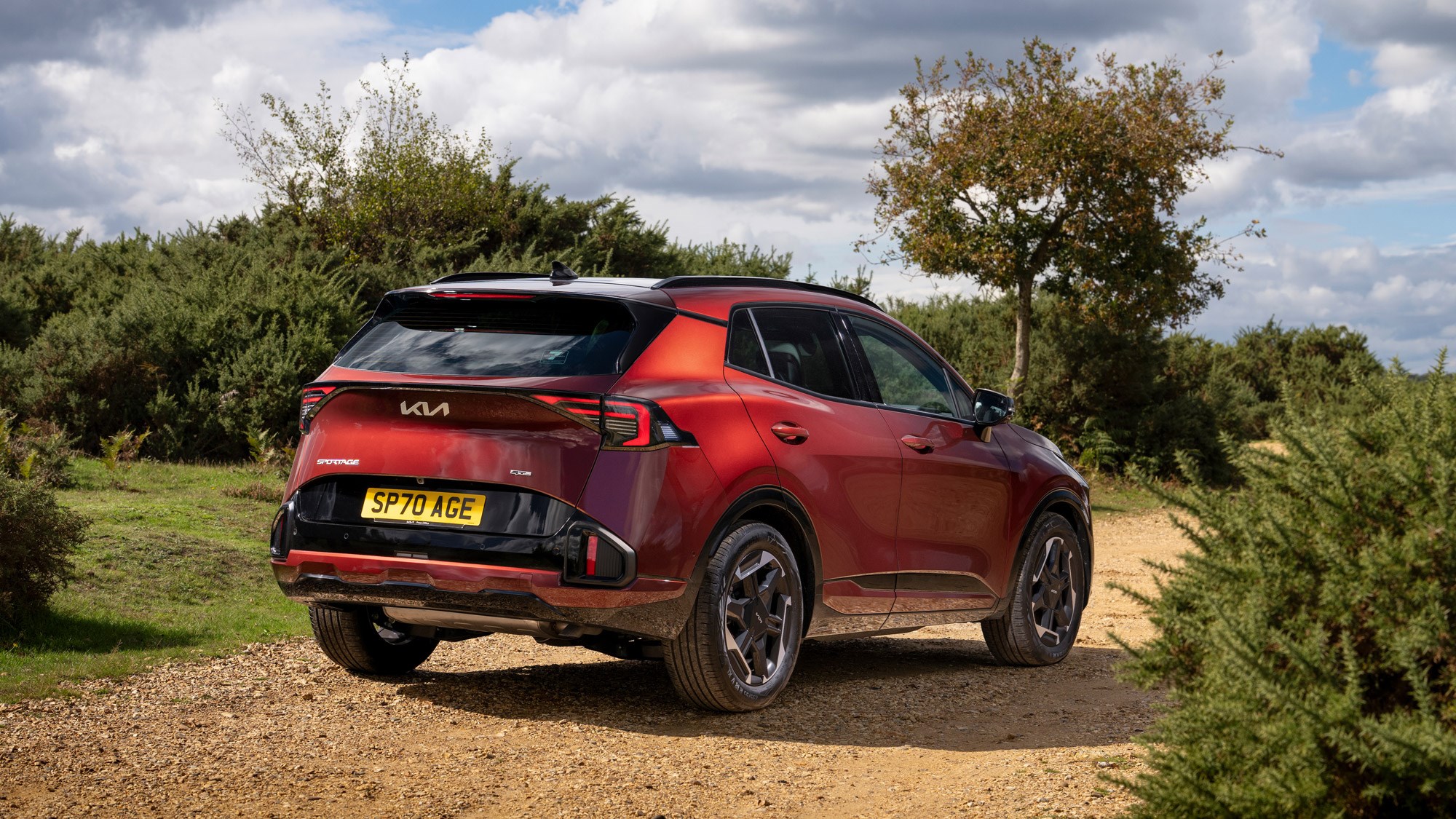
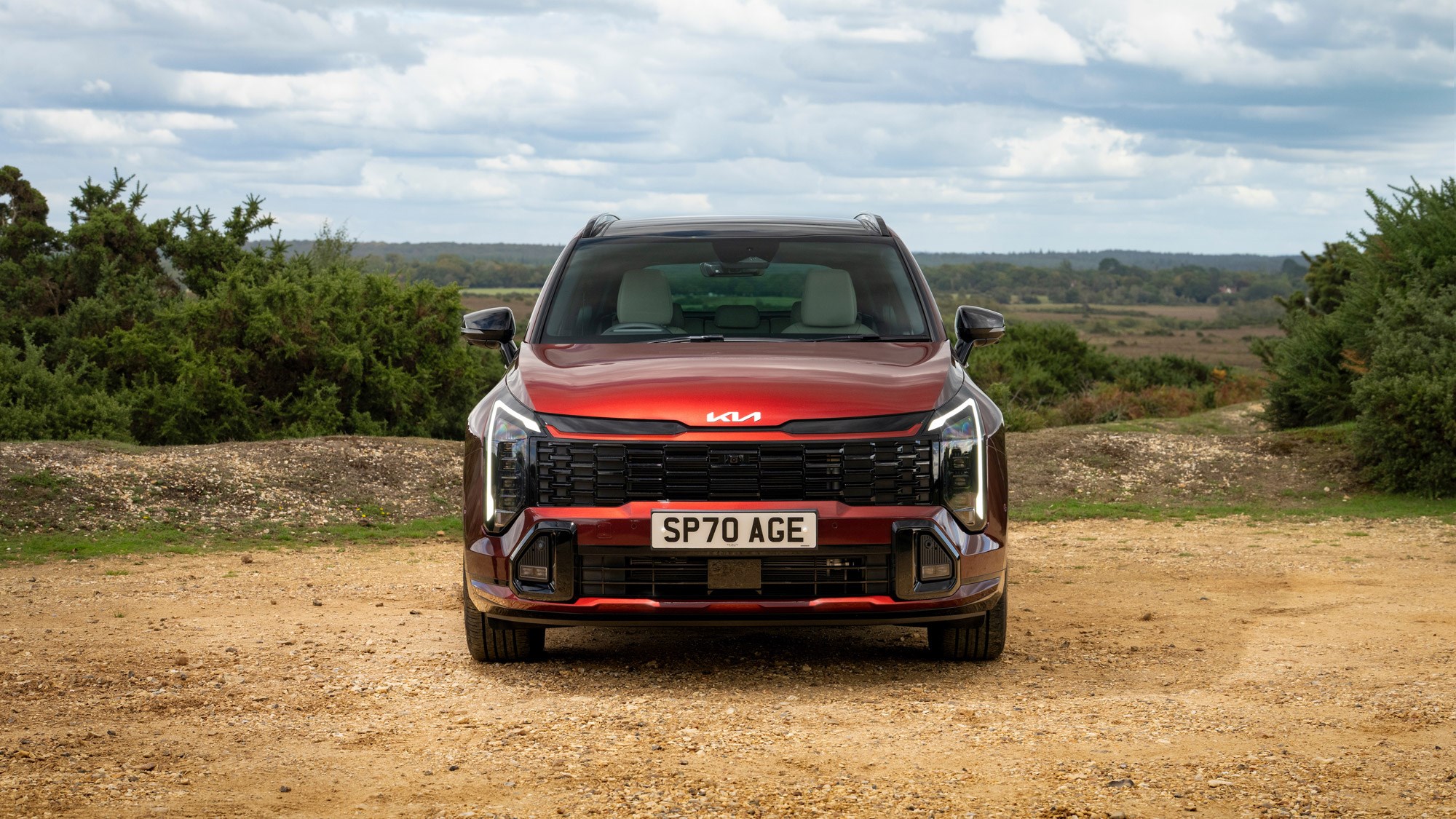
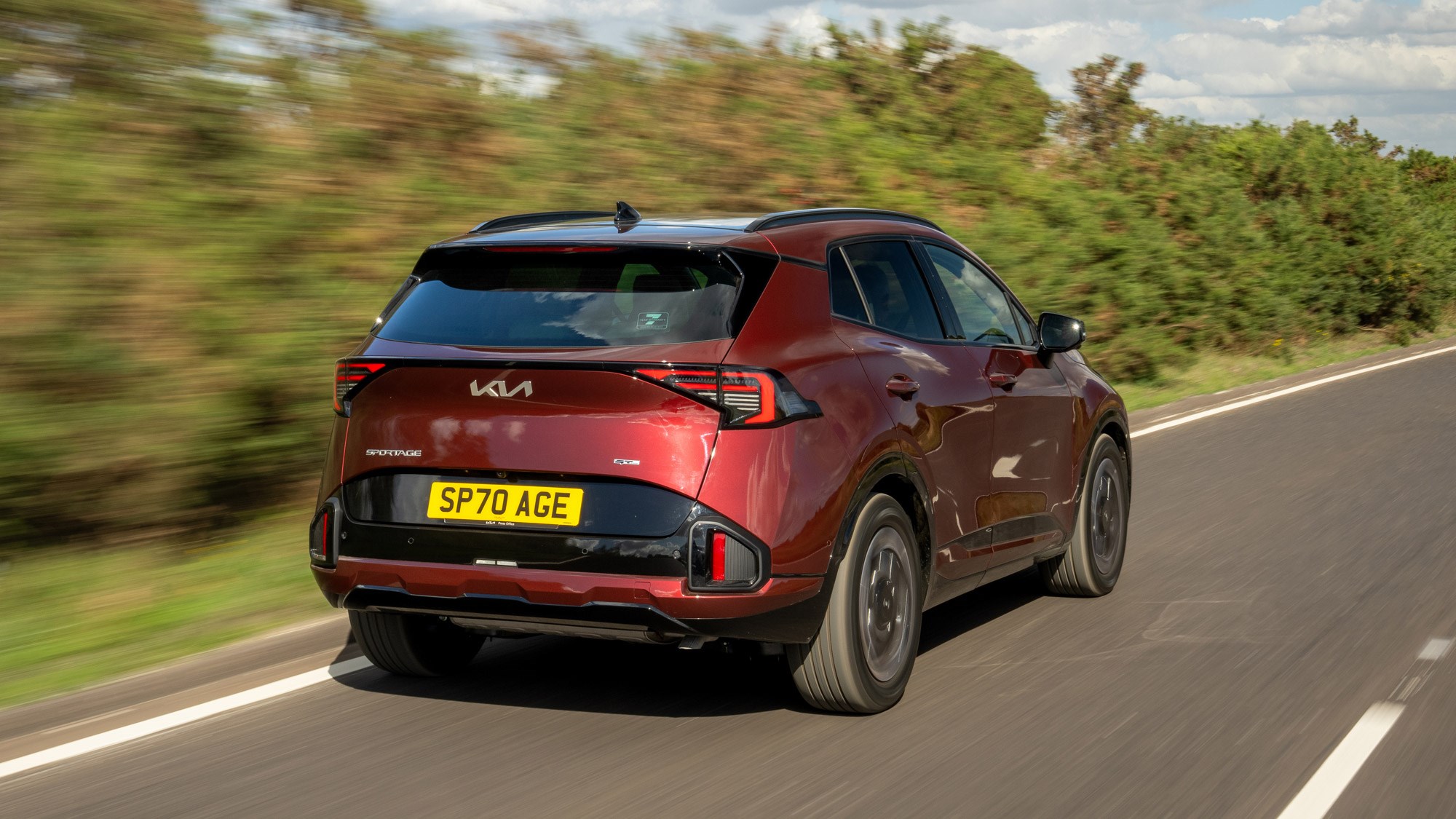
Design-wise, there are small updates to bring it more in line with the EV3 and EV9. Out go the boomerang DRLs of old, replaced with Kia’s Star Map headlight design, as seen on the newer EV3 and facelifted EV6. The grille is bigger and there are squarer bumpers than before. It’s a high-volume car, but the styling hasn’t been watered down with this refresh. Sportages may be everywhere, but this isn’t a car that blends into anonymity.
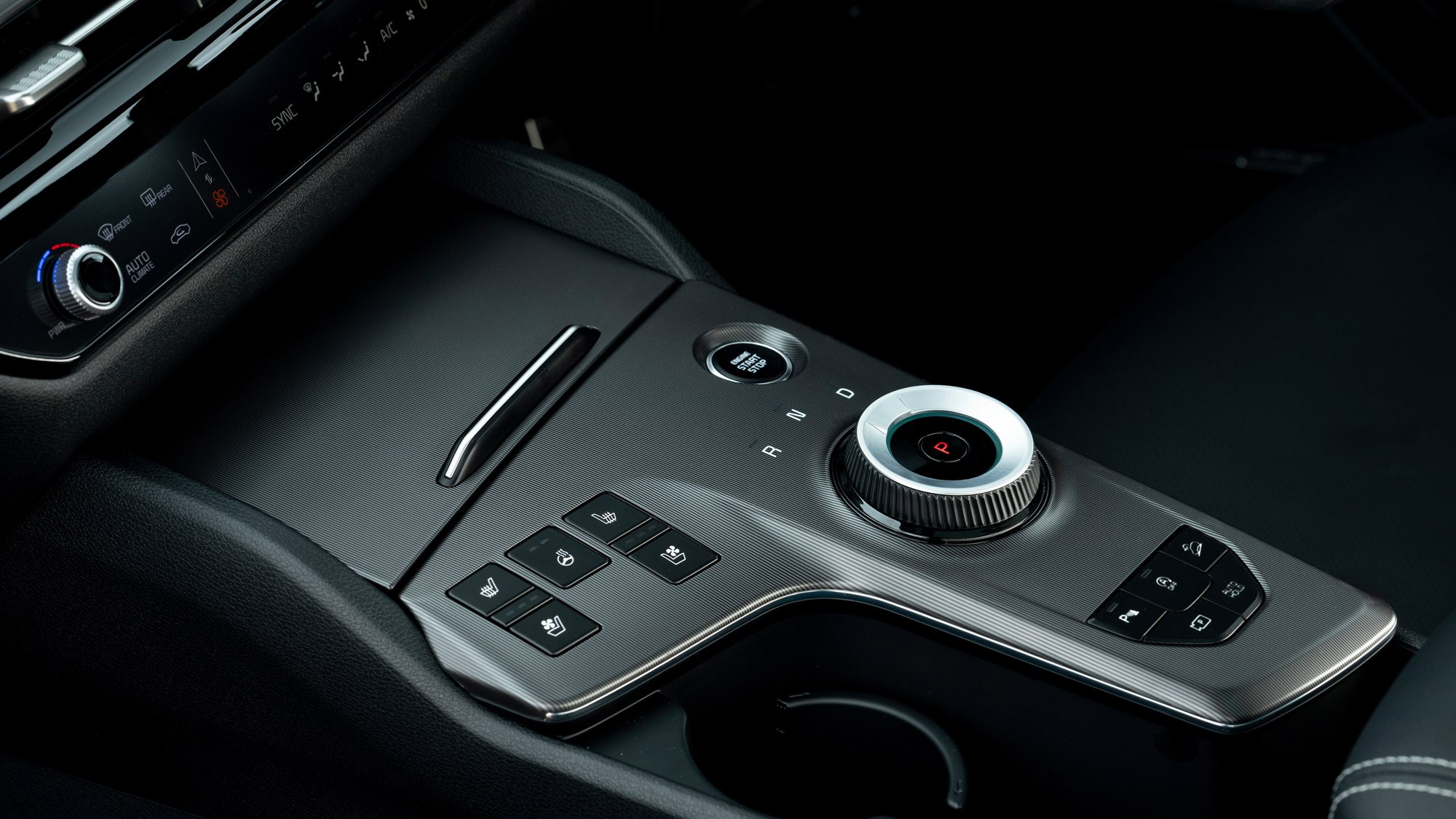
The interior still looks upmarket and offers plenty of features but has been subtly updated with a new steering wheel and the hidden air vents as seen on the EV3 and EV9. The horrid gloss black centre console on previous versions has also been swapped for a brushed aluminium-effect material. Well done, Kia.
There are a handful of changes to the oily bits including an updated six-speed automatic gearbox and some extra poke from the electric motors on the hybrid models. For the first time ever, The PHEV is available with FWD as well as AWD.
Paddles have been added to the steering wheel on hybrid models and offer either manual gear selection in sport mode, or dialable brake regeneration in the default eco driving modes too.
What are the specs?
The specs for the new Sportage are all in the ballpark of the old one, and Kia is keen to note that power is marginally up while CO2 emissions are marginally down. Engine choice continues to consist of a regular base petrol, a hybrid and a plug-in hybrid (which will join the range in early 2026), and all are based around the same 1.6-litre turbocharged petrol engine, but the previous mild-hybrid has been discontinued as Kia thinks it’s surplus to requirements.
The conventional petrol is available with a six-speed manual gearbox with a longish but easy shift action or a seven-speed automatic. It’s lost a solitary horsepower with 147bhp available but 0-62mph has been slashed by half a second to 9.7 seconds according to official figures. Kia claims 40mpg from this engine, and we were able to almost match that on a mixed test route.
Hybrid versions of the Sportage now offer 235bhp, up from 227bhp, and takes 8.1 seconds for the all-wheel drive models or 7.9 seconds if front-wheel drive options. As for efficiency figures, Kia claims 50mpg for FWD and 44mpg for AWD models. You’ll see close to those figures on a longer steady run but they’ll plummet significantly with more mixed driving – figures in the high 30s at one point were no better than the base petrol engine.
A plug-in hybrid will also shortly be introduced, and though full specs are yet to be confirmed, it’ll likely get a small increase on the old car’s 261bhp figure, though will keep the same 13.8kWh battery, and therefore its electric range will continue to lag behind the best in this class – its 43-mile (quoted) figure looking paltry next to the Tiguan’s 77-mile EV range.
How does it drive?
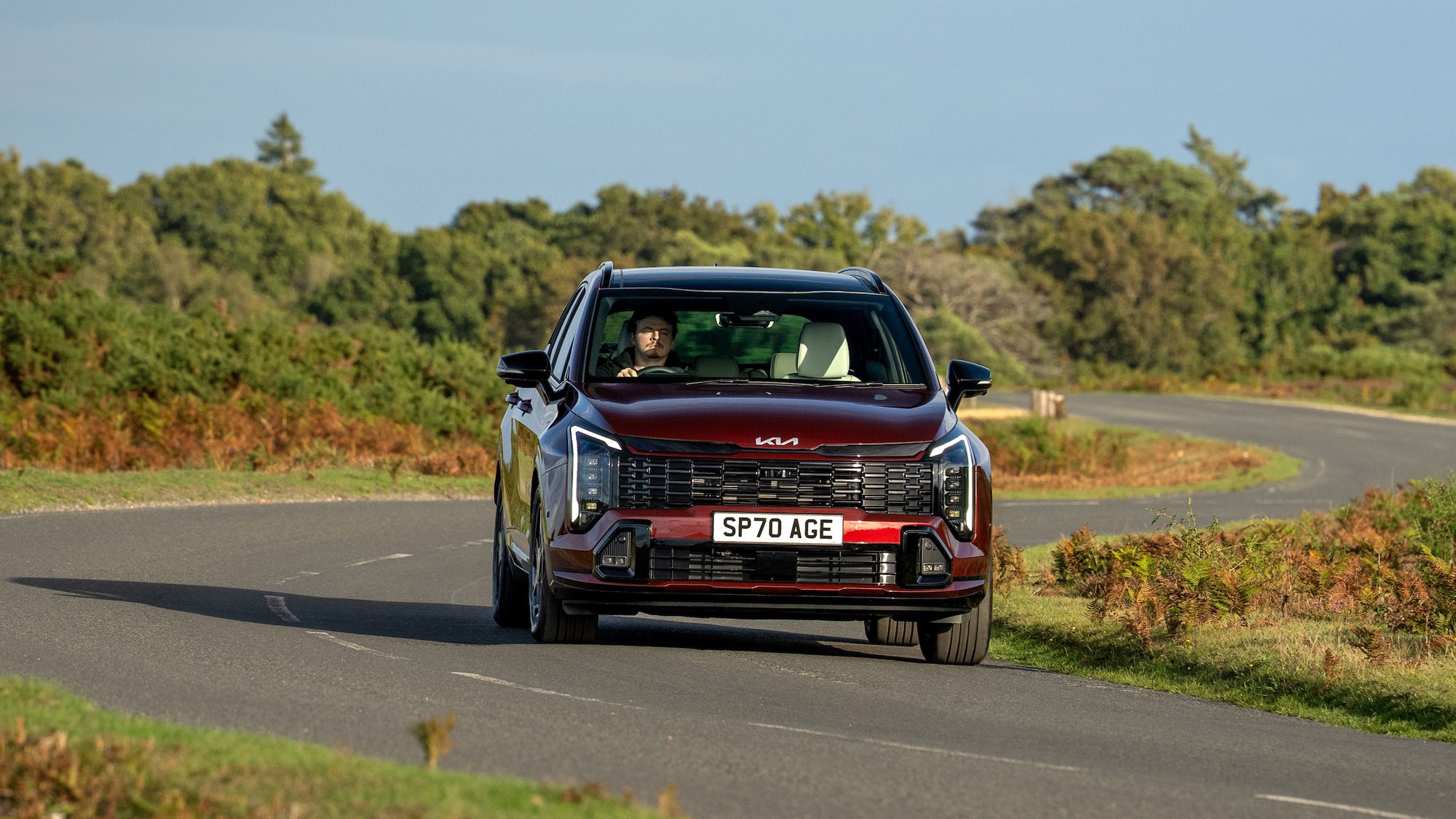
Pretty much the same as the old Kia Sportage, which means it’s comfort-focused and nicely refined. It’s nothing remarkable but hits its brief, doing nothing more or nothing less.
The steering is light in its regular Eco setting but gets more weight in Sport mode (the only two drive settings), but it never feels particularly agile or entertaining. But it makes for a wieldy town car and a calm motorway cruiser.
Kia has crafted a good chassis then, but it shines when coupled with the hybrid versions, making for a super-refined driving experience. At low speeds, the electric motor does the heavy lifting, making for near-silent progress. It’s a hushed companion when you’re pootling along if a little coarse and thrashy when you wring its neck.
Where the regular petrol Sportage’s performance is acceptable, the hybrid is surprisingly quick, with a better DCT box than I’ve experienced with previous Kias – there’s no lag when overtaking and you’ll get a few raised eyebrows as it accelerates off the line. We never had an issue with the traction of the front-wheel-drive car – I’m not sure the 4WD model is worth the extra spend and running costs penalty.
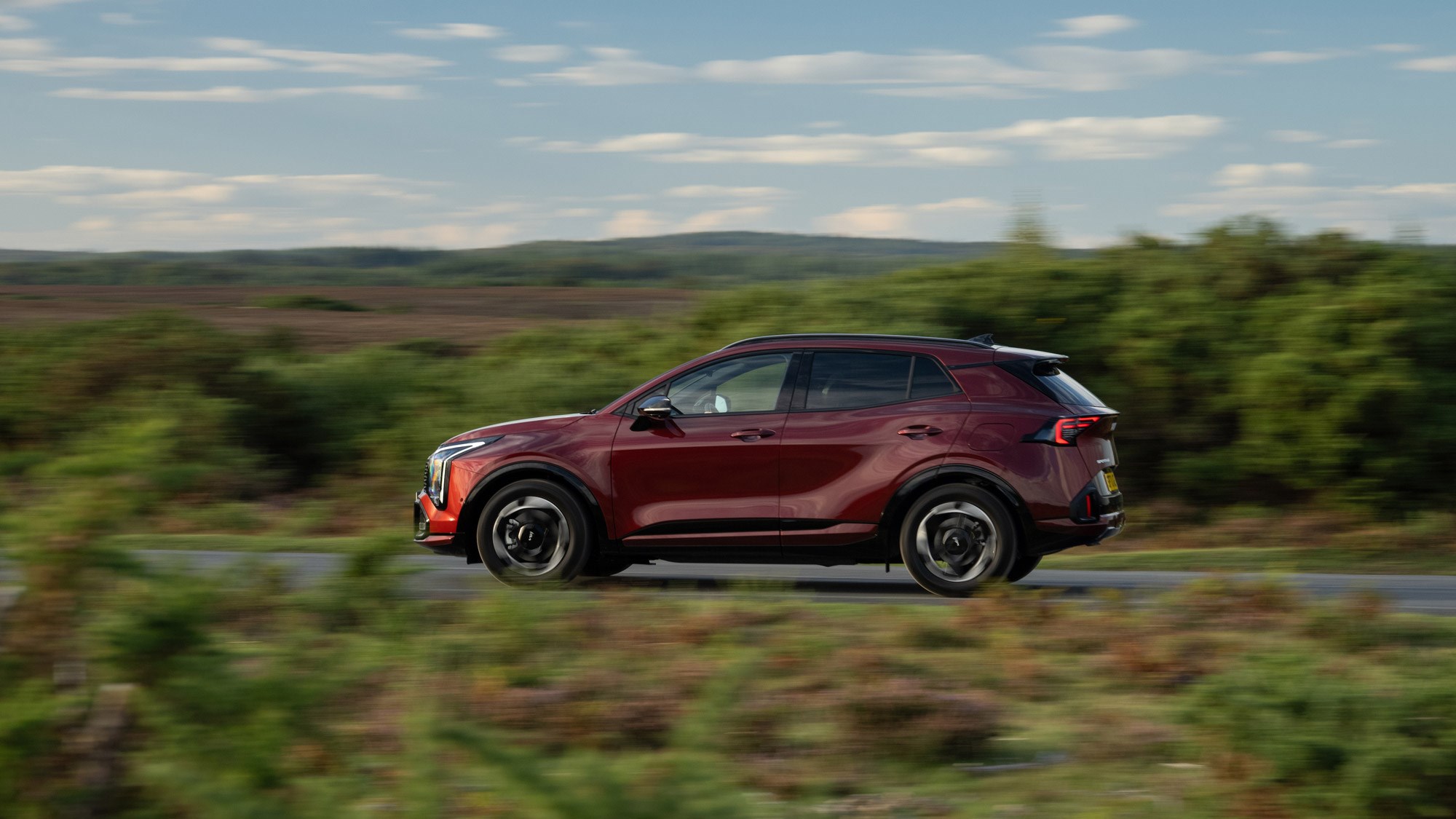
Ride comfort is generally good across the bored, with the entry-level Pure trim’s smaller 17-inch rims equating to a surprisingly cushioned drive. Higher-spec GT-Line versions come on 19s and, though firmer, are far from uncomfortable.
What about the interior?
The Sportage previously impressed us with its classy interior, and it is business as usual with the update. The big change is the updated infotainment system, running connected car Navigation Cockpit (ccNC). The menus are simpler than before and still one of the nicer units found in this class.
It’s logically laid out, the graphics are sharp, and the touch-sensitive panel beneath the screen still offers nifty shortcuts to hop between sat-nav, radio and heating controls. It’s a slightly overengineered solution to a problem that could easily be avoided with more buttons, but it’s slick and better than relying purely on screens.
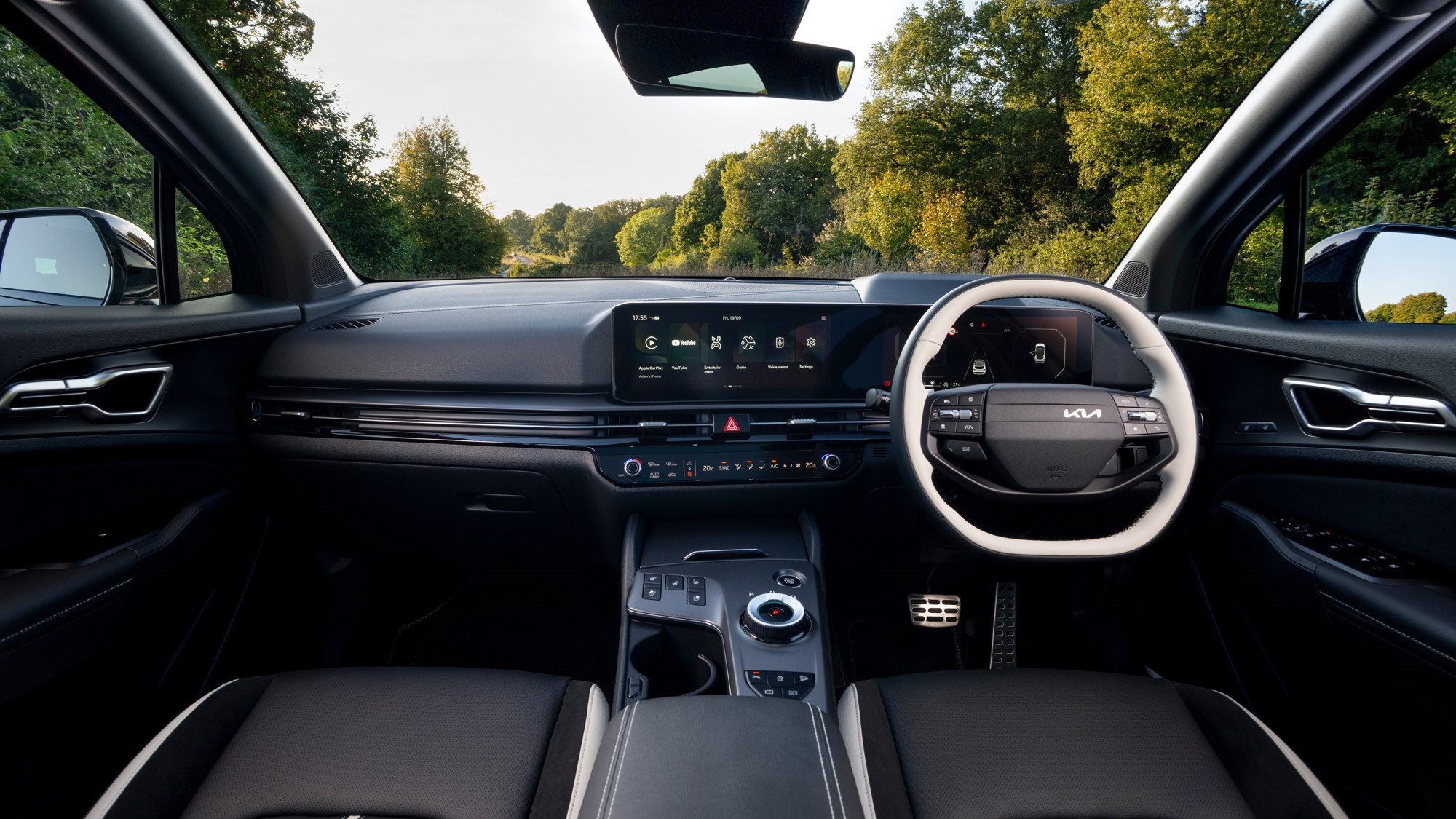
In another big forward, Kia has finally adopted wireless Apple CarPlay and Android Auto, as well as multiple Bluetooth device connections, a former notable omission on an otherwise well-equipped car. I still think you shouldn’t need to fork out for a top-spec car to get a wireless smartphone charger, though.
A small but worthwhile update is ditching the smudge-prone piano black trim with brushed plastic that won’t show up grime. After an industry standard ‘running a hand over the centre console’ test, I’m convinced it’s better. It may not seem like much at first but will pay dividends – especially for families.
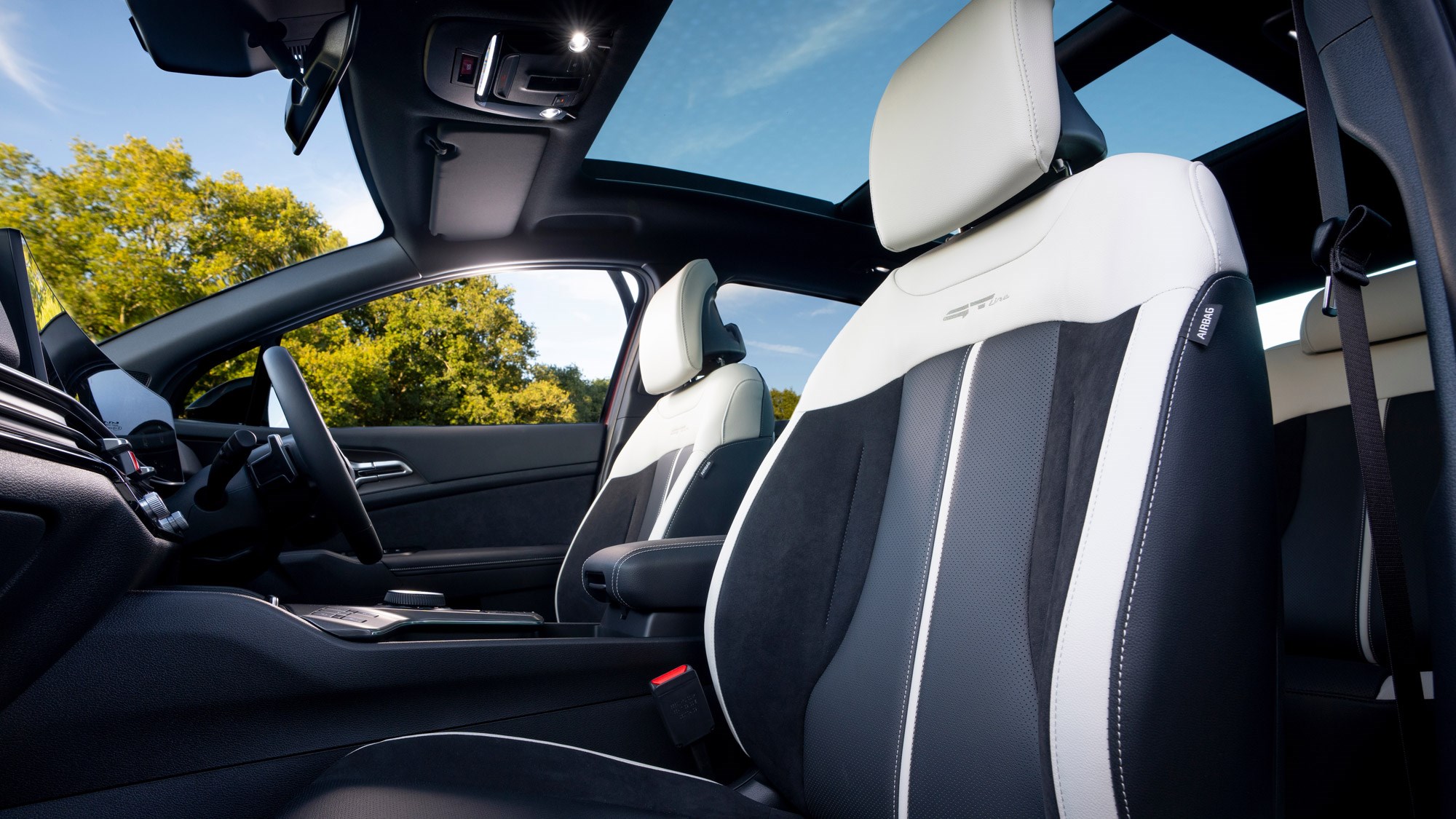
Materials feel plush, with soft touch finishes and tasteful trims throughout. There is a caveat to that, though, as in usual Kia style, the entry-level Pure model feels quite a lot cheaper, the most offensive aspect being a full strip of blanked-off buttons. But jump to GT-Line and GT-Line S models, the latter especially, and the Sportage feels like a genuinely premium product with its two-tone steering wheel and leather and suede upholstery.
There’s oodles of space for two adults in the rear seats. You can also recline the seat backs or split and fold them in a 40/20/40 format. The boot is a cavernous 587 litres (540 in the PHEV), so you’re talking about usefully more space than a Nissan Qashqai or Ford Kuga. Its interior as versatile as some rivals, though, with no sliding rear seats feeling a bit of an omission for a car in this class.
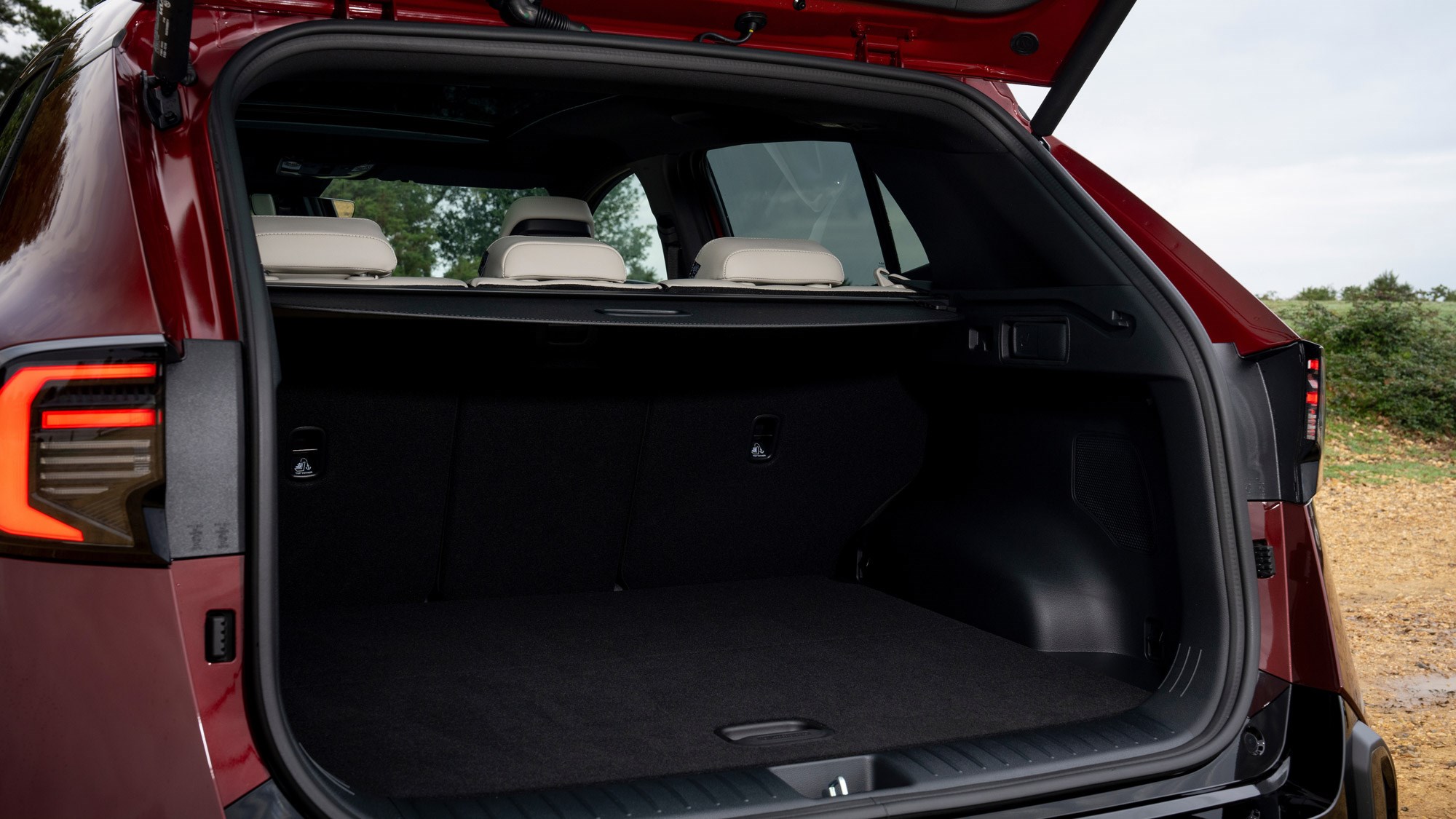
The Hyundai Tucson, which shares its underpinnings with the Kia Sportage, offers even more boot space with a maximum of 620 litres though, something to bear in mind.
Before you buy
There is, it seems, a Sportage for everyone regardless of the level of electrification you’re comfortable with, short of pure electric. If you crave electric power in something Sportage-adjacent, the upcoming EV5 fits the bill perfectly.
Kia has also streamlined the trim levels, down from five to three. There’s the Pure, which replaces the previous 2 and 3 grades, the sporty looking GT-Line and sumptuous GT-Line S. Kia is also offering each trim levels with all three powertrains, meaning there’ll finally be an entry-level Sportage PHEV.
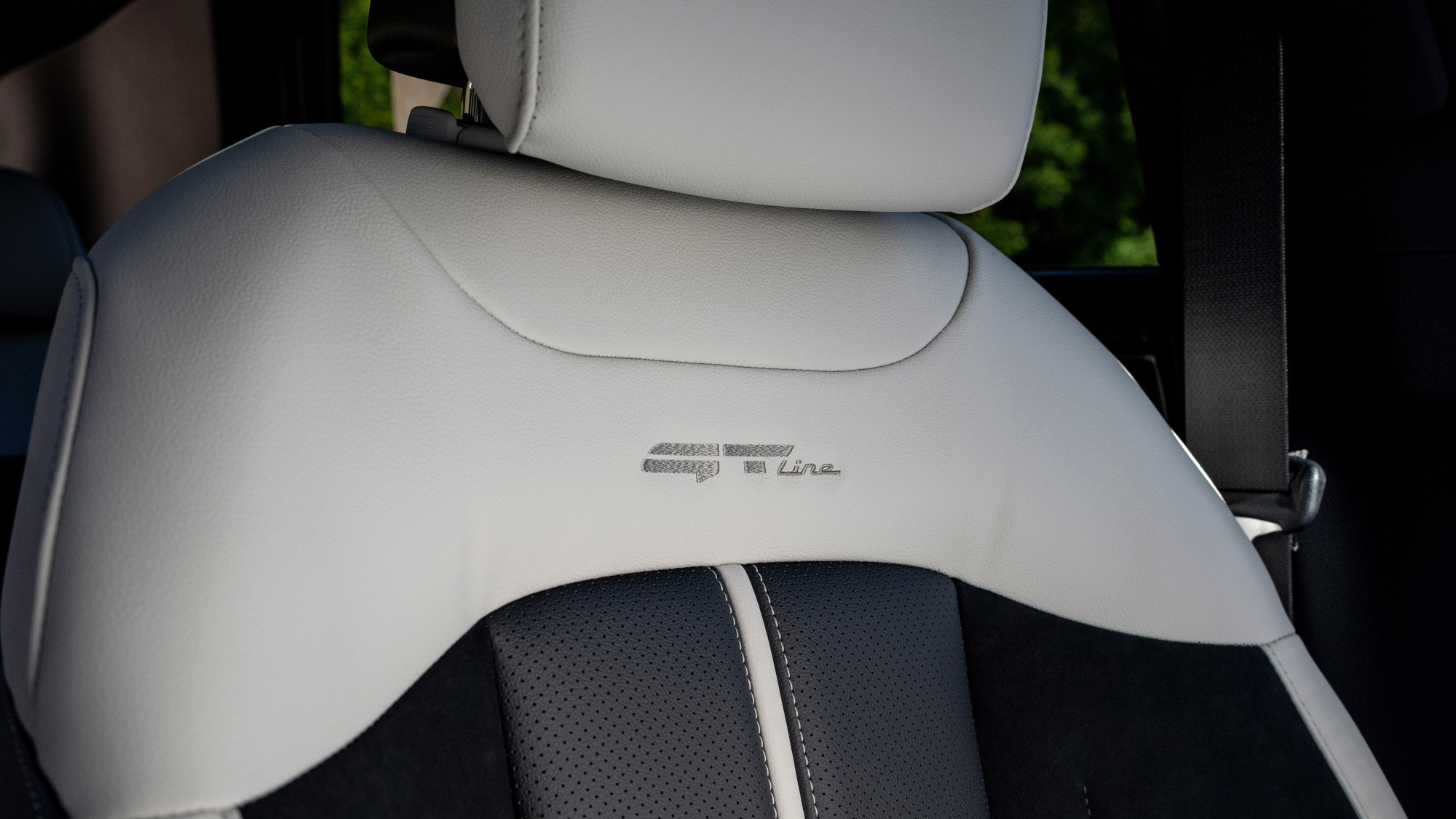
Standard features on the Pure includes the twin 12.3-inch screens, LED headlights, automatic air conditioning and keyless entry, but no height-adjustable passenger seat is a strange, penny-pinching omission. GT-Line is our preferred version, getting 18- or 19-inch alloys for ICE and hybrid versions respectively, sportier styling, heated front seats and leather and suede upholstery. The range-topping GT-Line S gets all the bells and whistles, including a panoramic sunroof, heated rear seats, an electric boot, head-up display and Harman Kardon sound system.
Prices for the Sportage do, however, remain competitive, starting from £33,885 for a base petrol manual car and £34,425 for a hybrid. A Nissan Qashqai costs very similar in both ICE and hybrid guises, though the Kia significantly undercuts the Volkswagen Tiguan’s £38,000 entry price.
The family SUV class is massive and sporting a range of new and updates rivals Kia will need to compete with. There’s the latest iteration of Nissan Qashqai, the exceptionally affordable Dacia Bigster and MG HS, as well as the well-rounded Volkswagen Tiguan to name just the latest crop.
Verdict: Kia Sportage
The changes made to the Kia Sportage are small but are enough to keep it at the top of the family SUV scuffle. It’s far from the most exciting or dynamic car even in its class, but the Sportage continues to be a refined and safe option, backed up by a solid warranty and upmarket interior.
It’s also a versatile option. Short of a diesel option (which is available in mainland Europe), there’s a Sportage for every powertrain and at price points that’s not exceptional but certainly competitive against the likes of the Hyundai Tucson and Nissan Qashqai. There’s no getting past the lure of Kia’s seven-year/100,000-mile warranty either.
In many ways the Sportage feels like it’s taken over from the VW Golf as the generic answer to the ‘what car should I buy’ question. It is the epitome of mainstream, but there’s something quite impressive about how crushingly competent it is in day-to-day life.
Specs are for the Kia Sportage GT-Line Hybrid