► Peugeot’s facelifted 208 teste
► We drive base ‘Style’ spec…
► …which may well be the best one
‘Is that a hire car?’
Two colleagues asked me that while rolling into the office car park in the silver Peugeot 208 you see pictured. It’s the new base Style trim in a relatively pedestrian colour, as you can see. It’s now as basic as you can get in the UK, providing just enough stuff on it for an attractive price.
But is it any good? Time to test the Peugeot 208 again…
At a glance
Pros: Quiet; smooth ride; sweet three-cylinder engine; charming base Style feels good value
Cons: Soggy manual shift; tight pedal box; laggy tech; uncomfortable driving position
What’s new?
This generation of Peugeot 208 has been with us since 2019 and managed to become the best-selling car in Europe in 2021 and 2022. The supermini was facelifted in 2024 – an update that largely focused on updating the exterior design, revising engine range and adding some extra safety tech.
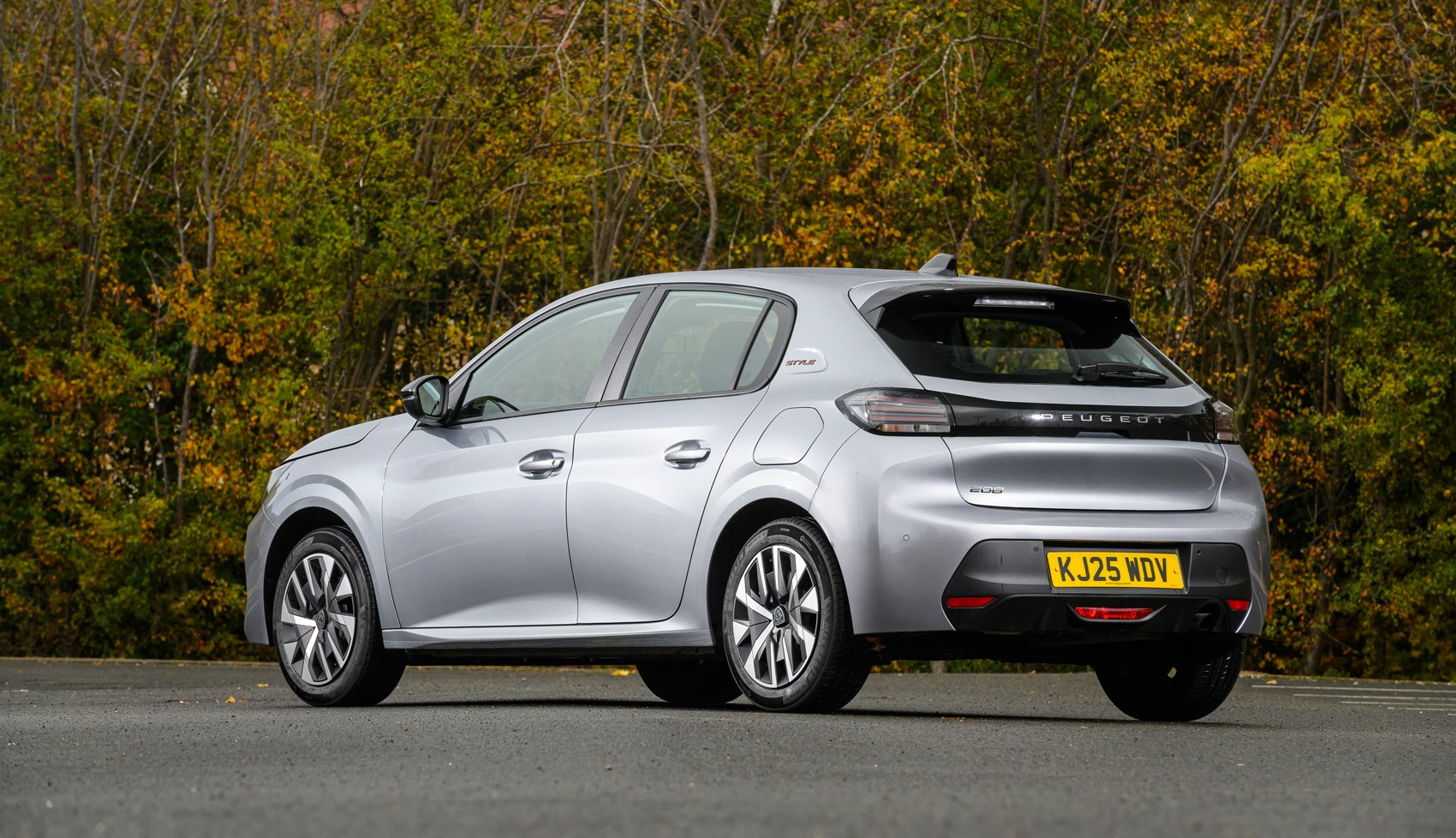
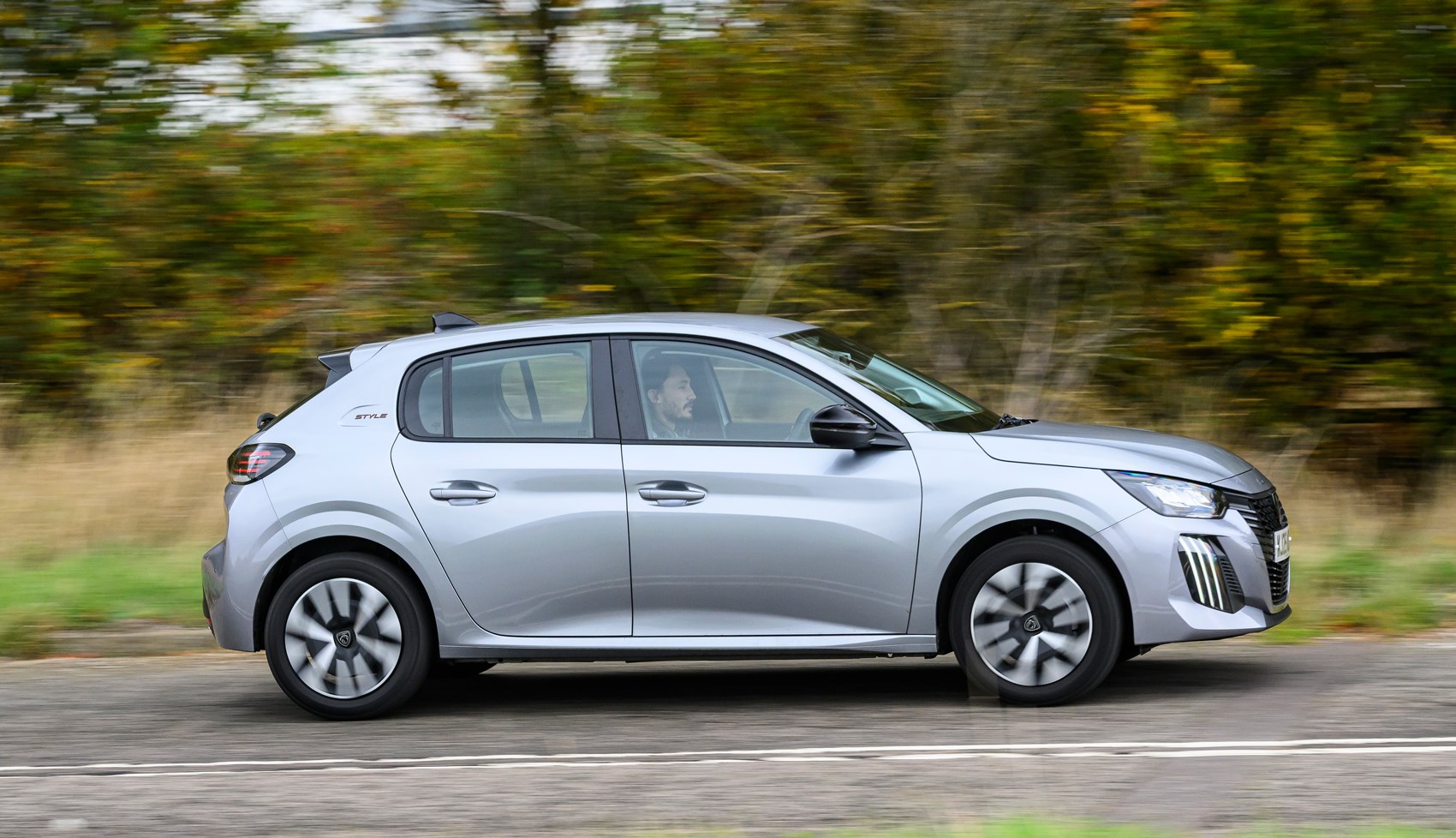
The new face brings the supermini largely into line with the design of bigger cars like the 2008 and 3008 crossovers, though we’d argue the 208’s new look has lost a little bit of cool sharpness the pre-facelift car had. New rear lights and wheels complete the look, and the colour range has been expanded to include two more – including a rather lurid Agueda Yellow.
What are the specs?
There are a few choices but, fundamentally, they are all variants of a same base recipe: a three-cylinder turbo engine. The base engine is largely the same as before – a 99bhp PureTech unit mated to a six-speed manual transmission.
The newbies come in the shape of two 48-volt mild hybrid options that generate 99bhp or 134bhp. Both use a six-speed dual-clutch transmission and, because they’re mild hybrids, allow for a little bit of extra torque as a boost. Peugeot claims a 15 per cent improvement in efficiency, and points to the fact these engines can propel the car at low speeds with the engine off.
These engines are also supplemented by the e-208 – a battery-electric version of the supermini that we’ve driven in a separate review.
As well as the engine options, you can choose from four trims: Style, Allure, GT and GT Premium. As I mentioned at the start, base-spec Style gives off proper holiday rental car vibes but largely comes with all the bits you could really need including wireless Android Auto and Apple CarPlay, rear parking sensors, a reasonably sized infotainment system, auto lights and a bundle of safety tech – all for a £20,495 asking price.
Allure (from £25,145) adds a few trinkets, but GT (£27,295) feels like the biggest technological step up with a rear camera, keyless entry, LED headlights and other luxuries. GT Premium (£28,795) has heated electric seats and a couple of the 208’s tech-focused option packs thrown in.
What’s it like to drive?
Our experience with this car specifically is via the 99bhp non-MHEV engine, and it’s largely the same as before. It’s buzzy and boosty, but flexible for a small engine that relies on a turbocharger for most of its torque. It’s quiet on the move, too, which is a sweet bonus.
We’ve experienced the electrified engines in other Peugeot models like the latest 3008, and they still have a fizzy three-cylinder sound but a bit more shove, and the dual-clutch transmission certainly has a little more response than the old eight-speed auto the 208 used to use.
The manual shift in this 208 isn’t the greatest, though. The shift action is quite mushy and vague, and it’s not helped by a pedal box that feels as if it was never designed for a manual transmission. Three-pedal versions of the 208 have a clutch pedal that’s far too close to both the brake pedal and the footrest, particularly if you’re wearing big shoes.
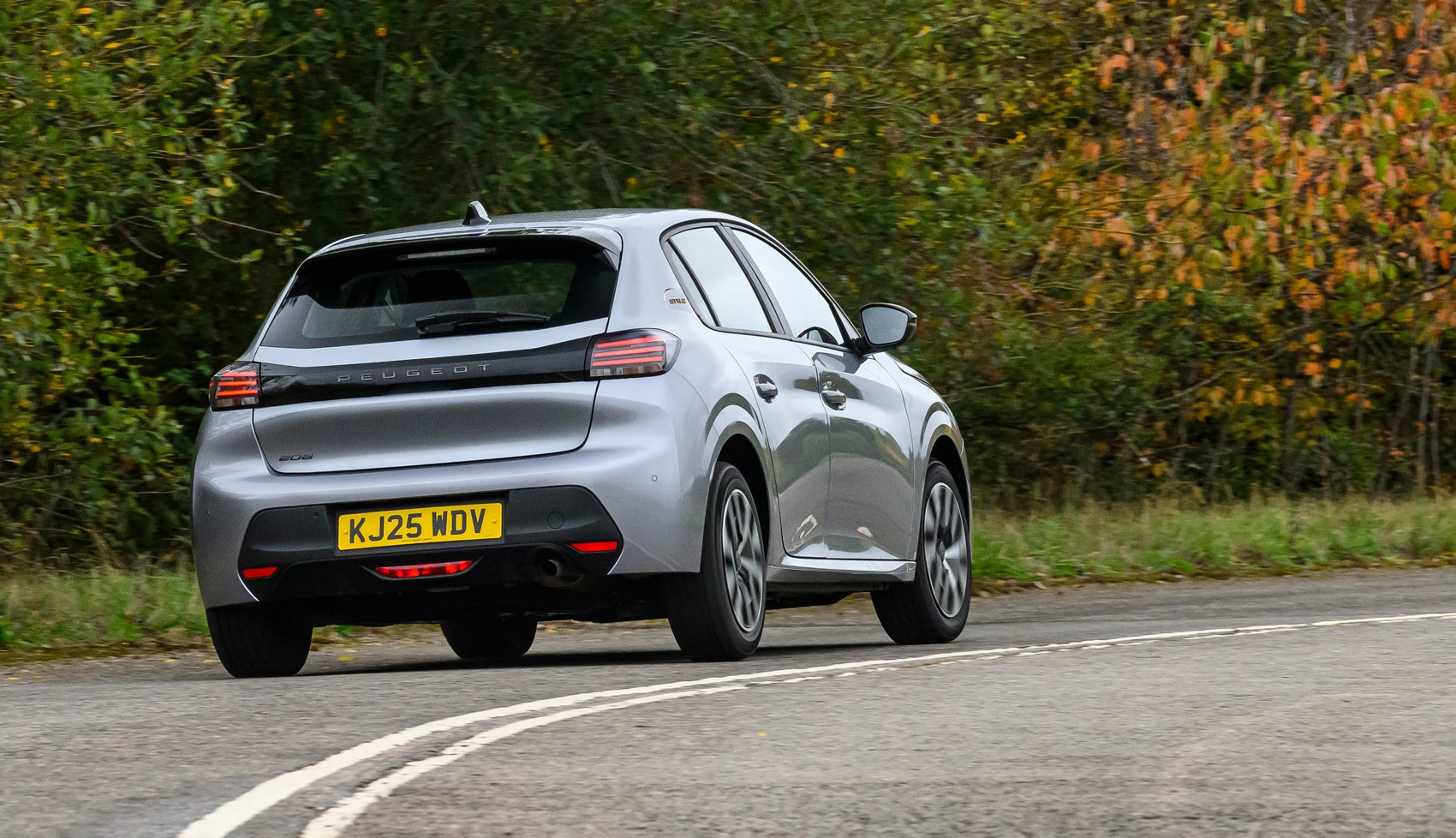
Still, though, the 208 is a largely refined car on the move. It’s quite at speed and the ride is a good balance, proving comfy and squishy enough without wallowing being slow to react to large road undulations. The steering is light and quite darty via that dinky steering wheel, too, making the whole car feel satisfyingly nippy – it helps when the Style spec is just over a tonne in kerbweight.
What’s the interior like?
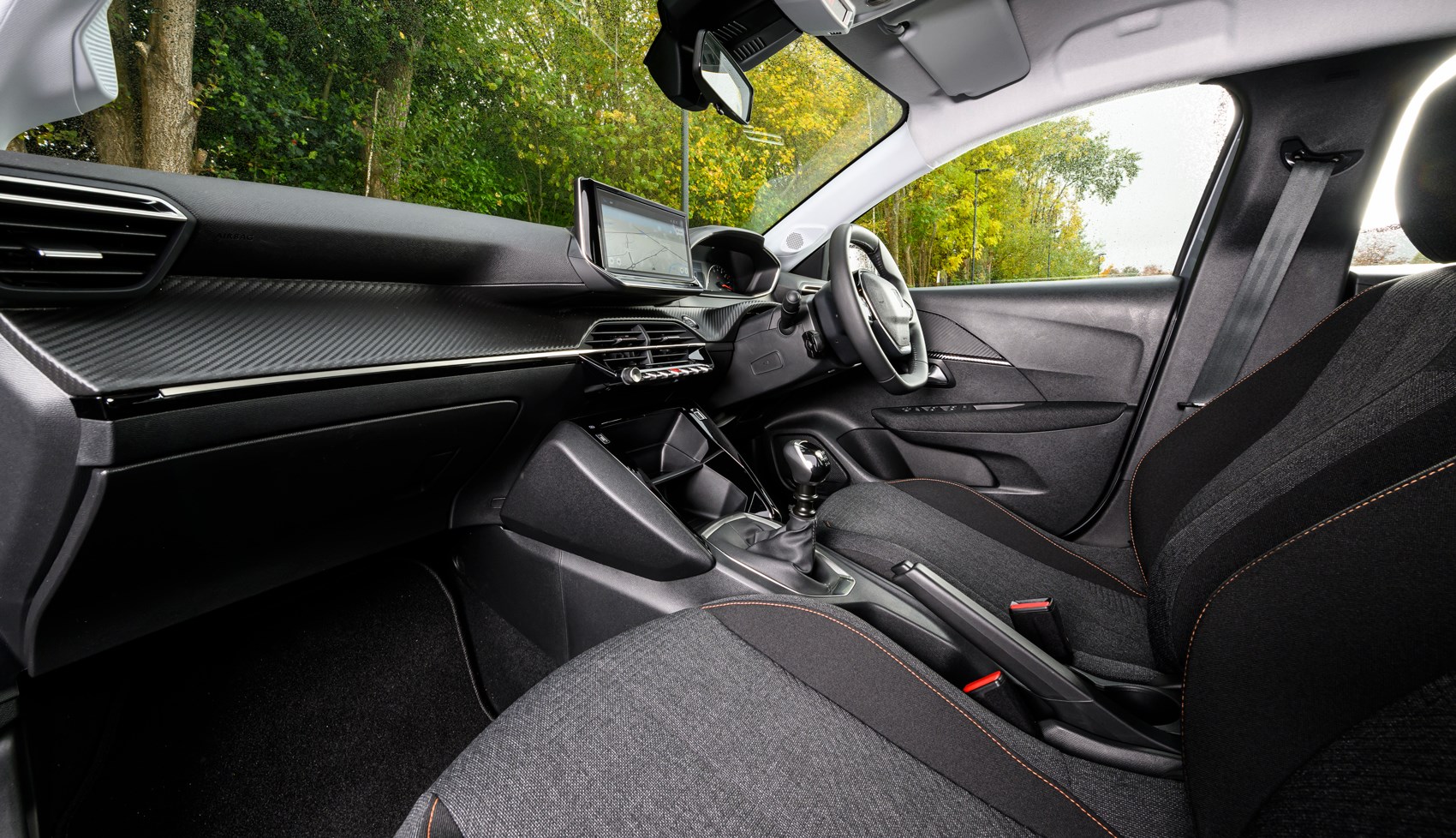
This bit hasn’t really changed much from when the car launched in 2019. You still get Peugeot’s weirdly shaped and small steering wheel, which is designed to sit below a set of instruments that rest atop the dashboard. Details like piano key-like physical switches are welcome, and the dashboard itself is finished on some perfectly decent materials. Ditto the seat upholstery; even base-spec Style models come with durable but attractive-looking fabric designs.
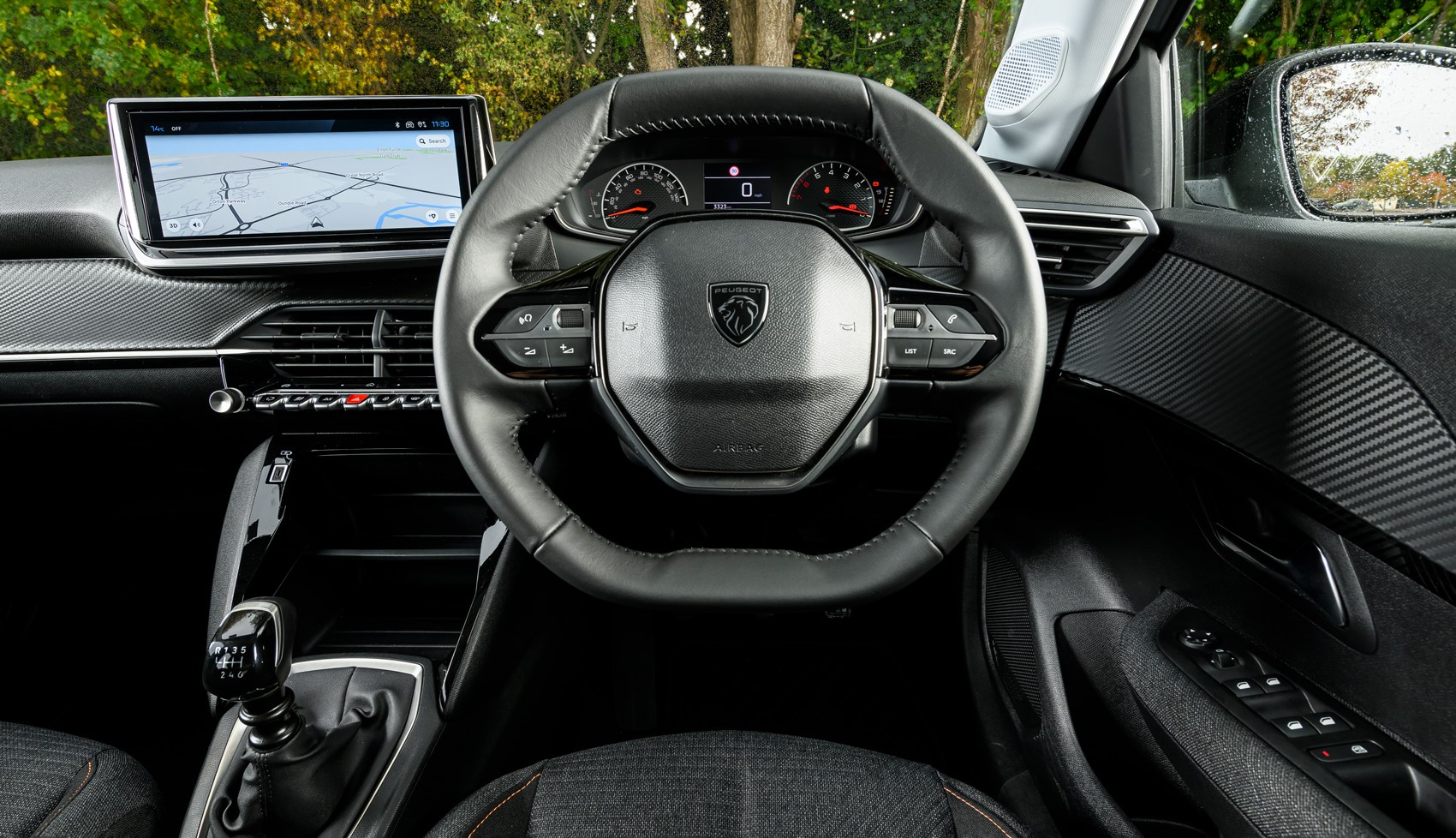
Given we’ve tested the base-spec Style model, it’s one that does without the larger 10-inch i-Cockpit infotainment display and digital instruments, which is a bit of a mixed bag. The smaller screen runs what feels like an older version of Stellantis’ group infotainment, which is already starting to show its age and feel a little laggy by modern standards. That said, the analogue dials – despite having a rev-counter that winds in the opposite direction – are clear to read.
Our biggest issue, though, is the driving position. Weirdly, the problem isn’t really about the steering wheel; it’s something you get used to quickly. The larger issue is that there isn’t much thigh support in the seats for those who have longer legs. Add to that the aforementioned grumbles about the pedal box and it means the 208 isn’t the most comfortable small car in terms of its driving position.
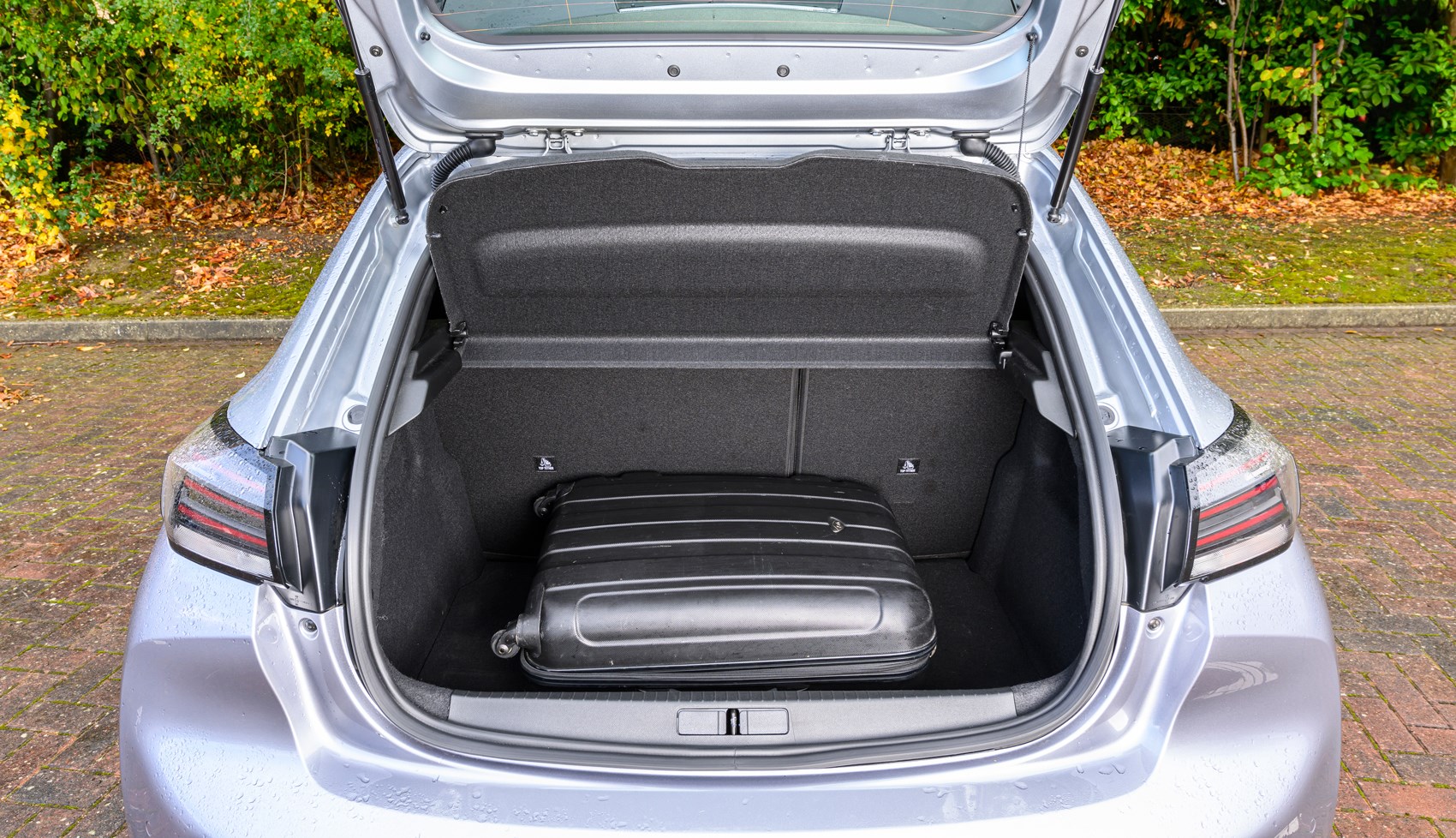
Space elsewhere is as much as you’d expect for a car of this size. Adults will feel cramped over longer journeys in the back seats – particularly when sat behind tall drivers. The boot space is rated at 352 litres, which isn’t far behind the Renault Clio’s.
Before you buy
We’d pick the base Style spec given the sizeable price gulf between it and the next spec up, Allure. Everything you’d really need is standard, and that circa-£20k price is hard to ignore.
Supermini options are still reasonably plentiful, with the 208 having its own competition within Stellantis like the Vauxhall Corsa and Citroën C3 – the latter being roomier and priced competitively. That said, the 208 in general doesn’t feel quite as complete as a Renault Clio by comparison; the small Renault starts at a lower price, is sharper to drive, its technology is more up to date, and it can be had with a full hybrid system.
Verdict: Peugeot 208
The latest Peugeot 208 is best, it seems, when it’s at its most basic. Upper models send the price through the roof and arguably offer nothing but more complication, while the new base Style trim gives you everything you really need. It’s quiet, comfortable and still offers some style others in the category don’t.
But the 208’s biggest thorn in its side is the very good sixth-generation Renault Clio. Despite the fact it’s about to be replaced, it manages to trump the 208 in many areas.
Specs are for a Peugeot 208 Style PureTech 100