► The best dual dashcams tested
► Front and rear coverage to capture vital footage
► Popular brands considered
Having a dashcam can be useful for capturing vital footage when on the road. Whether it be to settle and insurance claim, or avoid wanton criminals accessing your car, a dashcam can be worth its weight in gold. According to the Office for National Statistics, over 121,000 incidents of ‘theft or unauthorised taking of a motor vehicle’ in England and Wales between April 2024 and March 2025.
Imagine having a passenger recording everything for you 24/7. Dual dashcams go once step further by recording out of the front and rear of your car, giving you more coverage than traditional dashcams. Think of it as having an additional passenger behind you having your back.
Even budget dashcams can carry out the same task, albeit with lower quality footage, as a traditional dashcam, but if you’ve ever been in a rear-end collision then you’ll know it pays to have eyes at the back of your head. Rear collisions and events can happen, and you’ll have a wider field of view in case you need to search for evidence that needs to be submitted to the police, insurance companies, or any other relevant parties.
The best dual dashcams 2025 at a glance:
• The best dual dashcam: Miofive S1 Ultra – buy from Amazon
• Editor’s pick: Viofo A329 – buy from Amazon
• The best dual dashcam for ADAS: Vantrue S1 Pro Max – buy from Amazon
There are all kinds of dual dashcams out there, from mirror dashcams to high-tech units and many more. They are simply designed to give you as much vision as possible, which should help you should an accident or witness event happen.
However, looking for a dual dashcam setup isn’t an easy task with the plethora of choice out there on the market. We’ve made things easier by compiling our favourites with features from basic to those with advanced driver assistance systems as standard. They range in price point and purpose, which should make things easier when finding the right dual dashcam for your needs.
How we tested dual dashcams
All of the dashcams that we tested were used and installed as intended using the instructions provided. Rear cameras were mounted, in most cases, to the rear windscreen, unless otherwise instructed. Wires were tucked away using the supplied equipment (crowbar).
Each dual dashcam was left on the car for a couple of weeks to be assessed in a number of different weather conditions and lighting scenarios. We put an importance on low-light footage, especially for the rear camera as it would often be dazzled by other motorists.
We assessed the easy of installation, ease of use, intuitive menus, video resolution and added features like ADAS. Our final rating considered the price of each dual dashcam to assess the overall value provided.
The best dual dashcams 2025
Miofive S1 Ultra
The best dual dashcam
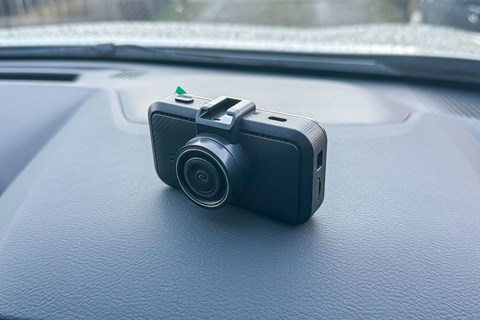
Pros: Dual 4K footage, great low-light footage, good value for money
Cons: Other dashcams have better build quality, frequent voice alerts
As far as dashcams go, the Miofive S1 Ultra is one of the best-value cameras available. It offers dual 4K resolution so that means footage out of the front and back will be consistent. This is a feature that I value as many other dashcams will settle for lower video resolution out of the rear.
I was able to install the Miofive S1 Ultra with ease, and since it comes with a 64GB memory card I didn’t need to worry about purchasing one. Video quality is great, especially given the price that the S1 Ultra is offered at. Video footage is clear but not particularly rich in colour. There is no glare, and I found low-light footage to be impressive. I also found the 140° and 112° (front and back) viewing angle to be useful in covering a wide area around my car.
The build quality of the S1 Ultra is great, but other cameras on this list feel more robust. The wires are strong, but the mounting arm feels a little flimsy.
While other dashcams offer better refinement or a variety of added features, the Miofive S1 Ultra offers the best value when it comes to the thing that matters the most: footage quality. For the price, dual 4K footage is hard to find, that makes the Miofive S1 Ultra a brilliant choice.
Click below for great deals
Viofo A329
Editor’s pick
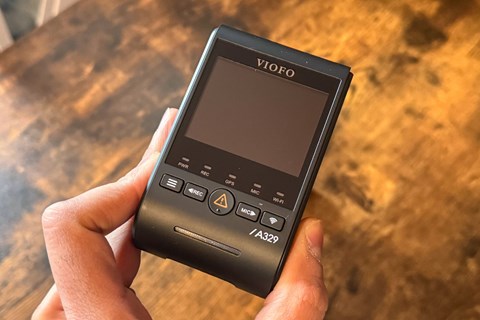
Pros: Impressive footage quality, convenient shape, ability to connect to larger storage solutions
Cons: Large storage required, Low-light footage isn’t as good as others
If you want the most superior footage quality then you should consider the Viofo A329. That’s because it can shoot in 4K 60fps out of the front, but if you’re using it as a dual dashcam then you should expect 4k 30fps out of the front and and 2K 30fps from the rear camera.
I believe the footage quality is certainly better for it. when using just the front camera I found footage to be smooth, even at motorway speed, but dual footage is also great quality. I found the low-light footage to be a little dark.
This unit feels robust, and is a convenient shape to mount on the windscreen without obstructing much of the view. I particularly like how it fits nicely without the need for a mounting arm. The wire for the rear camera is nice and thick, which I suspect will last a while.
If you’re wanting a dashcam with the highest quality specifications, like 4K 60fps, WiFi 6, and the ability to connect up to 4TB external storage, then the A329 is unmistakably the winning camera in a game of dual dashcam top trumps.
Click below for great deals
Vantrue S1 Pro Max
The best for ADAS
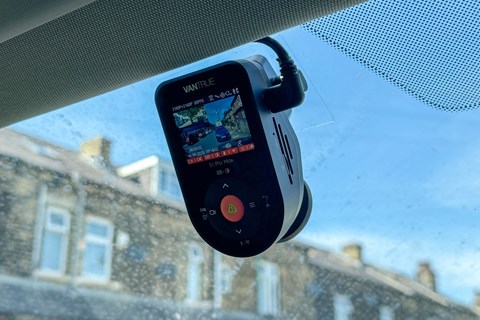
Pros: Lovely design, good quality footage, ADAS as standard
Cons: Unfavourable footage contrast, harsh and frequent voice alerts
The Vantrue S1 Pro Max is a fairly recent entry into the market, but one that packs a punch thanks to dual 4K resolution. Like the Miofive S1 Ultra, it means that footage will be consistent all round. I like the design, which takes the same considerations as the Viofo A329 in the way that it is mounted on the windscreen, but the Vantrue goes one step further by having a self calibration function to ensure the lens is pointing in the correct direction.
The S1 Pro Max goes one better than the Miofive S1 Ultra by offering a 155° from both cameras. That’s a huge 310-degress (out of a possible 360°) covered. Video quality is brilliant, but I believe it could be improved with a little more contrast. No complaints with low-light footage, however.
If you want features, the Vantrue has something called Vantrue Intelligence, which is ADAS. It can warn you of a potential collision with a car or pedestrian, lane departure, and even measure the distance between you and other cars. I usually like ADAS features but I found the Vantrue Intelligence systems to be too intrusive to the driving experience, with voice alerts being too harsh and frequent. Even ordinary speed bumps were often detected as incidents, so eventually I turned the ADAS functions off.
If you like ADAS, and want a dashcam that can do a lot more than just record footage, then the Vantrue S1 Pro Max should be high on your list.
Click below for great deals
70mai 4K Omni
The best for versatility
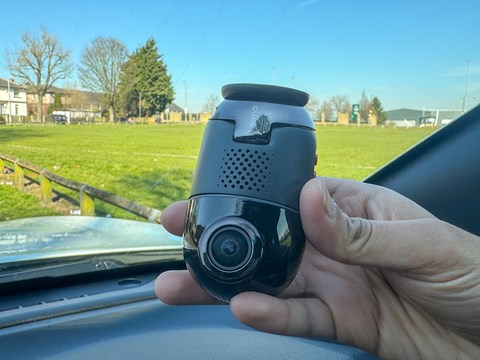
Pros: Sturdy unit, good footage quality, can be rotated
Cons: Installation can be tricky, priced higher than other dashcams
The 70mai 4K Omni looks a little unusual, and that’s because the front camera can rotate to shoot footage of the inside of the cabin if you desire. As the name suggests, it can shoot in 4K, but you should only expect 1080p from the rear. Footage quality is nice and clear, with balanced colour and good low-light quality. This is thanks to the Sony Starvis 2 sensors and HDR.
The 4K Omni feels rather heavy, and does take up a lot of room on your windscreen. It is for this reason I would recommend you take your time to find the ideal spot to mount the camera. The 2-inch curved screen is a little smaller than I would have liked, and takes a little getting use to.
I didn’t use the rotating lens much, but it’s nice to know that I could turn it to record interior footage whenever I would like without having to remove the camera, or without having to buy a three-channel camera.
Click below for great deals
Miofive Mirror 1
The best mirror dashcam
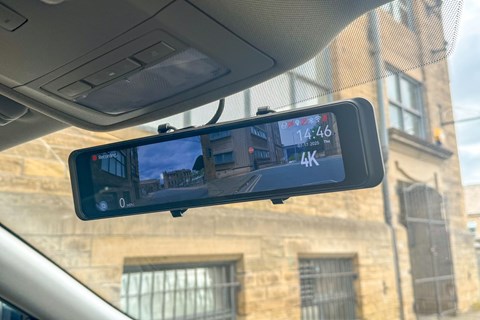
Pros: Two-in-on mirror and dashcam, 11.26-inch touchscreen, works well in darker conditions
Cons: Rear camera installation can be tricky, takes some time to adjust
Mirror dashcams can be useful for a number of reasons, especially if you want to record footage of whatever is behind you, like a dual dashcam should. It took me some getting used to, but eventually I enjoyed the experience of using the Mirror 1 from Miofive. In particular, I liked how lit-up the footage was in darker conditions, that’s something an ordinary mirror won’t do.
The Mirror 1 comes with 4K+2K recording capability (both 30fps), but considering the importance of the rear camera in this instance, I think the rear footage should be priority. The Mirror 1 is great for drivers who have restricted rear visibility, like vans. The large 11.26-inch screen can even act as a reversing camera.
The GPS alerts were impressively accurate, but voice alerts were a little too harsh, so I’d recommend turning the volume down. You can do that using the touchscreen which makes it easier to use the Mirror 1 over other dashcams.
If you’re looking for a dual dashcam, and of course you will be if you’re reading this, then maybe a mirror dashcam offers a viable alternative. Give it a go, and once you get used to it, you’ll enjoy it.
Click below for great deals
Orskey S900
The best value dual dashcam
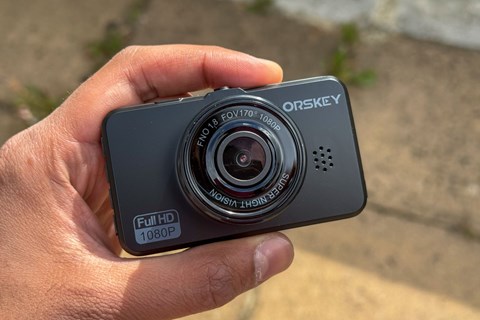
Pros: Dual dashcam for a fraction of the price of others, 310° coverage, 32GB memory card included
Cons: Poor rear footage, installation can be tricky
A dual dashcam must offer good coverage around your car, and that’s what the Orskey S900 offers. I was really happy to see the 170° field of view from the front and 140° from the back. For reference, a 140° coverage from the front camera is decent, so 310° all-round is great.
Footage quality out of the front is great for the price, with relatively clear video. The S900 can’t compete with premium dashcams as it only offers 1080p 30fps resolution, but that’s adequate in this case. Low-light footage isn’t the best as oncoming headlights can dazzle it. Rear footage is poor, but even just having a front-facing dashcam at this price is good value, so mounting the rear dashcam anyway is a bonus.
The rear dashcam seems to offer less than 1080p, which we don’t usually recommend, but if you’re able to get past the tricky installation then having front and rear coverage is useful. In addition to this there are a number of other features that make the Orskey good value: like the G-sensor and parking monitoring. The menu is intuitive and easy to use.
If budgets are tight, then the S900 offers an easy way to have a dual dashcam, peace of mind, and decent coverage around your car.
Click below for great deals
FAQs and things to remember with dual dashcams
Where do you mount a dashcam?+
All of the dashcams here are relatively easy to set up. Instructions will show you the best placement for your dashcam. For the front camera, this is hidden behind the rear-view mirror, and for the rear, it is adhered to the window, but make sure the position allows for a good view for the lens.
Wires and cables can be hidden in the headlining and various gaps if you want to hardwire the dashcam – instructions will inform you of the best way to do this for individual cameras.
Should I hardwire a dashcam?+
You may want to consider hardwiring your dashcam rather than using the 12V plug. This is a little more fiddly but will allow you to take advantage of the camera's parking monitor software. Hardwiring kits can be bought instead of a 12V plug or separately, depending on the model. You can always opt to get your dashcam professionally fitted for a fee if you wish.
Are dashcams worth it?+
Before you even get down to the business of choosing a dashcam, you will be wondering whether a dashcam is worthwhile at all.
The first and strongest argument for having a dashcam in your car concerns money. Fitting your car with a dashcam can reduce your insurance premiums, depending on your insurance provider.
For example, renowned dashcam brand Nextbase has partnered with a number of insurance companies, offering chunky discounts on insurance premiums to Nextbase dashcam owners. It is recommended that you check with your insurer to see if you can be benefitted in any way after a dashcam is installed.
What are important features in a dual dashcam?+
There are several important dashcam features that you don't really have to be concerned about because they come as standard on every dashcam you'll find. They are G-sensor, loop recording feature, and parking monitor. High-tech dashcams come with a lot more tech, and this is purely dependent on what you desire in your setup.
For the front camera, you'll want a minimum of Full-HD 1080p recording quality with a reasonable frame rate of at least 30fps. The angle width of the lens is important, too, because it determines how much the road the camera can capture. You'll want at least 140°.
For the rear camera, things vary a bit. Some rear cameras are internally mounted, and some externally. One example is the Road Angel Halo View mirror dashcam. The front camera clips onto your rear-view mirror, whereas the rear camera is mounted outside.
Naturally, if you get one that is external, it needs to be robust and properly waterproof - you only need to look for an IP rating to confirm its waterproof-ness. Rear cameras don't usually have the same quality of video as the front cameras, but 720p should be an absolute minimum.
From there, you can have as many or as few additional features as you wish. Wi-Fi in a dashcam and GPS are both useful, the former allowing you to quickly access files on your phone, the latter giving more precise information on your location and speed.
Why should I get a dual dashcam?+
Dual dashcams go one step further than an ordinary dashcam to provide you with coverage at the front and rear of your car. Simply put, having two (or more) cameras will allow you to record more footage than have just one camera. These dual dashcams can be vital in providing evidence during an insurance claim that wasn't your fault - often when someone has rear-ended you.
The benefits don't stop there, because a dual dashcam can also monitor a larger area when you park your car, so you can be accurately alerted if someone was to try to damage, enter, or steal your car.
You can enjoy CAR in its traditional print format, or one of the swelling number of digital editions, optimised for Apple iPhones, Android devices, iPads, tablets and desktop computers.