► Luke Wilkinson’s been enjoying an old BMW 330Ci…
► … and it made him rather critical of the new car industry
► His thoughts on soaring prices, poorer value and extra tech
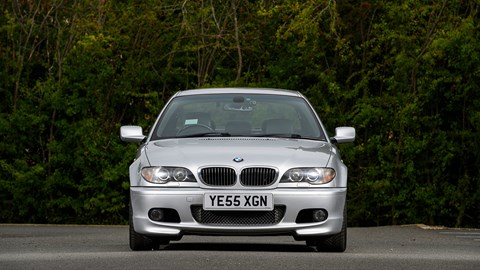
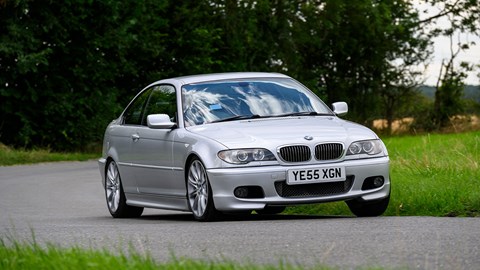
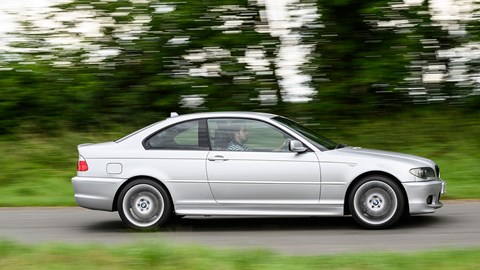
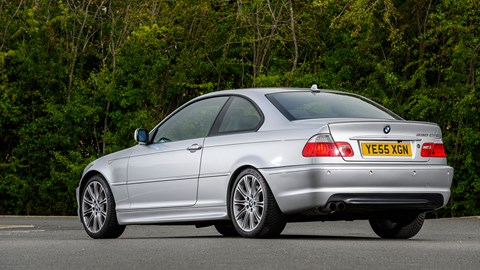
I’m a lucky boy. For the last two weeks, I’ve smoked about in a 2005 BMW 330Ci. I thoroughly enjoyed having it around, but the experience left me feeling quite reflective. Rather worryingly, I prefer it to any new car I’ve driven this year.
We’re used to technology getting better, more affordable and more convenient to own as time marches on. But this 330Ci made me realise that, during the last 20 years, cars have become poorer value for money, more irritating to live with and hardly any faster.
Stay with me. I appreciate classic car magazines have been making the same complaints since petrol won the battle against steam, but I have a serious point to make here. Cars are now too expensive, too boring and too clever for their own good.
This isn’t just the musings of a disgruntled motoring journalist, either. A recent study by the RAC Foundation found that our cars are now older than they ever have been. At the end of 2024, more than 40% of the cars on UK roads were more than 10 years old – up from 33% at the end of 2015. That means drivers either simply can’t afford a new car or they have no interest in owning one. Scroll down for a rant on why.
The effects of shrinkflation
Money’s an easy metric to quantify and, unfortunately, we’re simply not getting as much for it now as we did in the early 2000s. When this 330Ci was on the showroom floor in 2005, it cost £28,285. Adjusted for inflation, that equates to £50,126 in August 2025.
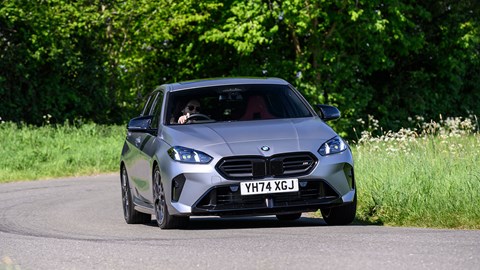
Coincidentally, that’s about the same amount of money BMW now charges for my long-term M135. Granted, my car has a few options, such as matte paint and some extra interior technology, but even the cheapest version will set you back around £45,000.
That means the money BMW used to charge for a performance version of the mid-sized 3 Series coupe in 2005 is now only enough for a performance version of the entry-level 1 Series hatchback. And it’s the same story everywhere you look.
Back in 2005, the cheapest Volkswagen Golf cost £13,230. That equates to £23,445 in 2025, which is £4,700 less than what you need for the cheapest Golf today. At the other end of the scale, an entry-level Mercedes S-Class cost £48,290 in 2005. That’s around £85,000 in today’s money, which is £15,000 less than you’ll pay for its contemporary equivalent.
So, we’re paying more and getting less – at least in terms of segment sizes. Surely the extra performance of a modern engine will compensate for that, though?
The slim margins of performance and fuel economy
For the money you pay, the gap isn’t as big as it should be. Yes, a new M440i (which is the closest thing we have to a sub-M two-door 3 Series these days) is significantly faster than a 330Ci – but it costs around £63,000. That £12,000 more than our inflation-adjusted modern classic. So, instead, I’ll compare it to my comparably priced long-term M135.
The 330Ci has a 227bhp 3.0-litre straight-six, a top speed of 155mph and a 0–62mph time of 6.3 seconds. The M135 has a smaller, turbocharged 296bhp 2.0-litre four-cylinder that provides the same top speed but a 0–62mph time of 4.7 seconds. However, it’s worth noting the improvement to the latter figure is largely thanks to a four-wheel drive system.
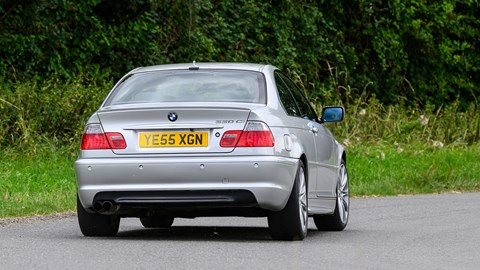
The M135’s extra traction means it can get its power down more cleanly than the 330Ci from a standstill. Once you’re moving, though, there isn’t much in it. The M135 might have an extra 74ft lb of torque, but it also weighs an extra 120kg. That means, if the 330Ci is in the right gear, the youngster can’t shake the old timer off its tail. Ask me how I know.
It’s the same story with fuel economy. Manufacturers tell us that they’ve downsized their engines for the sake of efficiency, but BMW’s engines from 20 years ago don’t seem to be any less economical than its engines from today.
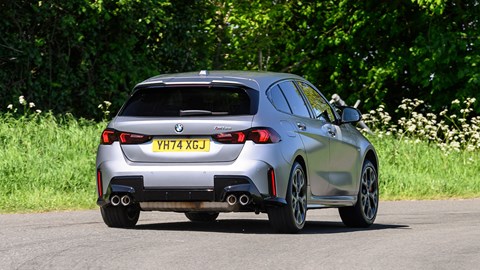
My M135 has an official fuel economy figure of between 34.8 and 37.1mpg, but I’ve been averaging around 30mpg in the real world. By comparison, the 330Ci has an official fuel economy figure of 31mpg – and I averaged 35mpg on my commute without any effort.
Why? Well, you need to beat the M135 mercilessly to make it move because it has short gearing and a frantic, boost-happy tune. The 330Ci has much longer gearing and a broader power band, meaning you can chug around in sixth gear, tickling the throttle just enough to keep the engine turning over. The M135’s computers won’t let you do that.
The intersection of convenience, capitalism and safety
Final rant before I wrap this up. I understand part of the reason why modern cars are so expensive is because regulations have forced manufacturers to fit them with more standard safety technology. But what’s the point in having the tech if you’re not using it?
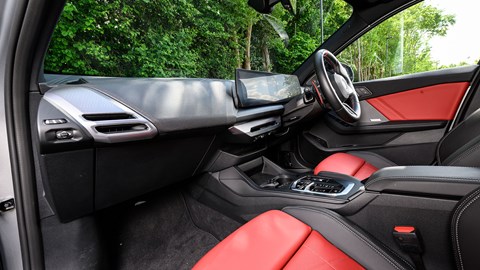
Safety technology should be invisible – and it certainly shouldn’t make a car less safe than it would be without it fitted. However, I’ve encountered lane assist systems that prevent me from weaving around potholes, traffic sign recognition systems that can’t tell the difference between a three and an eight (which makes using adaptive cruise control rather exciting) and driver monitoring tech that scorns me for wearing sunglasses in bright sunlight.
It’s frustrating. Normally, once I’ve finished testing a car’s safety systems, I turn them all off at the start of every drive. This study on our sister site, Parkers, shows I’m not the only driver who thinks like this, either – so why should we pay a penalty for technology we don’t want?
Think of it like this – if Apple introduced a feature that required you to manually connect your phone to the internet every time you unlocked it for better security, its sales would tank overnight. Everyone would rush out and buy a Samsung.
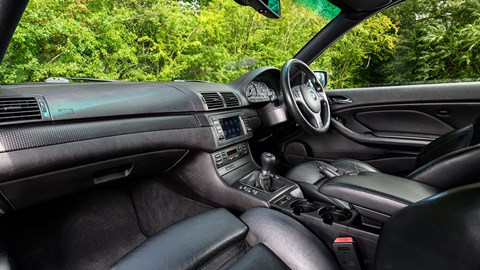
During my time with the 330Ci, I didn’t pine for a single piece of modern safety technology. In fact, I found it relaxing to live with a car that did exactly as it was told rather than as it was programmed to do. I also think it made me a better driver, because I knew I didn’t have an electronic safety net to save me from my own incompetence.
What’s your point, here?
New car sales aren’t as strong as they should be. I suspect this is partly because new cars are too expensive and partly because drivers don’t like the experience they provide. There’s certainly a lot I find irritating about them.
Instead of listening to the needs of drivers, manufacturers are prioritising the needs of legislated technology that’s proven to be shunned by owners. What’s particularly insulting is that we’re paying for the privilege of features we have no interest in using.
But it doesn’t have to be this way. If car manufacturers took greater notice of how their cars are actually used in the real world, they could present that data to legislators and better shape the laws their products are bound by. And I’d bet cars would get cheaper, easier to live with and more engaging to drive as a result.
It isn’t an impossible task, either. Plucky little Leapmotor – the fledgling Chinese company that kickstarted the most recent EV price war – has already stuck its neck on the chopping block. Back in April, it told me its customers aren’t using lane assist and speed assist, so it’s prepared to switch the technology off by default to make its cars more user-friendly.
Leapmotor faces a fight with Euro NCAP for its boldness, and it’ll probably lose a star off each of its crash-safety ratings if it’s successful. But that small victory might be catalyst the car industry needs to find its mojo again. Who knows, if Leapmotor can win that fight, we might soon have a new BMW that’s as fun to own as this old 330Ci.