► Why times are getting tougher for the van manufacturers
► Are the European brands nervous?
► Our van man gets a very early look at a big name’s next model
Making vans is a licence to print money, right? Most of the vehicle is filled with air rather than expensive seating, the cabin is a working environment so doesn’t need the same levels of luxury or tech, and life cycles are many times longer than the equivalent in cars. But the move to electric is posing challenges for the European manufacturers.
Take the Citroen Relay for example. The current generation of the large van was launched back in 2006 and remains on sale to this day. Sure, it’s had a few changes, facelifts and upgrades since then, but it’s no Trigger’s Broom – the fundamental vehicle is much the same. Add in that the Peugeot Boxer, Fiat Ducato, Vauxhall Movano, Toyota Proace Max and the forthcoming Iveco SuperJolly are all the same vehicle with different badges and it’s clear it’s long paid off its development costs. It’s little surprise that Ford has also chosen to put its van business front and centre too.
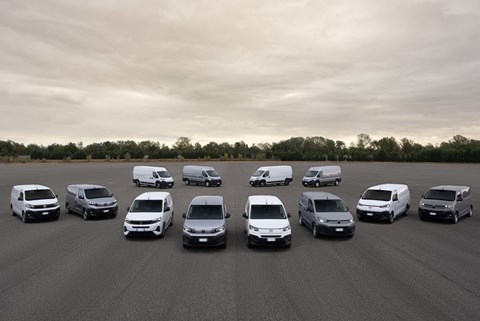
But there are tougher times ahead for the traditional big-name commercial vehicle makers. They face the same challenges on electrification as the passenger car market, but things are not going to plan right now. September 2025 was the best month ever for EV van sales, with a rise of more than 70 per cent versus the same month last year. However, the 4,002 registrations only accounts for an 8.4 per cent market share, which is some way short of the target for the year of 16 per cent.
Fear from the big names?
Last week I went to an event giving a glimpse at the next generation of Mercedes-Benz Sprinter. This is a vitally important vehicle for Mercedes, and it has long been seen as a trend setter in the large van sector. It’s also regularly topped reliability surveys and it’s certainly doing ok for itself on the sales front, too, as it’s the fourth biggest selling van in the UK so far this year.
There are problems though. The first of these is that it isn’t due to go on sale until 2027 at the earliest. The current model will be eight years old by that point, which is on the short side for a replacement cycle in the van world but still feels long enough to make reacting to market changes trickier.
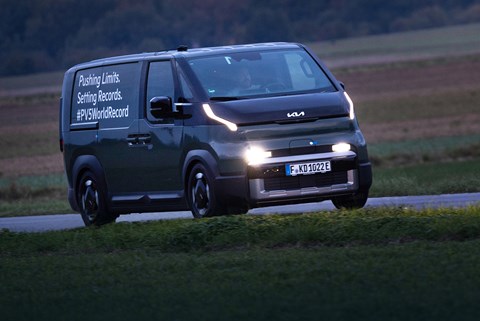
The challenge it faces is that two years is increasingly looking like being a long time. New brands are launching all the time, meaning more and more competition moving the goalposts. Not only are there Chinese manufacturers arriving like Farizon, but big-name brands like Kia are getting involved too. The PV5 (which has just set a record for the longest distance, fully laden on one charge – pictured above) is here already and the PV7 and PV9 are not too far away now, and could well launch before the Sprinter and Vito, the latter of which will also be on the same all-new Van.EA platform. If either of those Kias shake up the market in the same way that the PV5 has with its enticing pricing, it could require some recalculations at Merc.
Change of plan
There have already been some changes for the Sprinter. Back in early 2024 at the launch of the current Mercedes eSprinter I was told that the Van EA models would be electric only, and there was no chance of any other powertrain being fitted. I asked the question with hydrogen in mind, but everything was ruled out, including diesel.
That is no longer the case, as Mercedes has decided to create a Van CA version of the platform too, with the C standing for Combustion. This is the first instance I can think of where a brand has engineered an EV platform to take a combustion engine – usually it’s the other way around. Granted this has happened in the car world, with the Fiat 500 one such example.
This was done in consultation with customers, who you can imagine saying in fairly firm terms that they won’t be ready to pivot entirely to electric by 2030, so they would like another option if they are not going to take their business elsewhere thank you very much. And when you are talking to companies that buy hundreds of vans at a time, you tend to listen to them. Then there is the campervan market, which is posing its own challenges – you can’t exactly get far off the beaten track if you have to remain within relatively easy reach of a fast charger. Then all that heavy gear in the back will test the electric range to its limits.
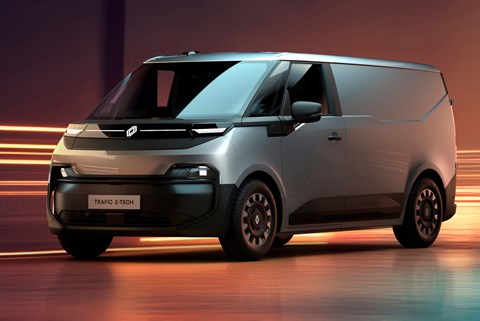
Interestingly, Mercedes has chosen to not do what Renault is doing with the new Trafic. The all-new E-Tech (pictured above) will launch in 2026, but the increasingly aged (but perfectly decent) current diesel model will continue to be sold alongside it. This might prove a challenge to the marketing team as there will be two very different models both being sold under the same Trafic badge.
A very early peek
The event we were at was a slightly strange one, as it told us very little about the new Sprinter. We essentially saw a physical manifestation of a teaser image, with the new Sprinter being carved out of rock. I wasn’t brave enough to crack any jokes about the Flintstones and going back to the Stone Age. It made for a strange visual though.

However, we were then allowed into a secret chamber behind the scenes where we were shown a model of a vehicle on the new VAN.EA platform. Given we were sworn to secrecy, had to surrender our phones, were patted down and I even had my Garmin watch taken away (quite why I’m not sure – what was I going to do, measure how many steps it took to walk around the model?!), you will forgive me for not wanting to find out exactly how serious Mercedes’ lawyers are.
What I can say is that we have never before seen a mock-up of a new van this early before its release. One colleague quipped that Mercedes must fear the Chinese brands getting all the attention and it was trying to regain some of its own. It begs the question as to why Merc is leading with the new VLE passenger limousine when the vans make up 80% of its commercial vehicle sales.
I’m being a little harsh on Mercedes here, and what we know of the new Sprinter and Vito is genuinely exciting. I’m expecting the new version to take big steps forward in many areas, not least efficiency. It might well be all that many companies need to ditch diesel, but it says a lot about the challenges it is facing and what customers are asking for that it has had to row back on the original plans to go EV only for this model.
Right now, 2027 feels like quite a long way away, and a lot could change between now and then. Here’s hoping Mercedes and the other European van makers can be bold enough to make the leap forward that they need to in order to remain at the head of their game.
Not before time
Don’t get the impression that this is a case of ‘Won’t someone think of the poor van makers!’ It’s about time they caught up in many senses. After all, it took major changes of legislation to force them into putting more than a single airbag into a van and only now are we seeing proper safety systems in something that drivers generally don’t have a choice about spending all day in.
If a mainstream car was still being produced fundamentally unchanged nearly two decades after it was launched it would be viewed unfavourably. I doubt that the van life cycles will suddenly match cars, with updates every three years or so, but a little more modernity and reactivity would be no bad thing.