The NEC Classic Motor Show is the UK’s largest indoor classic car event, taking over more than half of the National Exhibition Centre. If you’re not familiar with the scale of the place, imagine a room that doubles in size every time you think you’ve nearly reached the wall, and you’ll get the idea.
The 2025 edition featured an array of car clubs, dealers, traders and special displays. Iconic Auctioneers held a mammoth sale of over 600 cars and bikes. If you took your time over getting round the whole show, you could easily fill the three days it’s open to the public.
There are literally thousands of fascinating cars of every variety to see. Cars that were once everywhere and now exist in penny numbers, star cars of huge historical significance, the weird, the wonderful and everything in between. Here, in no particular order, are the ones that grabbed my collar and pulled me in for a closer look.
Ferrari F40
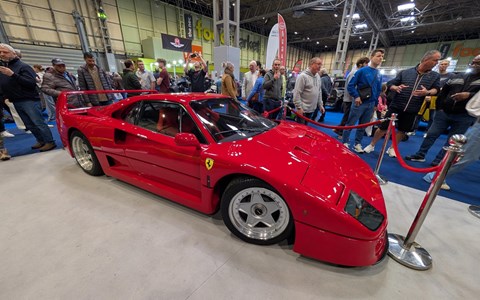
It may be the most numerous of the Ferrari hypercars, but it’s still a rare occasion you see an F40. I’m always surprised by how small and delicate it looks, despite the brutalist styling – there’s a distinct echo of it in the new F80. Hard to believe it’s nearly 40 years old. Shame we didn’t get to hear the 2.9-litre twin-turbo V8 barking out its 478bhp.
TVR Cerbera Speed 12
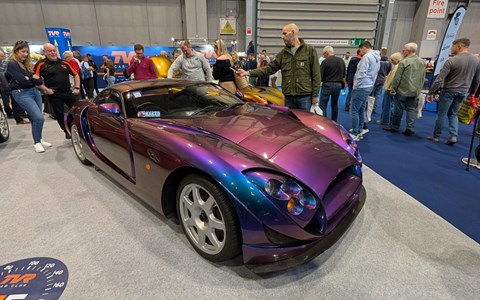
TVR was always slightly bonkers, but it was positively unhinged during its mid-1990s peak, a fact brought to insanely vivid life by the Cerbera Speed 12. The standard six-cylinder Cerbera was fast and fighty enough for most, but the Speed 12 added a 7.7-litre V12 and Le Mans refugee styling to the mix. It was built to race but a few road cars were built as well. This chromaflared praying mantis is the ‘Project 7/12’ concept car unveiled at the 1996 British Motor Show that I believe hadn’t been seen in public since.
Ford Supervan 3
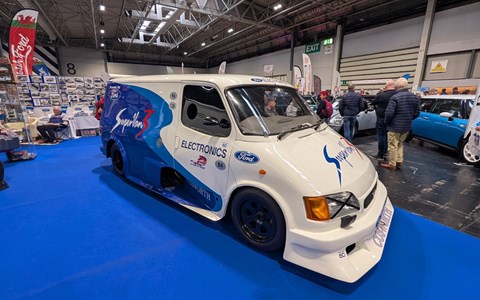
The Ford Transit Owners’ Club had all three of the race car-based Supervans on display. The original, recently-restored Supervan 1 – a Mk.1 Transit body plonked onto a GT40 chassis – had a huge crowd round it, while Supervan 3 was being totally ignored. Unfairly, I thought, as it’s the by far the maddest looking, and was the maddest to drive. It’s based on an F1 chassis and originally had a 650hp Cosworth HB usually found in a Benetton. Now it runs a more useable Cossie V6.
Jaguar D-Type
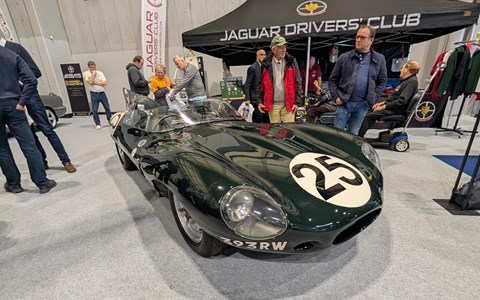
This was undoubtedly the most valuable car at the show, worth at least £10 million. Why? Well, just look at it. If there was a more beautiful racing sports car in the 1950s, I’ve not met it. XKD 605 is the penultimate of 11 ‘long-nose’ D-Types. Built in 1956, it was campaigned by the works team and won the Reims 12 Hours but only managed sixth at Le Mans. It went on to finish third in the Sebring 12 Hours in 1957.
Peugeot 309 GTi-16
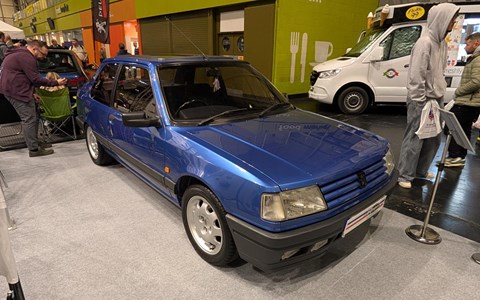
Maybe it’s the dowdy styling that keeps the 309 GTi out of the ‘best hot hatch of all time’ conversation but it really should be in the mix. Indeed, there’s a strong argument that it’s better than the 205 GTi, handling just as well without the threat of snap oversteer. Any 309 GTi is a rare sight these days, but this one might be unique. It’s an ultra-rare homologation special GTi-16 – with a 16-valve engine from the 405 Mi16 – and thought to be the only right-hand-drive one supplied to a UK customer.
Austin Maestro Post Office van
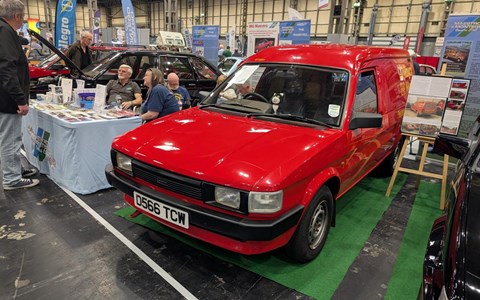
This is one of those vehicles that really shouldn’t have survived. It’s the oldest known Maestro van and the oldest known Maestro diesel, one of 70 trialled by the Post Office in 1986. These things were basic in the extreme, not even having a 12-volt socket; add in the questionable build quality and raucous Perkins engine, and it’s no surprise the posties much preferred the Ford Escort. The other 69 PO Maestros probably didn’t last even 10 years, but this one was laid up and has recently been fully restored to considerably better than new condition.
Ford Capri 280 Brooklands
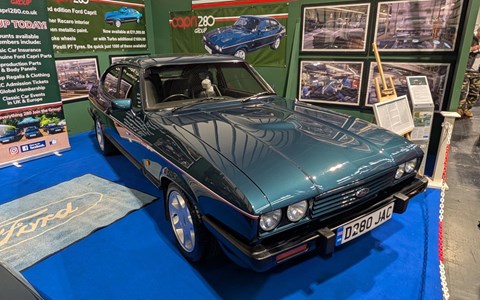
The ultimate Mk.3 Capri has always been on my ‘want one’ list. A run-out special edition built just for the UK after sales in the rest of Europe ended, it was based on the 2.8 Injection Special and featured leather upholstery, wood dashboard trim, unique five-spoke alloys, and that gorgeous green bodywork. It still had a live axle and leaf spring rear suspension, but this was more of a GT than a sports car, and a very fine GT it was.
‘Spider II’ GN hillclimb special
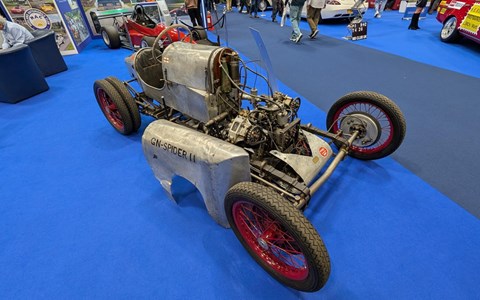
This brilliant contraption has been pieced together from bits of many other vintage cars hung off a GN chassis. It’s looks spindly and mildly lethal, but no doubt it’s a highly effective racer. Note the twin rear wheels that improve off-the-line traction for hillclimbs. The engine is a thumping 2.4-litre V-twin that appeared to be two single-cylinder units on a common crankshaft. The chain-drive mechanism(s) was bafflingly complex.
Ford Country Squire
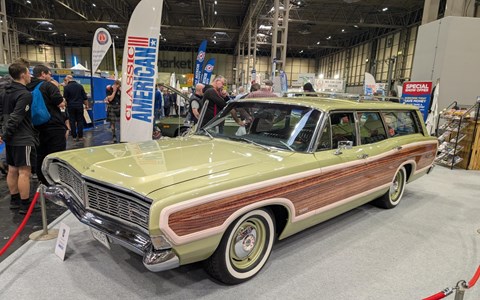
The mid-1960s were the peak of America’s ‘land yacht’ era and this a magnificent example. The Country Squire was Ford’s top-of-the-range station wagon, based on the LTD sedan – itself a poshed-up Galaxie. It seats nine in three rows, the ‘wood’ side panels are made from Formica, you’d cover 50 feet walking round it, and you could get it with a 7.0-litre V8 also found in the Shelby Cobra. This one probably makes do with a more sedate 4.9 engine, more’s the pity…
Bedford OB coach
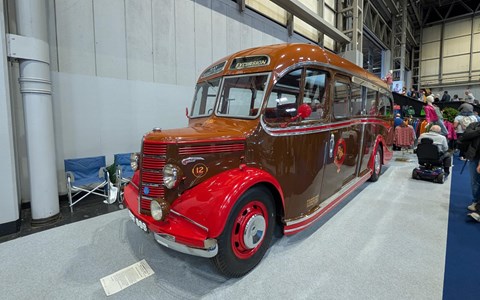
I used to be a bus driver and the vehicles still fascinate me. This is a particularly fine example of the Beford OB with 29-seater Duple Vista coach body, a combination that was a mainstay of passenger transport from the late 1940s until the early 1970s, and it remains hugely popular in the ‘preservation’ scene. Power comes from a 3.5-litre straight-six producing around 70bhp and a good one is, by all accounts, lovely to drive.
Ford Escort RS1700T Group B rally car
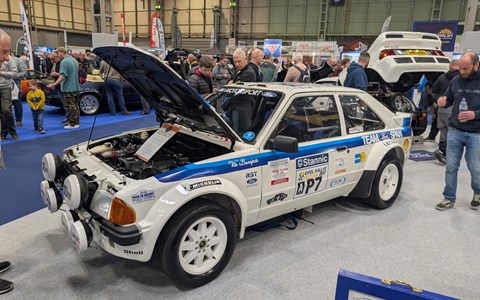
Before the RS200, this was going to be Ford’s contender in Group B rallying. It featured a 1.8-litre, four-cylinder, turbo’d Cosworth BDT engine and rear-wheel drive, which seemed like a strong powertrain when development started in 1980. But then the Audi Quattro proved four-wheel drive was the way forward and the RS1700T was killed so the RS200 could live. This is one of the prototypes that were dispatched to South Africa and enjoyed some success in local rallies. Surely it’s the coolest Mk.3 Escort there’s ever been?
Ferrari 365 GTB/4 Daytona
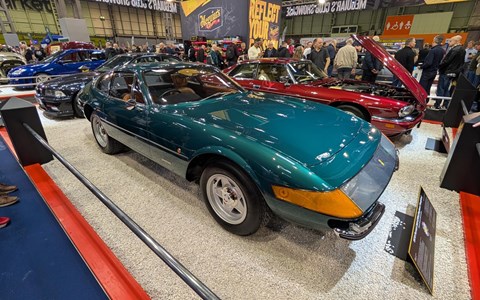
Believe it or not, the Ferrari Daytona is rarer than the F40 we saw earlier – 1285 of these were built versus 1300 F40s. It’s a truly stunning looking car that was, at the time, officially the fastest in the world, it’s glorious 4.4-litre V12 powering it to 174mph. It could even do 70mph in reverse, apparently. This one, resplendent in green with tan leather, proves that Ferrari’s don’t necessarily look best in red. Incidentally, ‘Daytona’ is only a nickname, applied by the press in recognition of Ferrari’s 1-2-3 finish in the 1967 Daytona 24 Hours.
Honda NSX
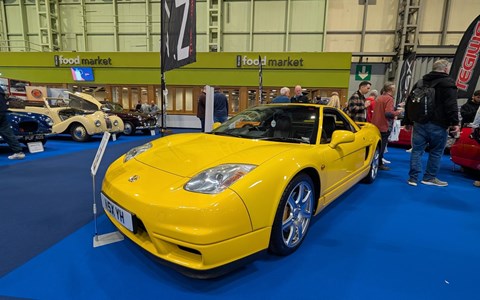
It’s so often the case that all-time great cars are completely ignored at the time, only gaining real traction 20 years later. And so it is with the Honda NSX. It gave the supercar establishment a proper kick up the backside when it was launched in 1990 but only a few brave Brits went to the same showroom that sold Civics to drop £70,000 on a mid-engined exotic. This is a late facelift car, launched after pedestrian safety regs effectively banned pop-up headlights. The huge crowd round it showed just how much love there is for the NSX.
Jaguar XJS V12 Group A touring car
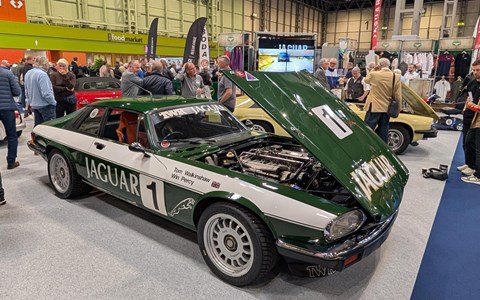
Touring car racing in the 1980s was all about the battle between Ford and BMW, right? Not entirely. The early years of Group A threw up some unexpected contenders, including Jaguar. It entered the European Touring Car Championship with a brace of TWR-run XJS V12s, an unlikely racer but a very effective one. Team boss Tom Walkinshaw took the 1984 driver’s championship, winning the Spa 24 hours along the way. This is one of those 1984 cars and it’s quite a menacing thing; I just want to drive it hard and glory in its wailing V12.
Ford Escort RS Cosworth
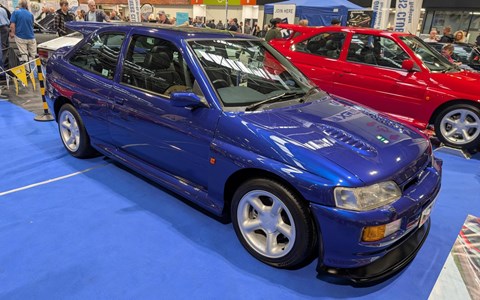
If you’re a fellow child of the 1990s, you’ll remember the seismic impact the Escort Cosworth had before the Impreza WRX and Mitsubishi Evo came along. It wasn’t the sharpest instrument to drive, but the wild styling stopped everyone in their tracks and it was so easily modified. Everyone I knew wanted one – as did all the ram-raiders, so it became functionally uninsurable. Now the 1990s have come back around good Cossies go for big money and this one – which is in the best colour – is a lovely example.
Volvo P1800
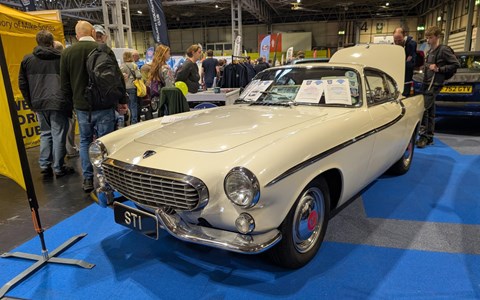
Any Volvo P1800 is a rare and special thing. It’s essentially an Amazon saloon with a much prettier body, but that’s no bad thing – the Amazon’s actually quite sporty. This particular P1800 is rarer still because it’s an early car built in Birmingham by Jensen. They usually rusted away in short order, hence their rarity. On top of that, this is the oldest of three cars used on-screen in the Roger Moore TV show, The Saint. Now fully restored, it’s a delightful thing.
Wood & Pickett Mini by Callum
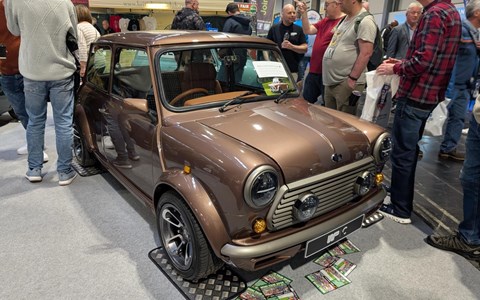
You probably saw recently that Ian Callum has revived the name of coachbuilder Wood & Pickett, which turned out some wild custom Minis in the 1960s, for his own line of custom Minis. This is the one featured in all the press images; I could have spent all day pouring over the countless little details. There’s not a single part of it that hasn’t had a touch of design applied, that hasn’t been perfected.
Vauxhall Nova GSi
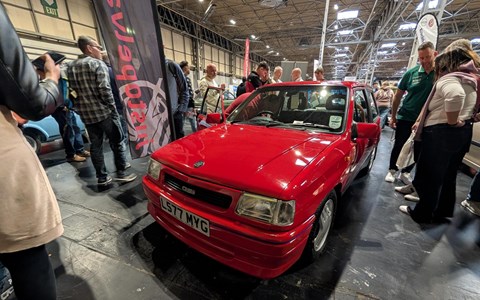
Fast Novas were so frequently used, abused and thrown away that there are only a very small handful left. But everyone still loves them, if the crowds around this absolutely immaculate example were anything to go by. The original order form was on the parcel shelf, showing it was one of the very last ones registered, in September 1993. Amusingly, a 10-year-old Metro Vanden Plas was part-ex’d against it. This would have been a big step up in performance, it’s 1.6 engine producing a snorting 100bhp in a featherweight bodyshell that rode too firmly but handled neatly.
Unipower GT
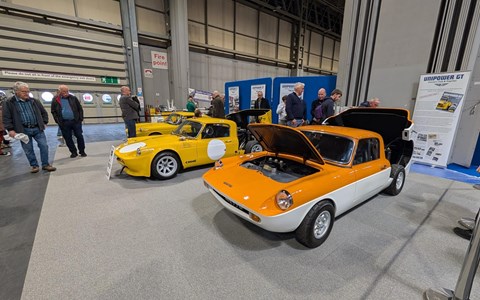
This could leave you scratching your head, unless you really know your stuff when it comes to low-volume British sports cars of the 1960s. The Unipower was designed by an ex-Lotus engineer and made by a company that usually built heavy-duty trucks. It’s a tiny thing with a glassfibe bodyshell and a mid-mounted engine, usually of Mini origin. Surprisingly quick and very agile, it racked up an impressive racing record.
Matra Rancho
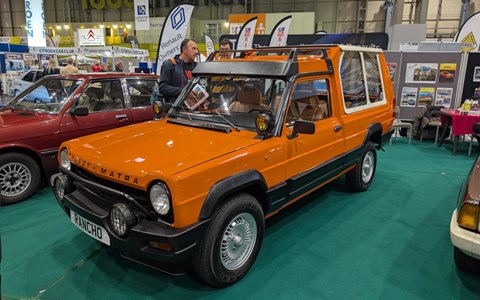
If there were more than two on the UK’s roads (including this one) the Matra Rancho would probably be having a moment. There’s a strong argument it’s the original SUV in the modern sense of the word, a slightly raised, slightly toughened, practical family car based on a hatchback. Or based on a pickup that’s based on the Simca 1100 hatchback in this instance. It’s just such a cool thing that probably arrived 20 years too soon. Few were sold here and they all rusted away.
Lotus Carlton
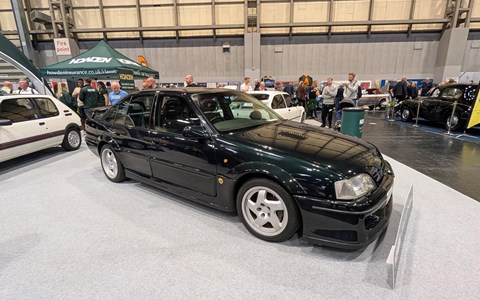
It’s hard to believe the Lotus Carlton caused such a fuss back in the early 1990s, blasted by press and politicians for being too powerful, too fast for the general public. Now, its numbers look pretty pedestrian – 377bhp from its 3.6-litre, six-cylinder, twin-turbo engine, 0-62mph in 5.1 seconds, 174mph flat out. But that was so far beyond what any other saloon could do at the time, it was bound to get people in a flap. It’s decidedly old school now, but still a fabulous thing to blat about in..
Volvo V70 T5 police car
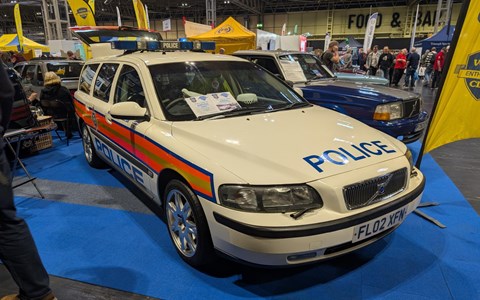
Everyone says the 1994 British Touring Car Championship campaign turned around the image of Volvo estates, but I’d argue the omnipresence of jam sandwich liveried T5 wagons on the UK’s motorways had a bigger impact. The original 850 and several generations of V70 just looked so cool and could keep up with pretty much anything – incredibly effective marketing. This second-gen V70 is a very rare survivor complete with all the period correct police gear, even down to the first aid kit.
Skoda Felicia Fun
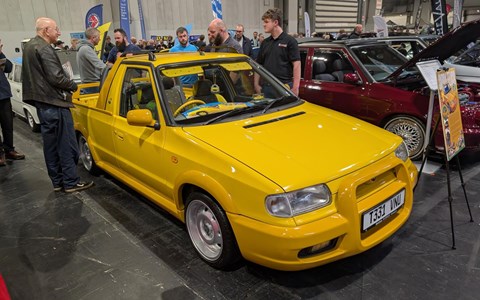
I tried to persuade my dad that the Felicia Fun would be a perfectly sensible family car. Though he liked the yellow colour scheme and frog-themed upholstery, he thought a pickup with rear seats that pulled of the cab bulkhead would not, in fact, work for us. I still think we was wrong, not least because a good one such as this recently restored example is now worth around £15,000. I don’t think you could ever be a bad mood driving one, either.
Vauxhall Cresta
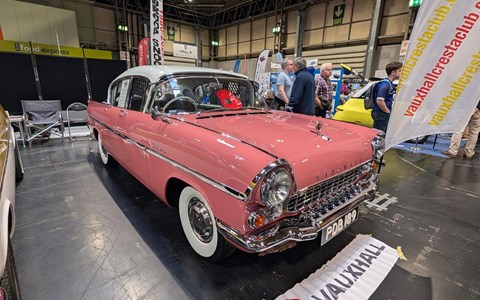
A 1959 pink Cadillac with the gigantic tail fins is probably the most American of American classic cars. The Vauxhall Cresta was the closest thing to it General Motors sold on this side of the Atlantic and it was also available in pink for 1959, shown in all its magnificence on this delightful example. Built on a more British scale than the gargantuan Caddy, the top-of-the-range Cresta was still festooned with as much chrome as possible and had tail fins at least six inches high. It must have seemed like Hollywood had arrived whenever one passed by.
Morris Ital
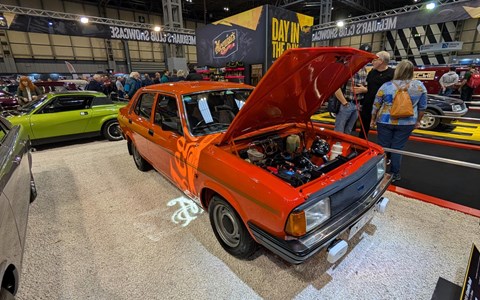
And to close, an example of how a strong emotional connection to a car can make you do irrational things. There is very little love for the Morris Ital, the facelifted version of the Marina that staggered on until 1984, by which time bits of the chassis and running gear shared with the Morris Minor were nearly 40 years old. Yet this base-spec 1.3 L that’s been owned by the same family from new has had untold time, energy and money lavished on a better-than-new restoration. Irrational? Probably. Fantastic? Absolutely.