► Cupra’s take on the Leon is a proper hooligan
► Top-spec hatchback is now available with 321bhp
► … all of which goes through the front wheels
Cupra seems to be establishing two distinct strands within it. At one side it’s pushing its EVs and long-range plug-in hybrids, and then at the other end it’s on a mission to squeeze every last drop of power out of its remaining petrol models.
The latter is what’s led to the Volkswagen Group’s most powerful front-wheel-drive hot hatch ever: the Cupra Leon VZ. Not to be confused with any previous VZ1, VZ2 and VZ3 models that came before it, and which remain on sale.
But, as we all know, that amount of power going through just the front axle can have mixed, torque steer-y results, so is the Leon VZ worth considering or are you better just shopping for the staple Volkswagen Golf R?
At a glance
Pros: Superb performance, tidy handling, highly usable
Cons: Expensive, interior could feel more special (seats aside)
What’s new?
The Leon is one of the final remnants of Cupra’s bygone Seat era – the other being the aging Ateca SUV. In many ways, though, the Leon is wearing its years better than the Ateca, not least because Cupra has now updated the car with some fresh styling, a revised interior and a reworked chassis. We’re off to a good start, then.
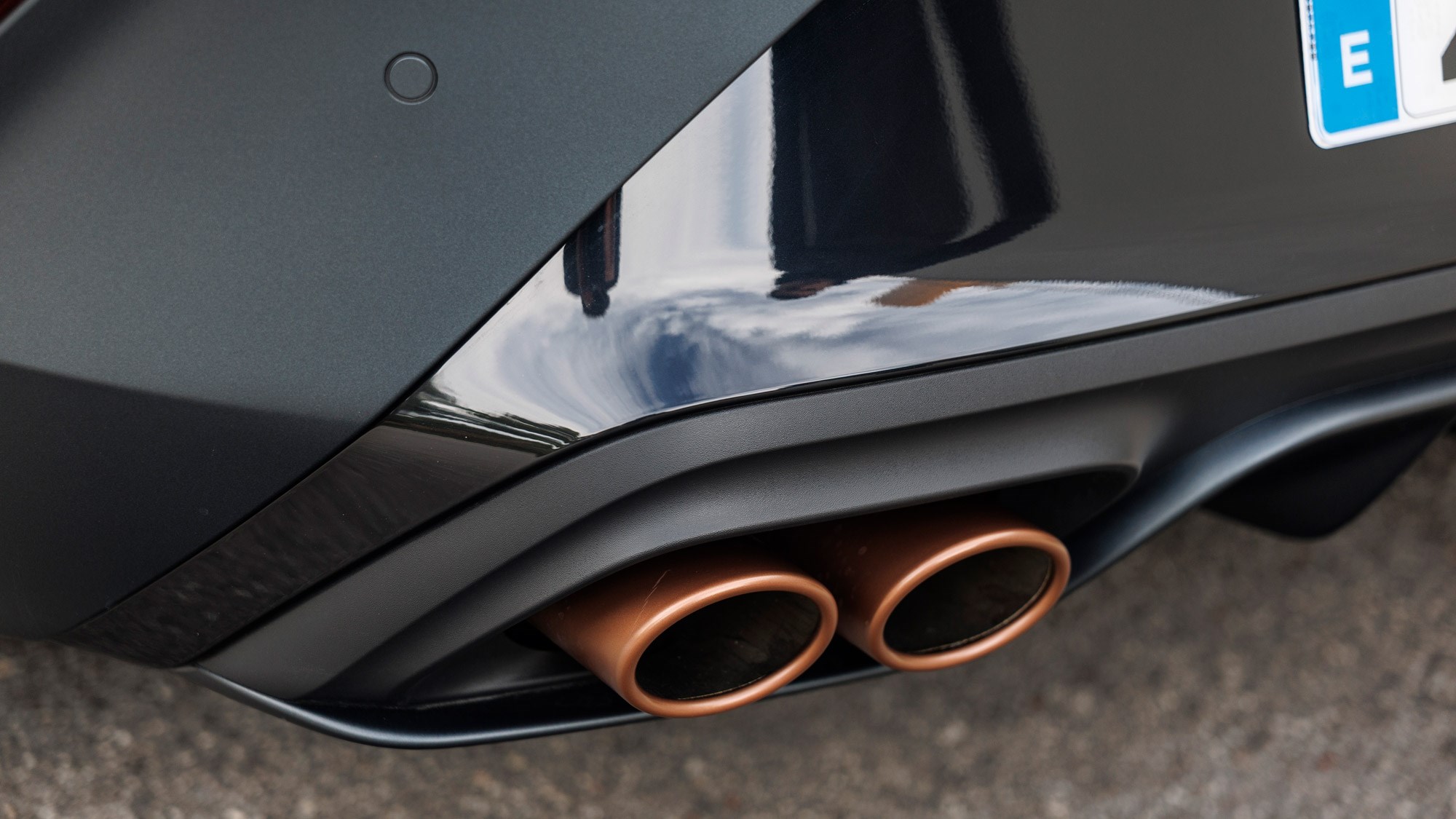
While the refreshed model launched at the end of 2024, Cupra is already back with updates that are aiming to unlock a wilder side that the current-generation Leon hasn’t yet found in a way of previous Seat-badged Cupra R models of old did. It’s a fairly simple policy of just adding a useful extra 25bhp, but visually other changes include copper-coloured exhaust tips and additional dark chrome detailing. Just 1500 are being made – of which only 50 are expected to come to the UK.
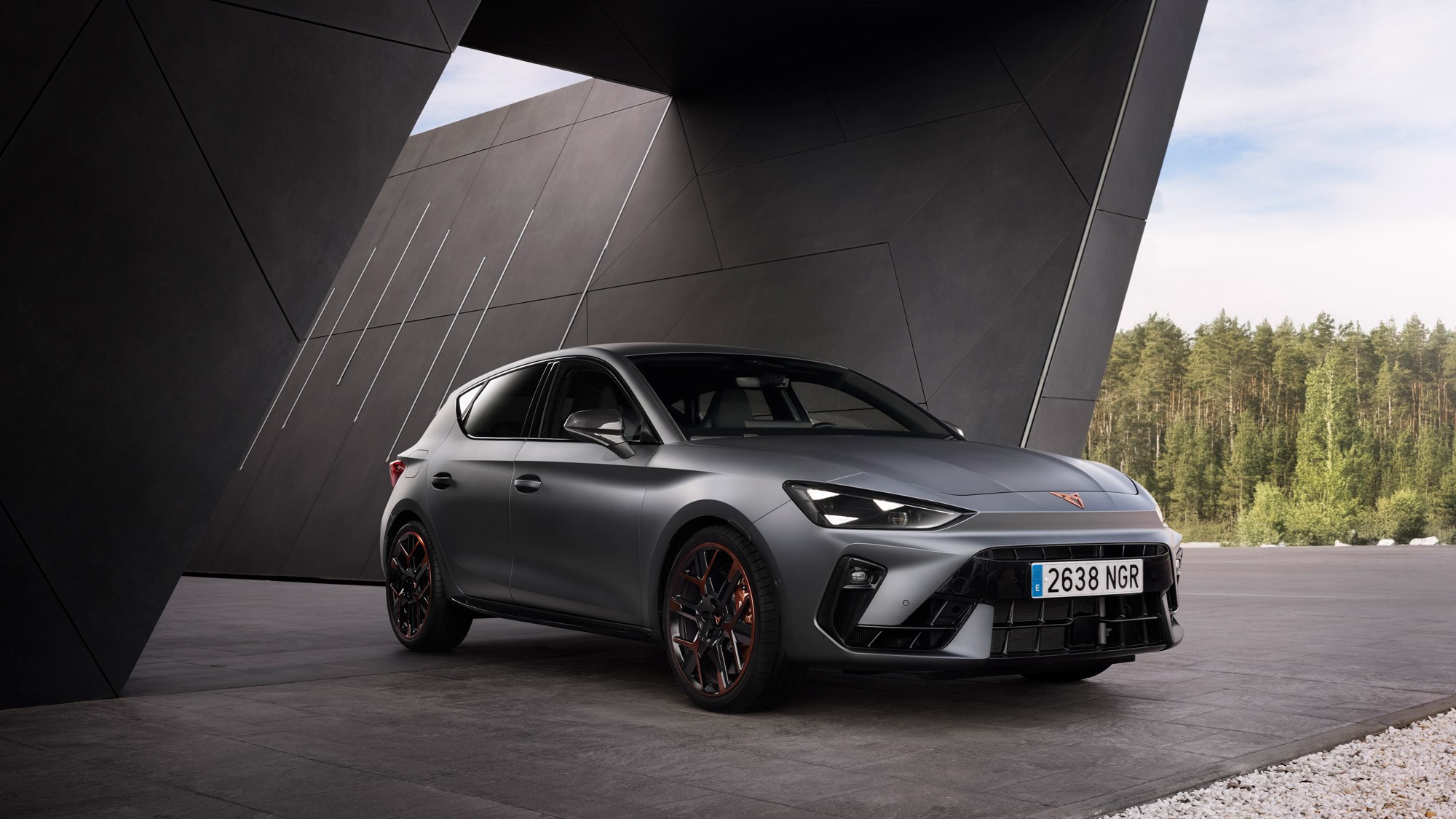
The proper treatment will come later in 2026 in the form of the Leon TCR – a more stripped-out hot hatch inspired by the Leon touring car. It will take things up a notch with its removable rear seats, rear strut brace, wider tyres and proper racing harnesses. This will be even rarer, with just 499 Leon VZ TCRs set to be produced. Expect a fairly significant price increase, too.
It’s worth noting that while the Leon VZ might currently be the Volkswagen Group’s most powerful front-wheel-drive hot hatch, it will soon be joined by the Golf GTI Edition 50, marking half a century of sporty Golfs.
What are the specs?
Cupra’s toybox is the same as Volkswagen’s so, if you’ve read our various Golf reviews, these figures are going to look very familiar. The regular Cupra Leon line-up consists of a mix of 1.5-litre and 2.0-litre petrols, as well as new PHEVs delivering up to a claimed 81 miles on a charge.
The VZ keeps Volkswagen’s renowned EA888 engine and seven-speed DSG automatic, plus gets an extra 25bhp and 15lb ft of torque compared to regular VZ1, VZ2 and VZ3 models, putting out 321bhp and 310lb ft. That’s a lot. For reference, the now-discounted Ford Focus ST Edition has a mere 276bhp (and that’s hardly a slow car) while the four-wheel drive Golf R only has a little more at 328bhp.
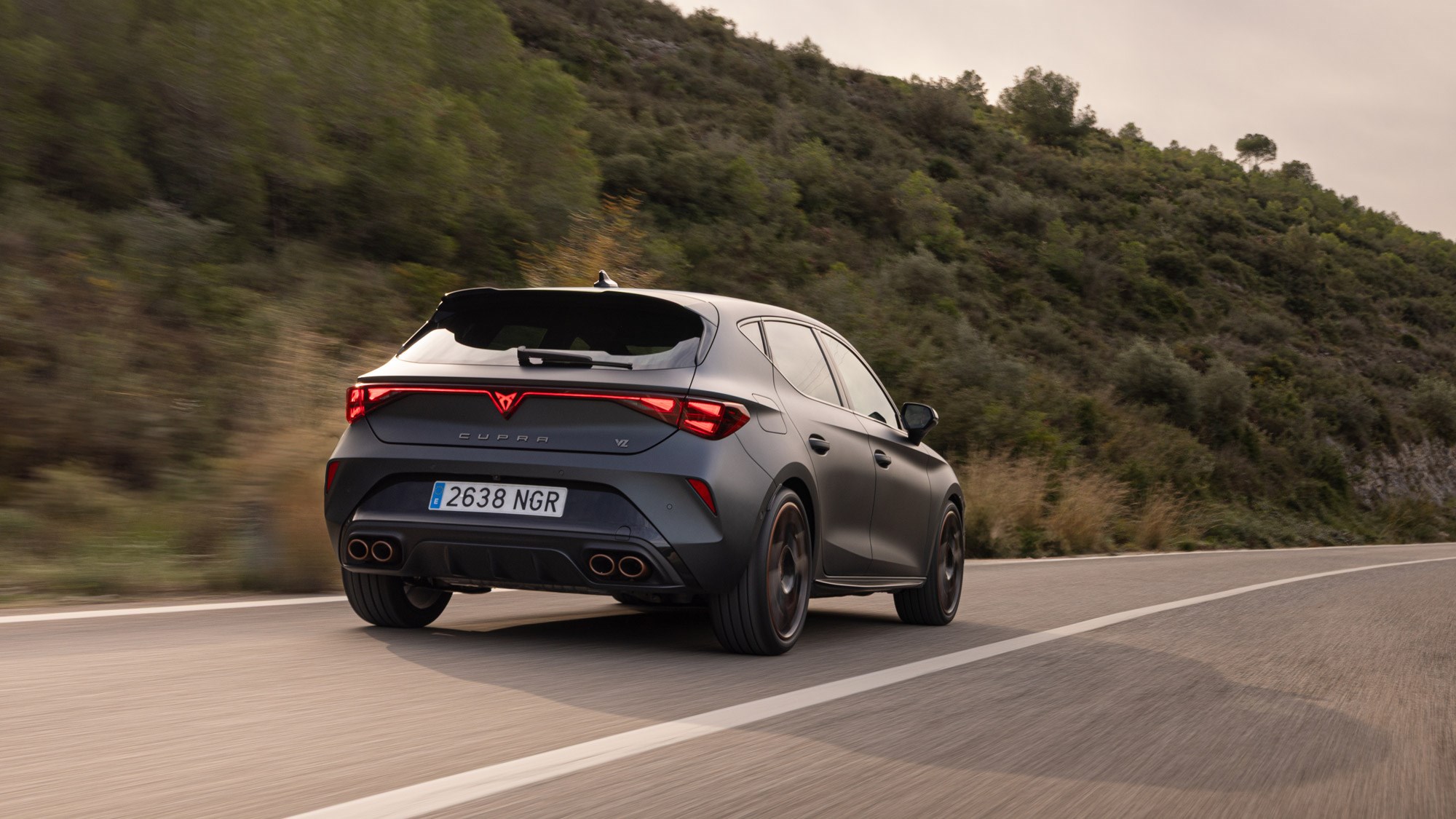
In fact, the only other front-wheel drive hot hatch that can out-horsepower the Leon is the 325bhp Honda Civic Type R, which will sadly be axed in 2026 – and that requires a weapons-grade arsenal of clever chassis hardware to stop it from torque steering into the verge every time you tickle the loud pedal. It doesn’t come cheap, either.
The result? Well, providing you can get its power onto the tarmac cleanly the Leon will dash from 0–62mph in 5.4 (down from 5.7) seconds and keep pulling to a delimited top speed of 168mph.
How does it drive?
We know from driving the 296bhp Leon that it can scramble around for grip. Try and use any of the power in anything other than perfect conditions and the front wheels will snatch at the tarmac before the traction control bats it over the head with a newspaper. But, fortunately – or should we say unfortunately – the weather conditions on our Spanish test drive were perfect.
It certainly seems to have a harsher edge than the equivalent Golf. But its damping, steering and brakes all felt slightly heavier than my memory of the Golf GTI’s – and its gearbox shifted with greater ferocity. That’s not a bad thing in our book, we’re all for owning a hot hatch you actually need to grab by the scruff of the neck drive. It’s why I love the Civic Type R so much.
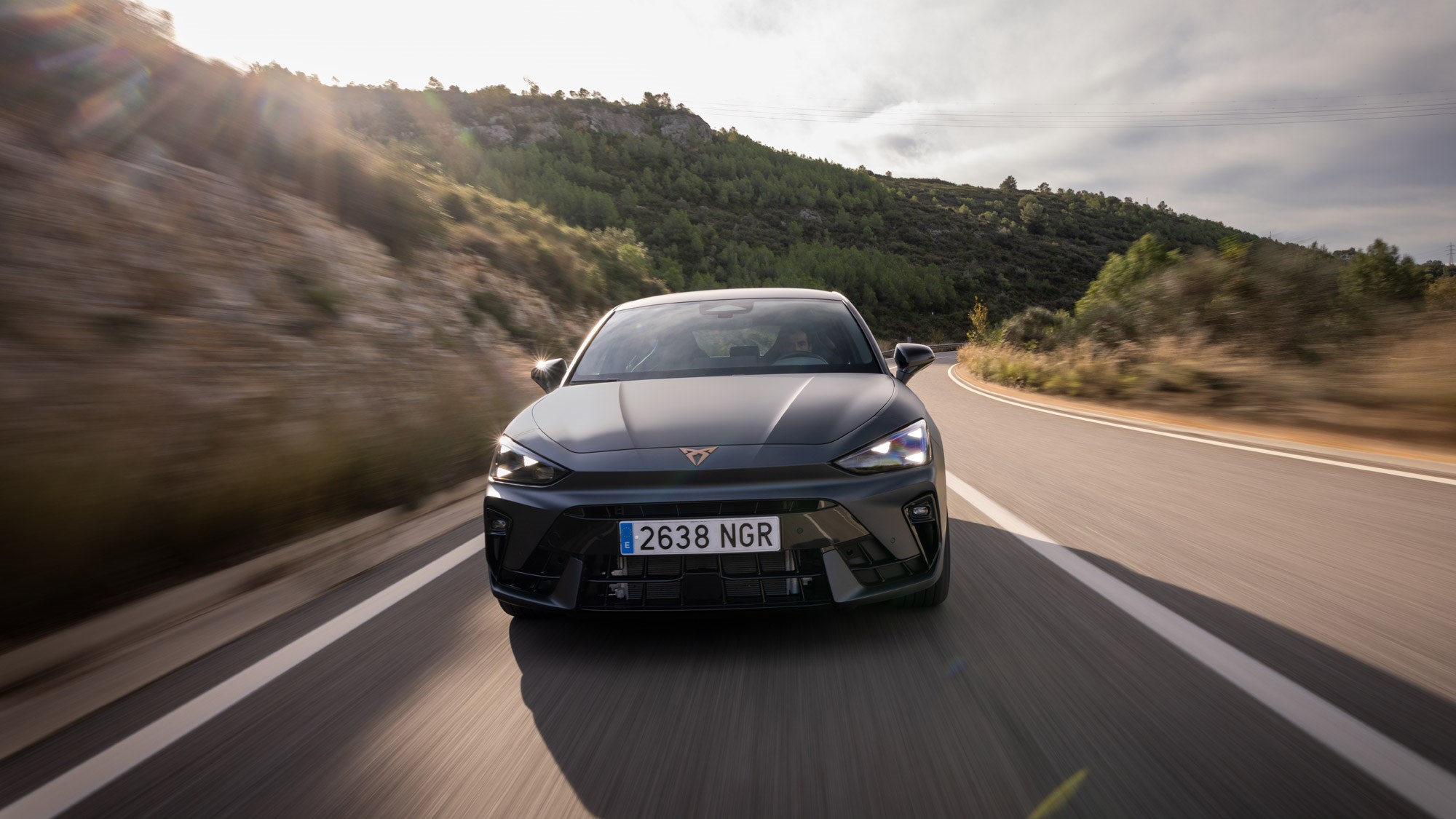
Like the Civic, this has some clever chassis technology to help it manage its power. The most impressive part is the electronic differential, which will tug the car into the apex of the corner as you apply the power (in the dry). It’s magical. And hilarious. Our test drive incorporated a closed section of road (thank you, local friendly Spanish police) that is perhaps the ultimate stomping ground for a hot hatch.
That extra power is welcome, if not particularly wanted, and the way it gets up to speed is remarkable. On bone dry tarmac it can keep up with the new five-cylinder in all but the straights, with loads of grip in the dry and minimal understeer. Pity we know that’s an almost impossible task on Britain’s usually-damp roads.
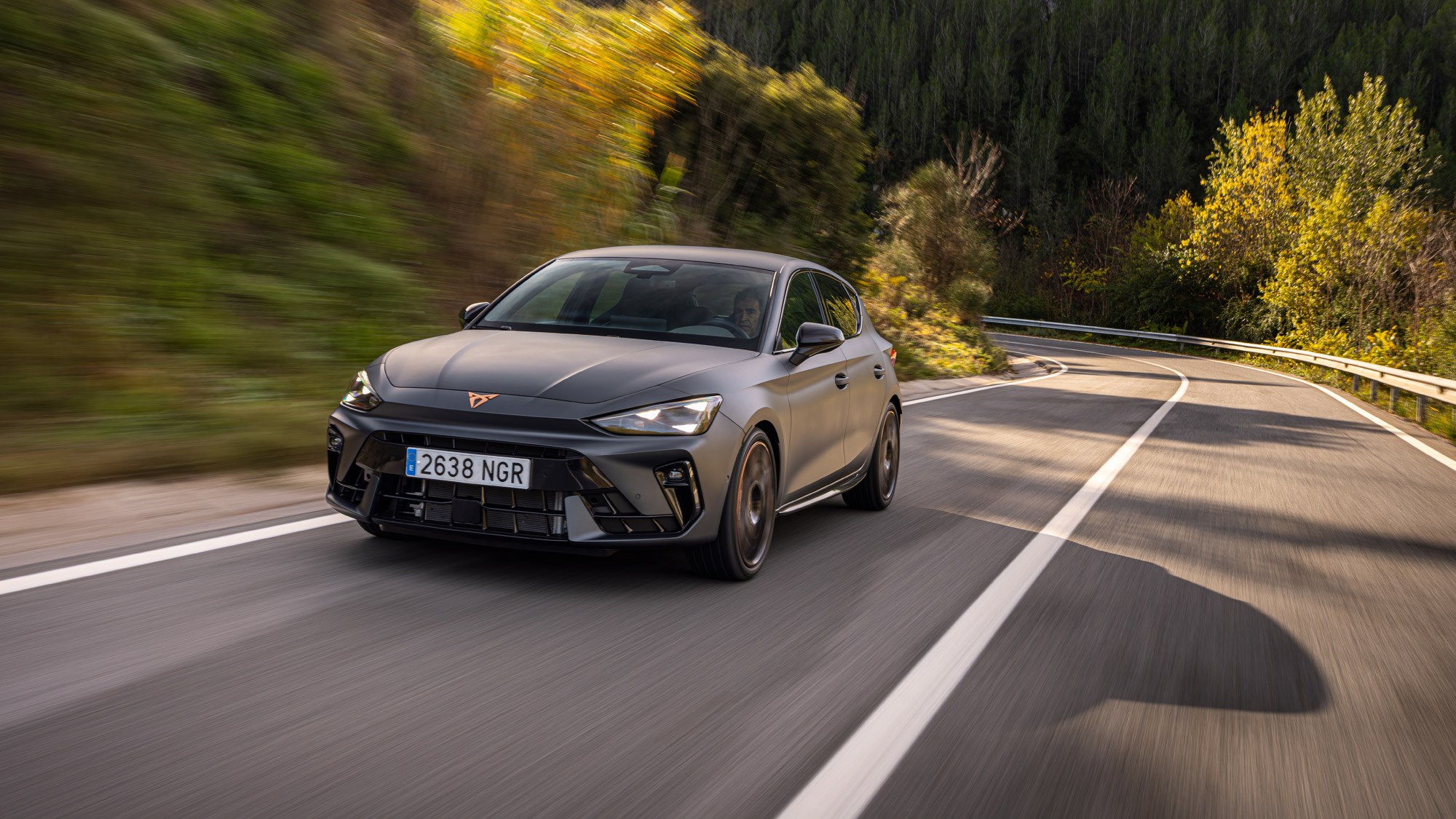
Volkswagen’s adaptive dampers deserve a special mention, too, because they do a fabulous job of keeping the Cupra’s weight in check. It isn’t a particularly hefty car at just over 1500kg (especially now that you consider there are two-tonne-plus electric hot hatches like the Ioniq 5 N to contend with), but it’s very composed on a twisty B-road. The suspension isn’t even desperately uncomfortable, even in its harshest Cupra mode.
Again, though, these are all things you can get from the GTI Clubsport and the Leon starts to make less and less sense the further down its pecking order you descend. It’ll certainly be interesting to see how it compares to the new Golf GTI Edition 50 considering they share the same power.
What about the interior?
The best bit are the Leon VZ’s ‘Cup Bucket seats’. They’re supportive and comfortable, although we would have liked them better if the adjusters would let them get closer to the floor. We like the Leon’s steering wheel, too – especially the big drive mode selector and start/stop buttons nestled on the two upper spokes. They’re fun to use.
The Leon’s touchscreen isn’t as logically laid out as the one in a Golf GTI, and it’s harder to read in bright sunlight, but it’s responsive and has everything you need. We know it’s not a new complaint, but a few physical buttons would still go a long way. Cupra seems to have toned down the copper for the VZ’s interior, too, or at least in contrast to the quite wild styling on the exterior. For what should be quite an extreme hot hatch, the interior (seats aside) just feels a bit tame. That said, the TCR will come along to change that, and likely go too far the other way with its racing harnesses and lack of rear seats.
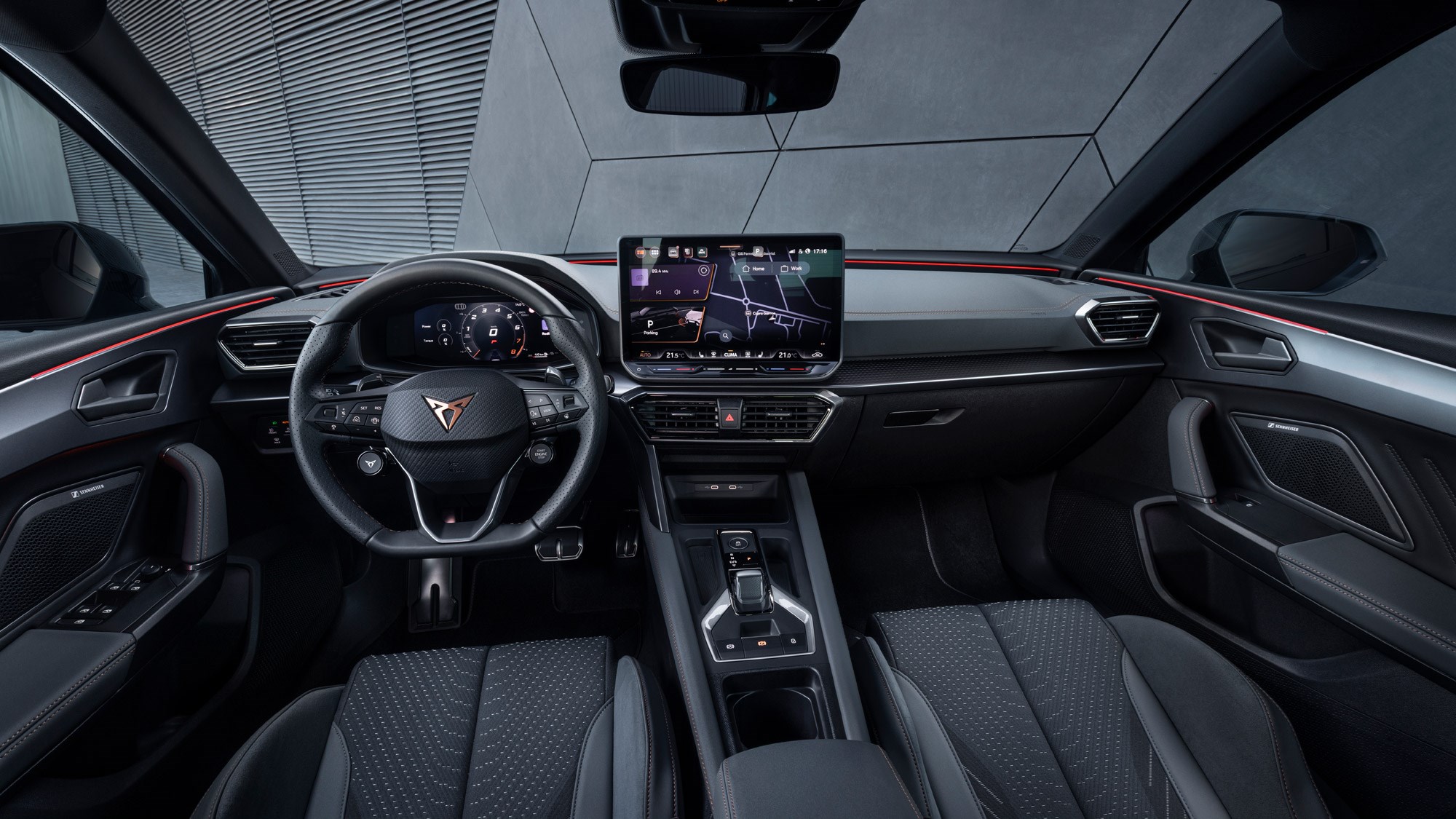
At least the rest of this VZ car is quite practical, though. You get as much space as the standard SEAT Leon, which is to say enough room in the back for a six-foot adult. There are also plenty of storage bins (including a wireless smartphone charger and door pockets with litre-sized bottle holders) and a 380-litre boot. For any stat trackers playing along at home, that’s the same as the Golf.
Before you buy
Cupra hasn’t confirmed pricing for the Leon VZ, but has hinted that it will cost around £50,000 for a VZ model, which, though expensive, is only a few hundred pounds more expensive than the current top-spec VZ3. Standard equipment will be comprehensive in classic Cupra fashion, too. Expect those fancy bucket seats, heated and electrical adjustment and an excellent Sennheiser sound system.
The trouble is, that sort of money gets you behind the wheel of faster and more capable hot hatches still. You can comfortably get a Golf R for less, and even an Audi S3 works out as slightly cheaper, albeit the equipment will be sparse compared to the Cupra.
Verdict
If you’re a child of the past, you’ll appreciate its harsher edge over the Volkswagen Golf GTI. It has slightly stiffer damping, slightly heavier steering, slightly weightier brakes and a faster automatic gearbox. These changes are only marginal but, if you’re looking for a rowdy hot hatch that responds well to a firm hand, you’ll probably be served well by the Leon.
The VZ is only a small step up, and in many ways feels surplus to requirements next to the standard 296bhp version, but if it’s only a small increment in price could be well worth considering – providing you’re one of the 50 able to get their hands on one. But don’t be too surprised if the 321bhp engine becomes more commonplace in the future.
Specs are for the Cupra Leon VZ2.