► Genesis launches new Magma performance division
► GV60 is its first car to get the treatment
► We hitch a passenger ride ahead of 2026 launch
Genesis has properly launched Magma, a new program (not sub brand) that promises to be an ‘iron first in a velvet glove,’ and it’s kicking things off with this: the new GV60 Magma. Based on the standard car but with a lashing of extra trimmings and tweakery, it’s punchy on paper: just check the 641bhp and 0-62mph sprint of just 3.4 seconds among the headline figures. That’s Ioniq 5 N territory if you hadn’t guessed yet.
It’s all well and good in presentations and glitzy reveals, but just how does the Magma program really work up in real life? And does a fusion of performance and luxury really make sense in a relatively hefty electric SUV? We’ve not been able to drive it yet, but we did get a good idea from the passenger seat at none other than the Paul Ricard circuit. How did we find it? Keep reading for our first impressions on the GV60 Magma.
What’s new?
For a start, Magma. It’s essentially the brainchild of chief creative officer Luc Donkewolke and it aims to add a performant edge to the brand – while keeping the luxury element intact. We’ve seen several Magma concepts before, but the GV60 Magma is the first one heading to production.
It’s a program surrounded by buzzwords such as ‘Athletic Elegance’ and ‘best of the best’ but it boils down to both speed, comfort and effortlessness. With that in mind there’ll be no track specials – well, besides the track specials such as the Magma GT or the WEC car. Moving on…
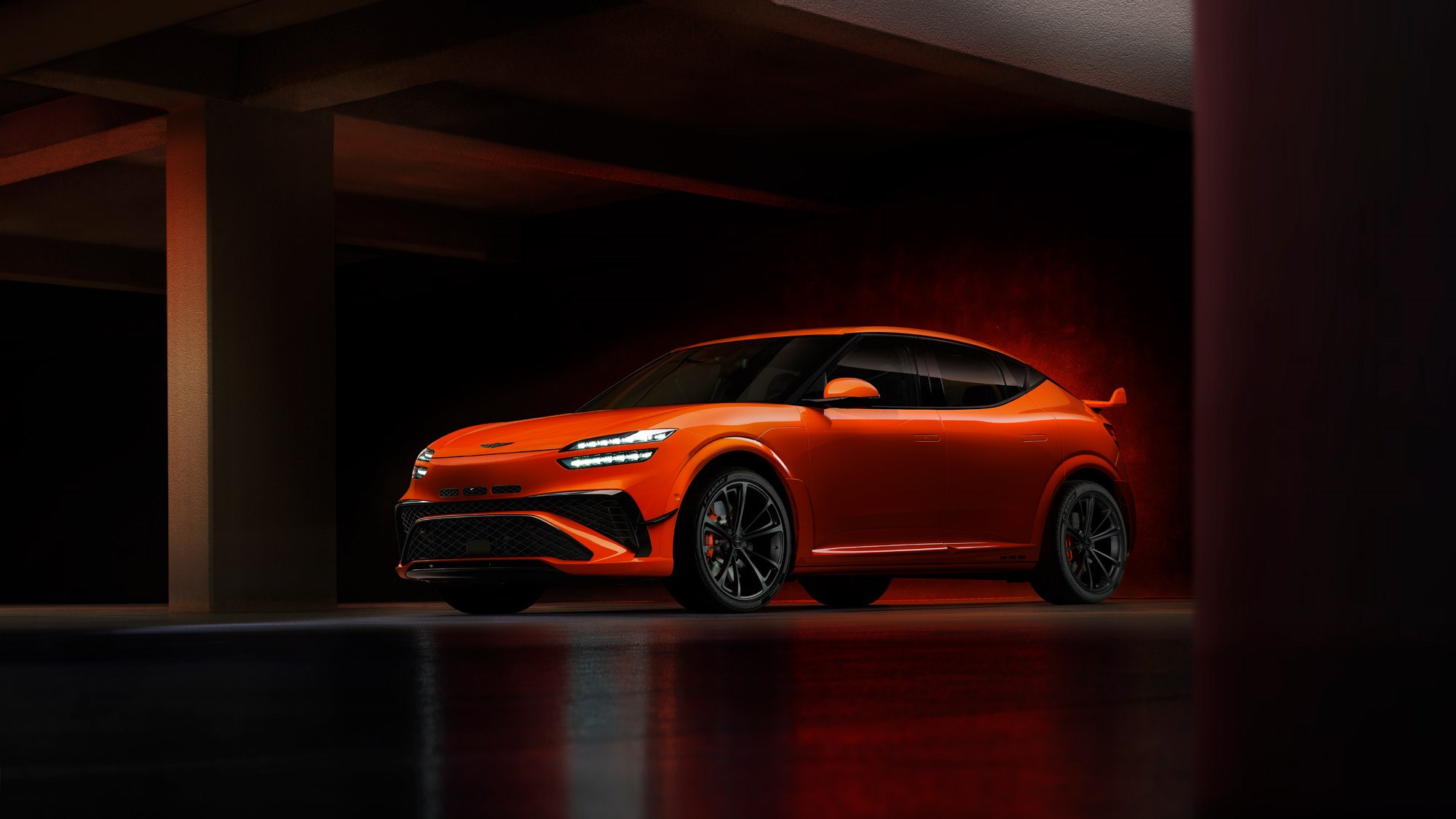
We’ll pick over the technical details of the Magma later, but the most obvious changes come with the exterior. Wider and more aggressive than the standard car, the hottest GV60 gets extra details such as triple vents (a bit like the sportier Audis) along with extra bits of aero. You’ll find some bits on the front and sides, but the biggest addition is a huge rear wing and diffuser around the rear.
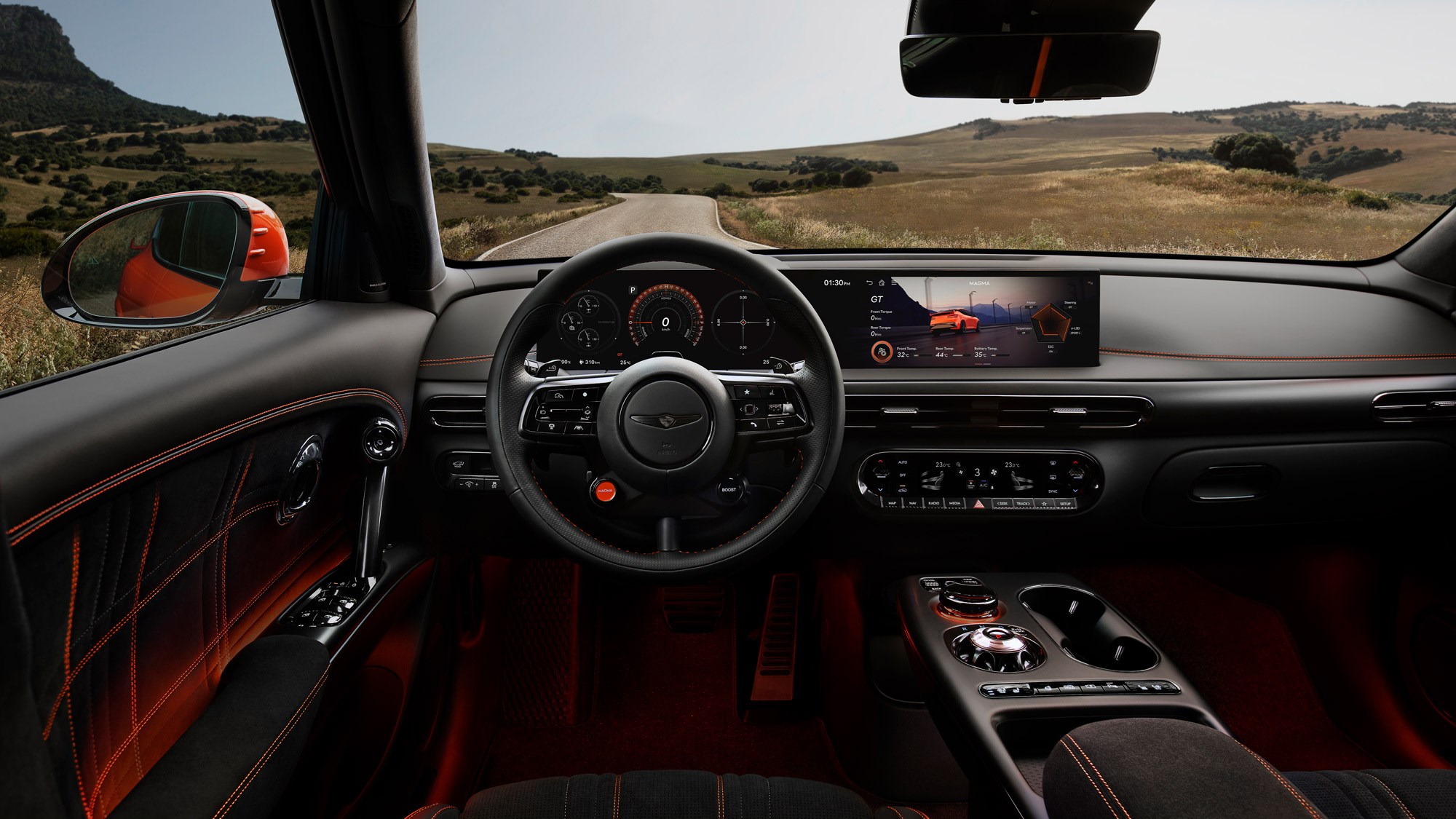
Inside you get a sportier interior and a UI that promises to put key bits of information front and centre. New software also means the GV60 Magma can make better use of its improved hardware, so there’s a Drift function as well as two new Magma-only modes: Sprint and GT. They do what you’d expect.
What about the specs?
The topline specs are impressive: most of the time, the GV60 boasts 601bhp and 546lb ft between two motors, though like many other HMG products it also gets a Boost mode. Use that and power rises to 641bhp and torque to 583lb ft. It only lasts for 15 seconds, but a combination of cooling and software improvements mean that’s five seconds longer than most HMG products. You’ll see 0-62mph in just 3.4 seconds, but keep your foot pinned and you’ll reach 124mph in just 10.9. Keep going and you’ll reach a V-max of 164mph.
Handling has been looked at too, to cope with the new power and to keep the car true to Magma’s new effortless ethos. With that in mind, the front and rear suspension has been reworked and dropped: the roll centre height is now 41.6mm lower on the front axle and 80.1mm lower at the rear. At the same time twenty extra welds and new L-shaped brackets mean torsional rigidity is up by 9.7% over the standard car. Tyres are now 275 rather than 255 to account for the extra grip and lateral load.
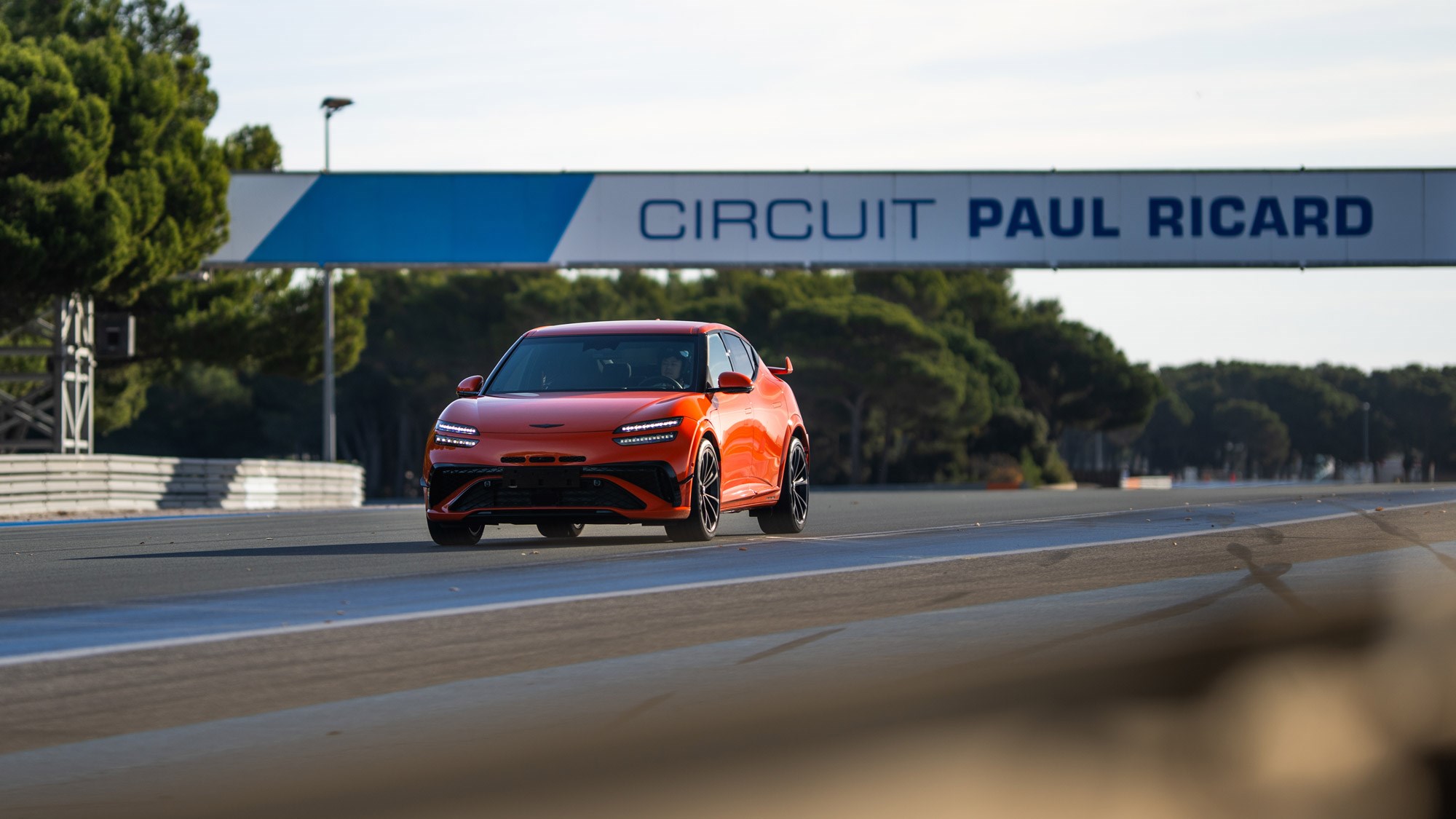
However, Genesis’ bods have done everything they can to keep the comfort whilst turning the wick up. NVH has been a huge factor, especially with larger wheels and more aero. The door sealing is different, there’s more sound deadening in the doors, more interlayer film in the windows and there’s even sound absorbing materials in the tyres.
The powertrain has been looked at to reduce the high-frequency whine you sometimes get in EVs. The whir of the gears has also been reduced with a reprofiled mesh. All these innovations surely come with a weight penalty, but it’s all a balance for Genesis.
What’s it like to ride in?
In two words: fast and clean. We rode shotgun around the Paul Ricard circuit and immediately felt the 641bhp on tap – but the most impressive aspects of the Magma appeared when we entered the first left-right of the circuit.
Our driver slings the GV60 to the apex with very little effort (thanks to the rejigged steering response) but after that, things are relatively serene. There’s almost no movement or body roll mid-corner, with the Magma’s various systems keeping the car straight and relatively neutral. Luckily, we’re kept snug by the newly bolstered seats. As we accelerate out from the corner and pin it on the exit, there’s just a whiff of oversteer before everything is neatly gathered up.
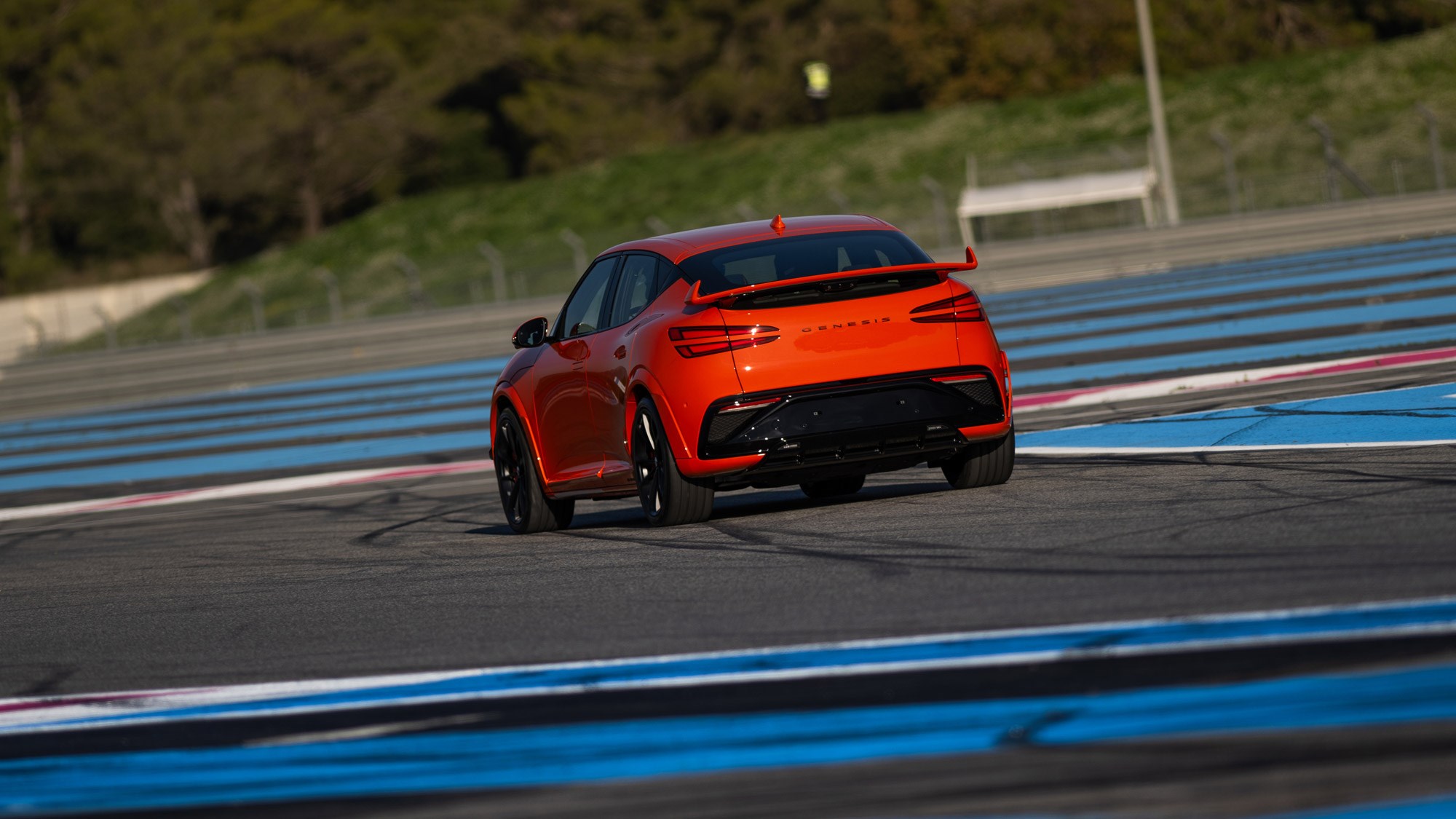
It’s the same story when our driver brakes later and is earlier on the power elsewhere in the lap: the GV60 feels pointy and positive, but not playful. Is this better than something rowdier like the Ioniq 5 N? Not for me, but Magma is about a flattering, effortless experience – and that’s what the GV60 seems to deliver. It’s little wonder the Genesis bods have had to throw in a dedicated Drift mode – without it the Magma feels extremely – if not a little artificially – planted.
The engine noise and the virtual shifting system seems a bit more visceral and urgent in Genesis than the other e-GMP products – perhaps because of the speeds we’re going, but also because of the rather gruff V6 sound it pumps through the cabin. The experience feels like an ICE hot lap. It was also hard to detect tyre squeal over the fake V6 – though it was loud.
What about the interior?
We didn’t spend a great deal thinking about the interior on our hot lap, but we did catch a glimpse of the Magma exclusive UI. Spread over two screens there’s a good amount of information in total to take in, but the key things are cantered in front of the driver. The dials are clean and basic, and work with the OLED display for strong readability.
Before you buy?
The GV60 Magma should appear in Europe first in 2026 and come to the UK soon after. We’re not sure how much it’ll cost yet, but it’ll certainly command more than the £67,715 of the current GV60 range-topper. We’re also expecting it to be priced higher than its Hyundai Ioniq 5 N and Kia EV6 GT stablemates, as is the way with other Genesis products.
First impressions
The Magma brand feels counter-intuitive on paper, especially when you have strong brands such as Hyundai’s N within the group. After one lap with the Maga, I’m still not totally sure if I get it, but it’s an impressively engineered product, nonetheless. It seems to want to do everything, but in isolation and over the limited time I had in the passenger seat, it does seem to deliver. We’ll know a lot more once we get behind the wheel.