► The controversial one – Alpine does an electric SUV
► Up to 464bhp, 0-62mph as low as 3.9 seconds
► Excellent combination of ride and handling
Alpine is a brand built on cult status – its A110 is a car beloved by purists, a dainty dancer that keeps enthusiasts swooning. So how do you follow up a classic? For Alpine, the answer isn’t another sports coupé (or at least not yet), but an electric duo. First came the A290 hatchback and now it’s the A390: a family-friendly, all-electric fastback designed to step out of the shadow of the brand’s heritage and into some bigger sales. That’s the theory, at least.
It’s controversial, sure – a move as seismic as when Porsche launched the Cayenne two decades ago. But if you want a proper European sales footprint, you need a bigger stable.
At a glance
Pros: Ride quality, styling, build, handling balance
Cons: Rear seat space, badge lacks German snob appeal, not as wild as some rivals
What’s new?
Everything, really. The A390 is Alpine’s watershed moment, its first EV and its first step into the lucrative crossover/fastback market. It’s not strictly an SUV – Alpine calls it a ‘sport fastback’ – and with its eye-catchingly low roofline and taut stance, it’s refreshingly different from the boxy norm.
And yet, to make the numbers add up, Alpine has drawn from the parts bin. Underneath, it rides on the AmpR Medium platform (shared with the likes of the Renault Megane E-Tech), but the transformation goes way beyond badges and plastics. The track is wider, there’s a bespoke steering setup, chunkier brakes, and, crucially, an all-new tri-motor arrangement. Even the battery is homegrown in France.
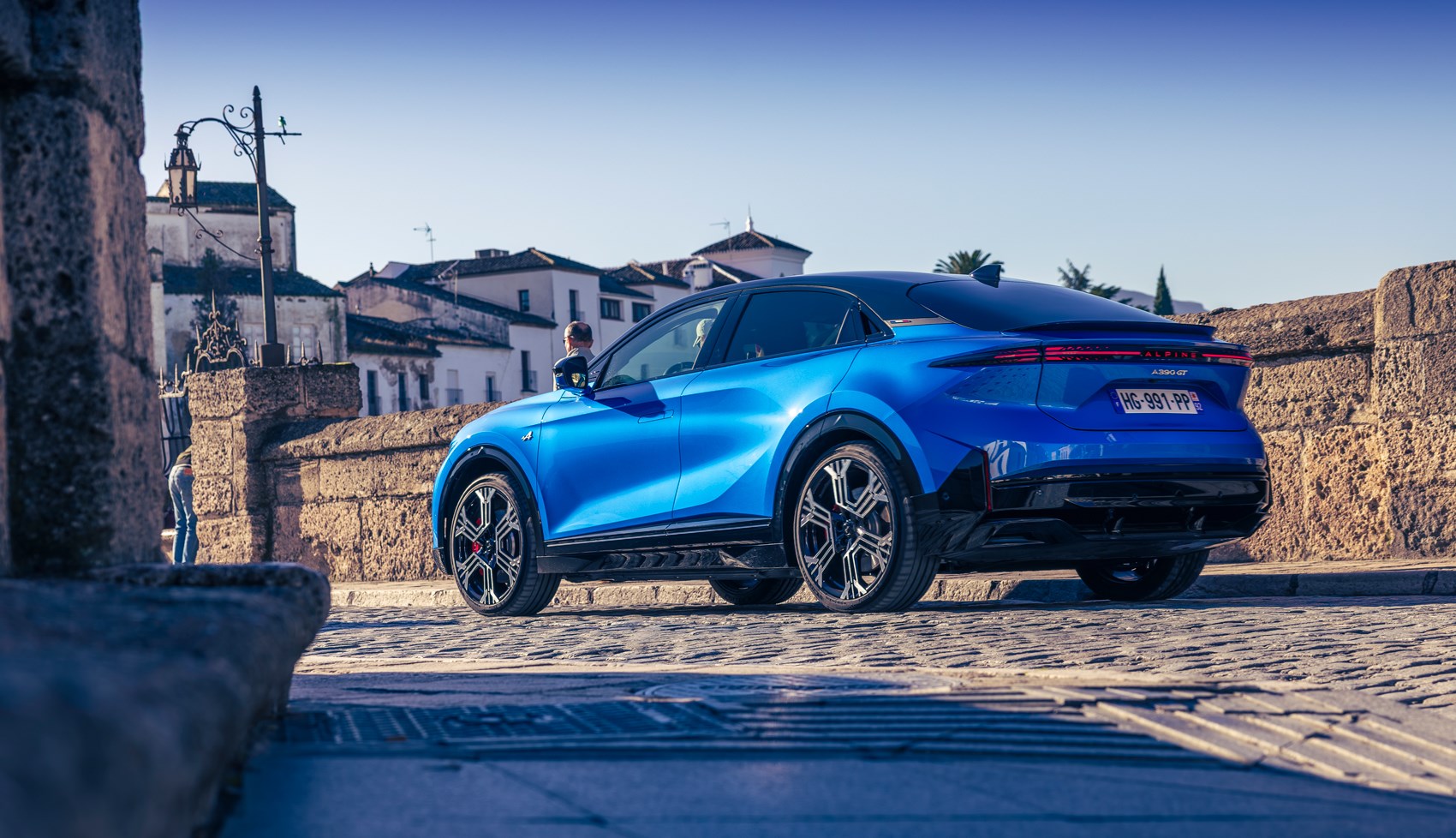
This is also the first Alpine where everyday usability is central to the brief: more room, more tech, more refinement, more space for kids and clobber.
What are the specs?
Power outputs come in two core flavours. The standard GT packs a healthy 395bhp and 479lb ft of torque; the hotter GTS ups that to 464bhp and 596lb ft. Both harness a 400v, 89kWh battery, delivering power to all four wheels via three motors: two permanent magnet jobs on the rear axle and an induction motor up front. Each rear motor gets its own inverter and reduction gear, allowing real-time active torque vectoring. That, plus a stubby 2708mm wheelbase (way shorter than some rivals), should bode well for agility.
Punchy? Definitely. The GT will crack 0-62mph in 4.8 seconds, with the GTS dialing it down to 3.9 – enough to shrug off most traffic, though shy of the stopwatch-bragging benchmarks of rivals like the Hyundai Ioniq 5 N. Kerb weight is about 2.1 tonnes, which is chunky when compared to the A110 but not overly fat in EV terms.
How does it drive?
Alpine promised to put pleasure above raw pace, and it shows. There’s exhilaration here, but it comes through fluency and balance, not brute force. The A390 flows, controls, and communicates, giving you the sense that – as the tarmac tightens – this is a car keen to involve, not intimidate.
The clever torque vectoring is a highlight: it rotates the A390 enthusiastically into corners, masking its heft and keeping things agile. The short wheelbase helps, too, letting you thread the Alpine along mountain hairpins or B-roads with surprising composure. The ride is quite firm. On the UK’s battered roads, you feel every lump, bump and ridge but, crucially, it’s never uncomfortable. And its body control is exemplary over mid-corner bumps, washboard surfaces and sharp crests. Motorway work is brisk and quiet. Despite the firmness, the ride quality is arguably best-in-class for an EV at this price, treading that fine line between cosseting and connected.
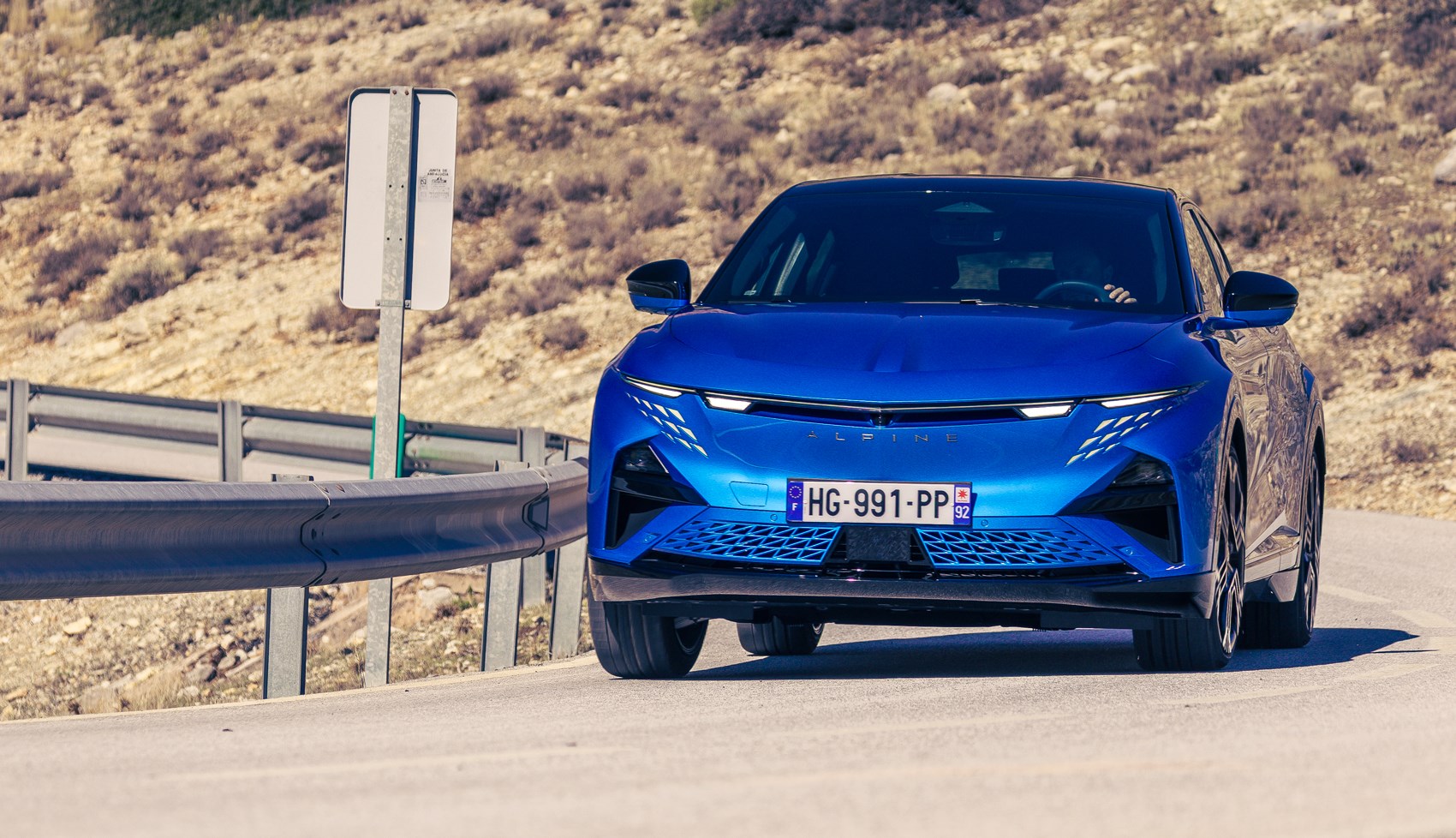
The key thing is the fluidity. It does normal very well – even on our car’s 21-inch wheels, the larger of the two options – but it can also be exciting when it needs to be. Turn it into track mode (there are five different drive modes and four different levels of brake regen, both controlled by buttons on the steering wheel) and it almost gets playful. Not wild like the Ioniq 5 N, but definitely up for some enjoyment.
There was one point in our test when I leaned on the accelerator through a long right hander and the rear stepped out ever so slightly. Not in a dangerous or surprising way, just with the sense that there’s some real agility here. The car worked with you, with none of the digital disconnect that can blight heavy EVs.
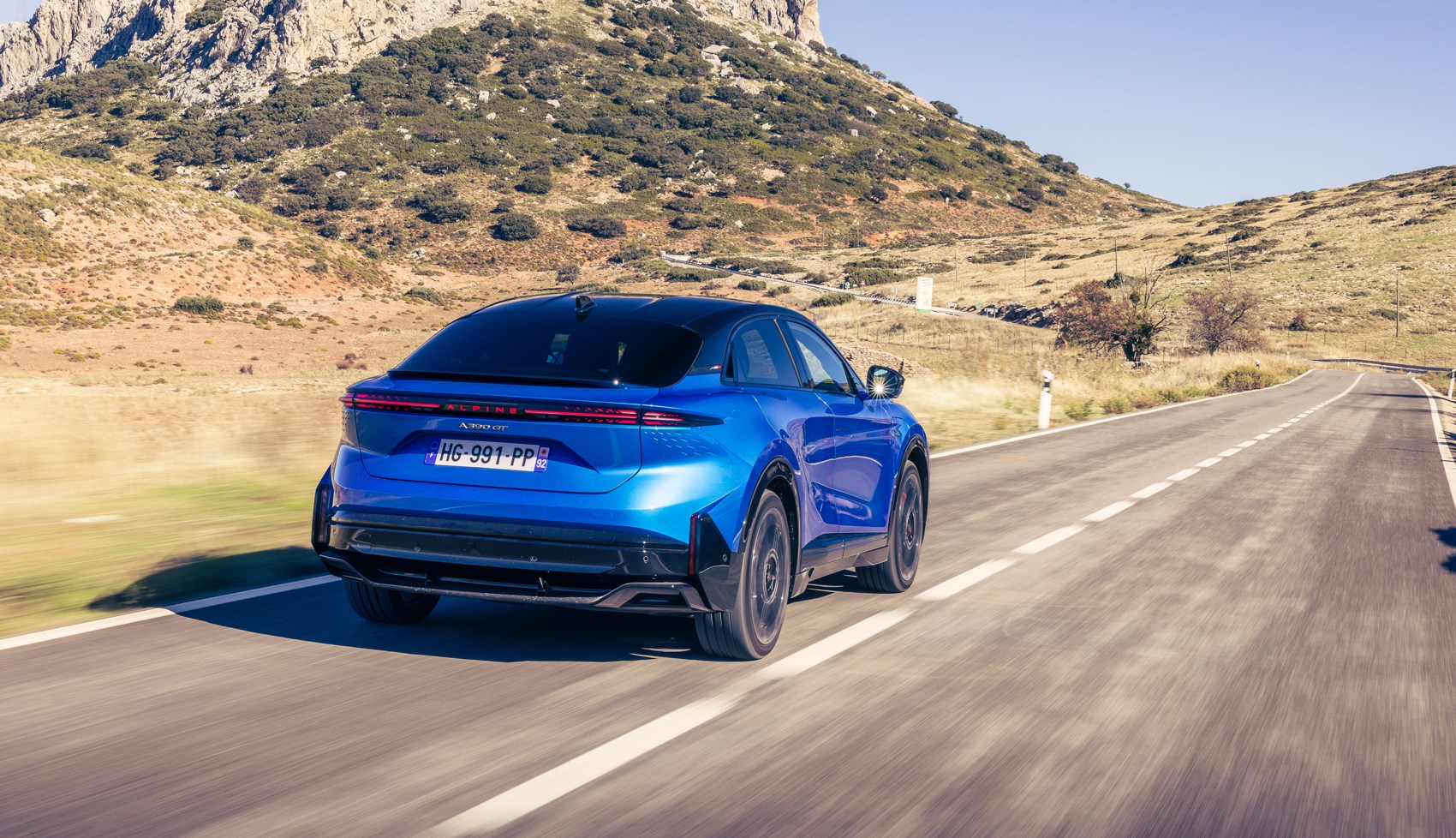
It’s not an electron-fuelled A110, but it’s got real spirit, and a balance between normal and intriguing that feels… well… Alpine.
What’s it like inside?
Much of the switchgear will be familiar to anyone who’s set foot in a modern Renault, but the sum of the design changes add up to make this feel much more than a rebadged Megane. Alpine’s flourishes – grained surfaces, sharp blue accents, and sculpted seats – give the A390 an identity of its own. Fit and finish feels excellent.
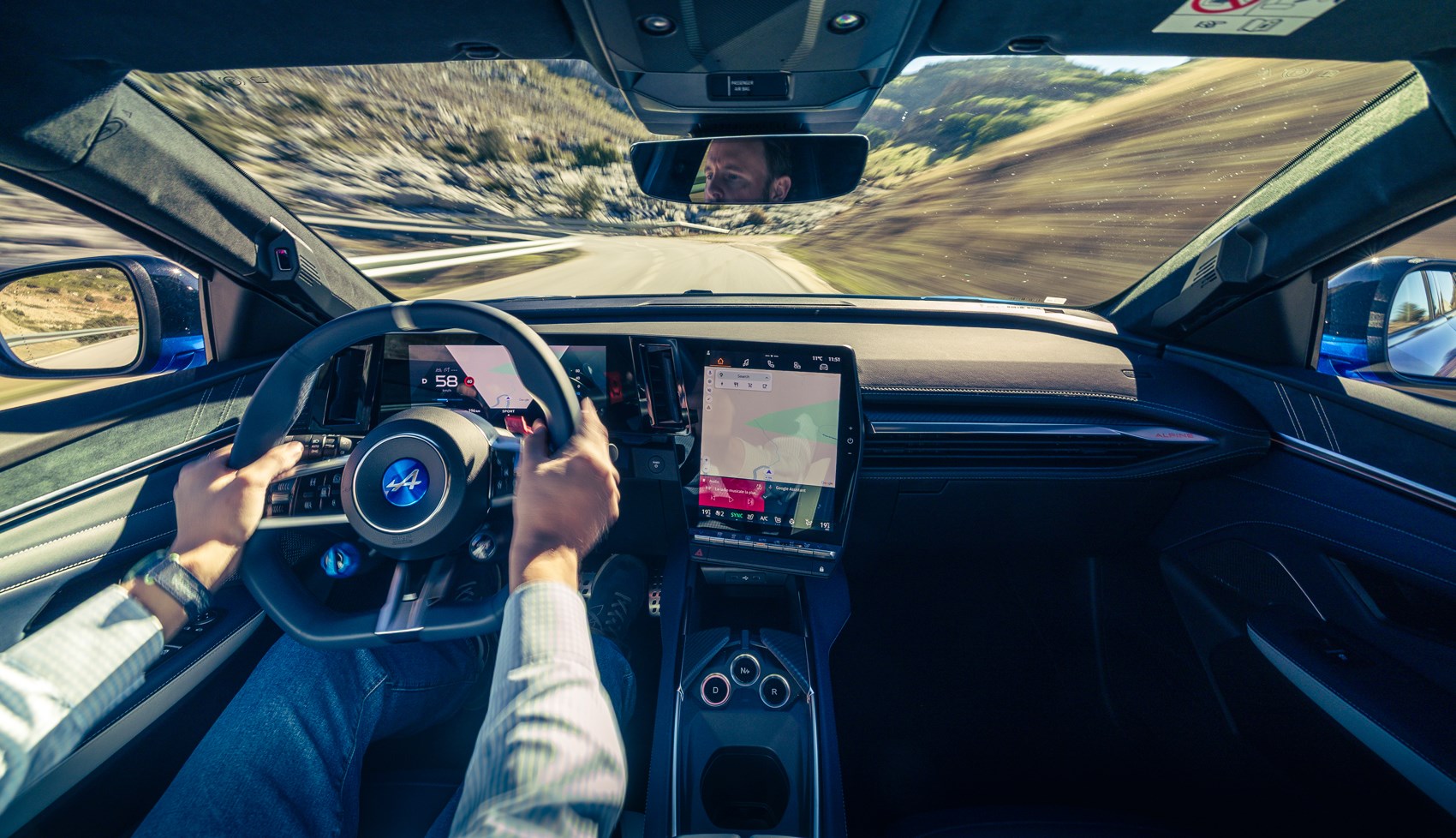
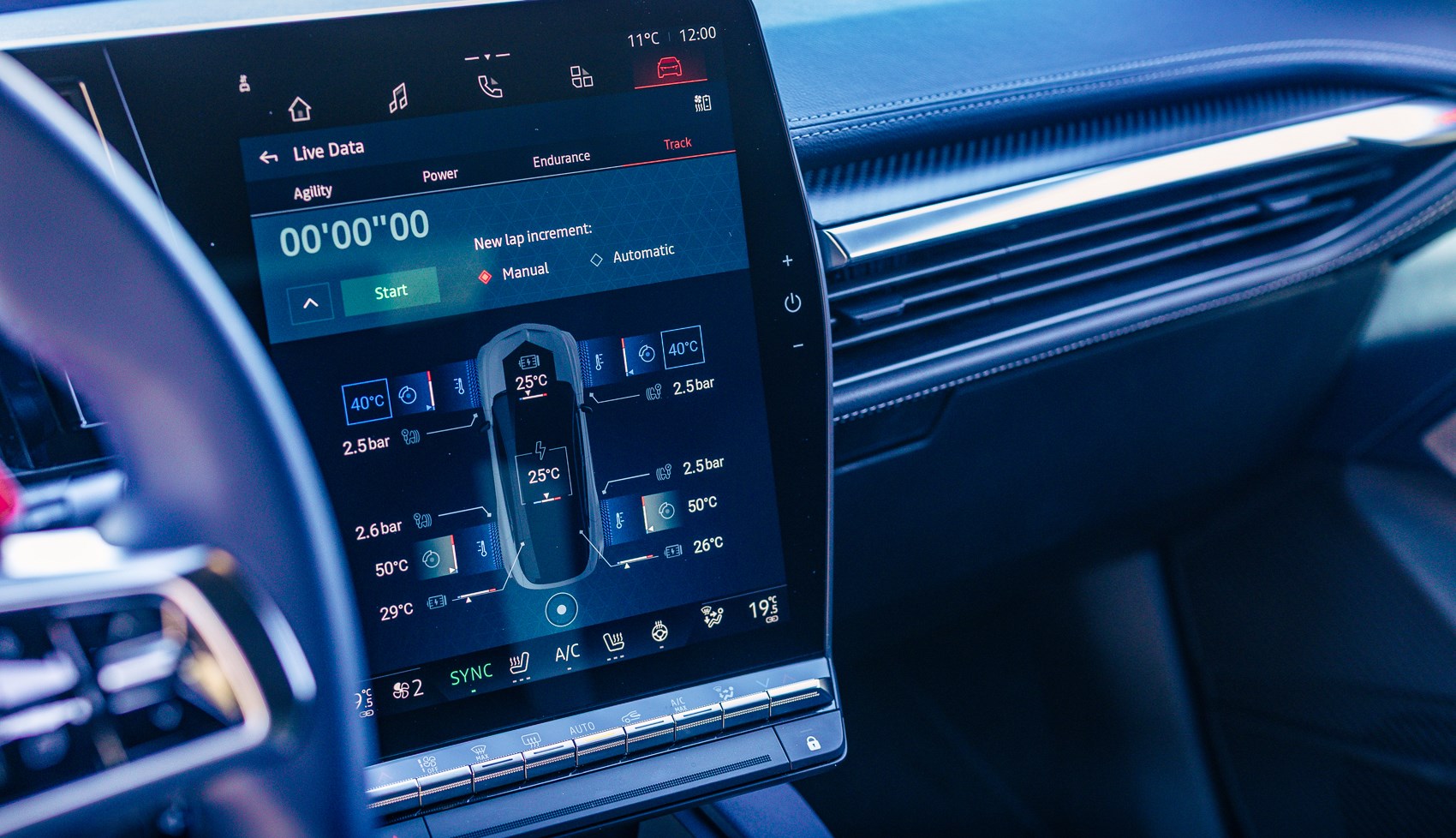
The Google-based, 12-inch touchscreen is slick and responsive, and works well with the physical climate control buttons located underneath. Delve into all the sub menus and you’re greeted with a system that can record live data and set challenges to earn bronze, silver or gold ‘badges’, all of which can be downloaded to your phone for analysis afterwards. I’m not sure how often I’d use it, partly for time reasons and also because a lot of it is best off within the confines of a track. But hey, it’s digi…
The rear seats? Let’s call them adequate. They’re contoured and supportive, but head and toe room are tight for taller passengers. Anyone over six foot might wish for more space after a while. Up front, it’s airy and focused, with great visibility and that essential ‘specialness’ you want at this price.
Practicality isn’t forgotten at the rear: 532 litres of boot space put it 52 litres up on the Hyundai Ioniq 5 N.
Before you buy: trims and rivals
Choice is simple: GT or GTS, with the latter bringing extra punch alongside the inevitable price bump. Exact prices are pending, but expect entry at around £60k (with the GTS around £70k). In today’s surreal EV market, it feels not unreasonable.
The A390 GT is pitched in a niche of its own. No direct rival really fits the bill: it’s punchier and more captivating than an Audi Q4 e-tron, yet it doesn’t have the chest-thumping cachet (or expense) of a Porsche Macan Electric. The Hyundai Ioniq 5 N and Ioniq 6 N are wilder, more extroverted, but less cosseting. The A390 offers a slice of something different – more dynamic than the some of the Germans, but more composed than the Koreans.
Verdict
This is a make-or-break moment for Alpine. The A390 isn’t a traditionalist’s delight in the way the A110 is, but it’s essential for the brand’s future. Critically, it delivers. There’s genuine Alpine DNA woven into the EV architecture: the steering is alert, the ride deft, the drive involving. It’s quick but not lunatic, practical but not soulless, distinctive yet useable. The only missing piece? That elusive badge snobbery – it doesn’t (yet) carry the cachet of big-name rivals to the wider population, and that may limit its reach.
But for those prepared to look outside the usual marques, the A390 is a very credible, very different take on the electric fastback formula. It’s not a sector-definer, but it enriches what’s come before it with wholesome Alpine character.
The A390 deserves to be far more than just a numbers filler on Alpine’s balance sheet. It’s a statement of intent – and, crucially, a genuinely desirable family EV.