► The Tamiya Mini returns with an all-new chassis
► Can be built front or rear-wheel drive
► Adjustable wheelbase to suit different bodies
Tamiya has such a long history of building radio-controlled kits of the original Mini Cooper, the full-sized version was still in production when the first RC car left the factory. The original 1994 M01 chassis was a clever design, allowing front or rear wheel drive depending on how you built it up.
It was an interesting feature that disappeared on the later M-03, M-05 and current M-07 chassis, but returns on the MB-01. With the M07 very much Tamiya’s racing chassis, the MB-01 is more for casual running with the ability to completely change how the car handles. If the idea of a rear-wheel drive Mini isn’t for you, classic Alpine and Abarth bodyshells are available.
The MB-01 is one of Tamiya’s more affordable 1/10th scale cars, albeit no cheaper than the larger and four-wheel drive TT-02. As usual, you get a motor and electronic speed controller in the kit, but you’ll need to add your own radio gear, battery, charger and paint. Expect to spend two or three evenings building the chassis, and a bit longer to paint and sticker up the bodyshell.
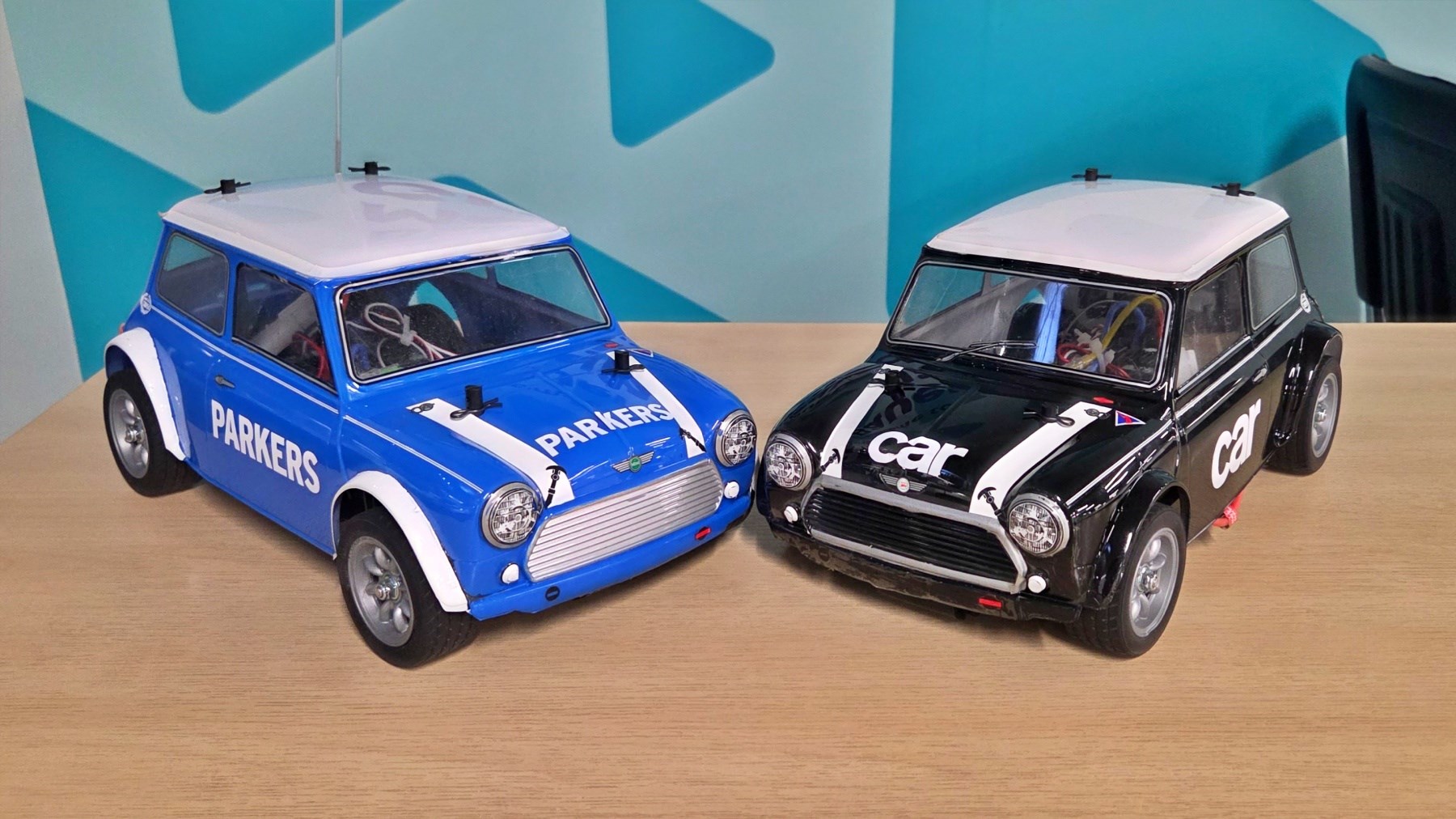
To find out if the Tamiya Mini Cooper Racing is any good, we built two of them and raced them around our office. Further testing was carried out on the emptiest carpark I could find.
Tamiya MB-01 Mini Cooper Racing
Pros
- Easy to follow instructions
- Can be built front or rear-wheel drive
- Detailed bodyshell
- Lots of upgrades available
Cons
- Lots of play in the suspension and steering
- Imprecise handling
- Suspension falls apart too easily
- Tyres rub on the bodyshell
Features
- Electronic speed controller and motor included
- Battery, charger, radio gear, paint and tools needed
- Adjustable toe angle front and rear as standard
- Front or rear-wheel drive
The build – MB-01 chassis
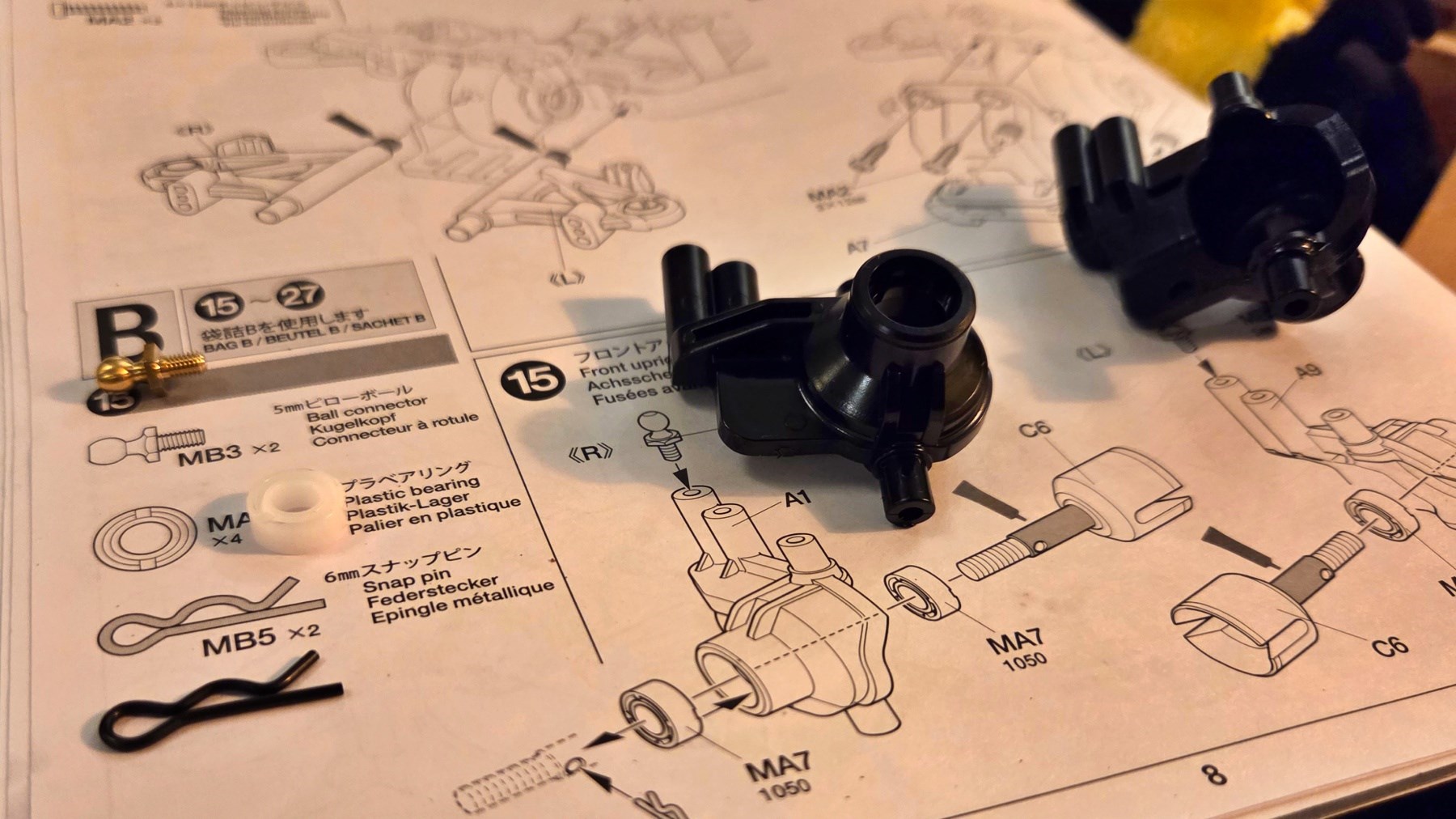
You won’t find a better instruction manual than one of Tamiya’s, and all the components you need are marked clearly. I’d still recommend giving the manual a read before starting, and it’s worth getting organised. A few trays for parts and a chopping board for trimming plastic will be handy.
You get a couple of tools in the box, but most you’ll have to dig out of the shed. You’ll need a crosshead screwdriver (a standard Ikea one works pretty well, but Tamiya’s own is best), pliers, side cutters, a craft knife, superglue and scissors. Tamiya includes a 1.5mm allen key and a four-way wrench for nuts and bolts.
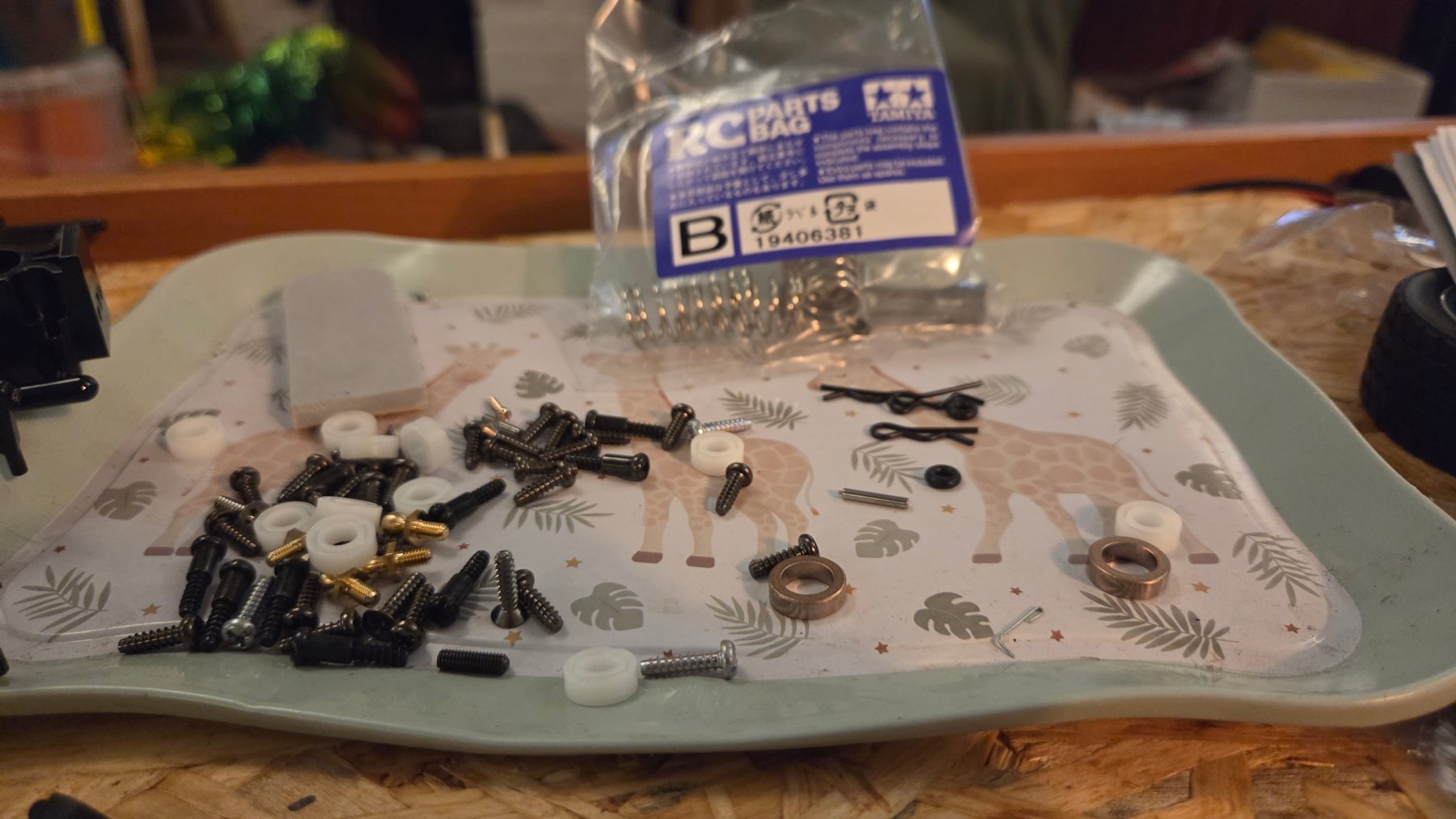
Plastic parts come on a sprue where a number of components are on one mould. I use side cutters to snip them off as cleanly as I can, then use the knife to trim away any excess. Remove only the parts you need so you can still see what number the other components are. To make life even easier, hardware is shown life size in the manual to make sure you get the right length, and there are pointers for where to grease and glue.
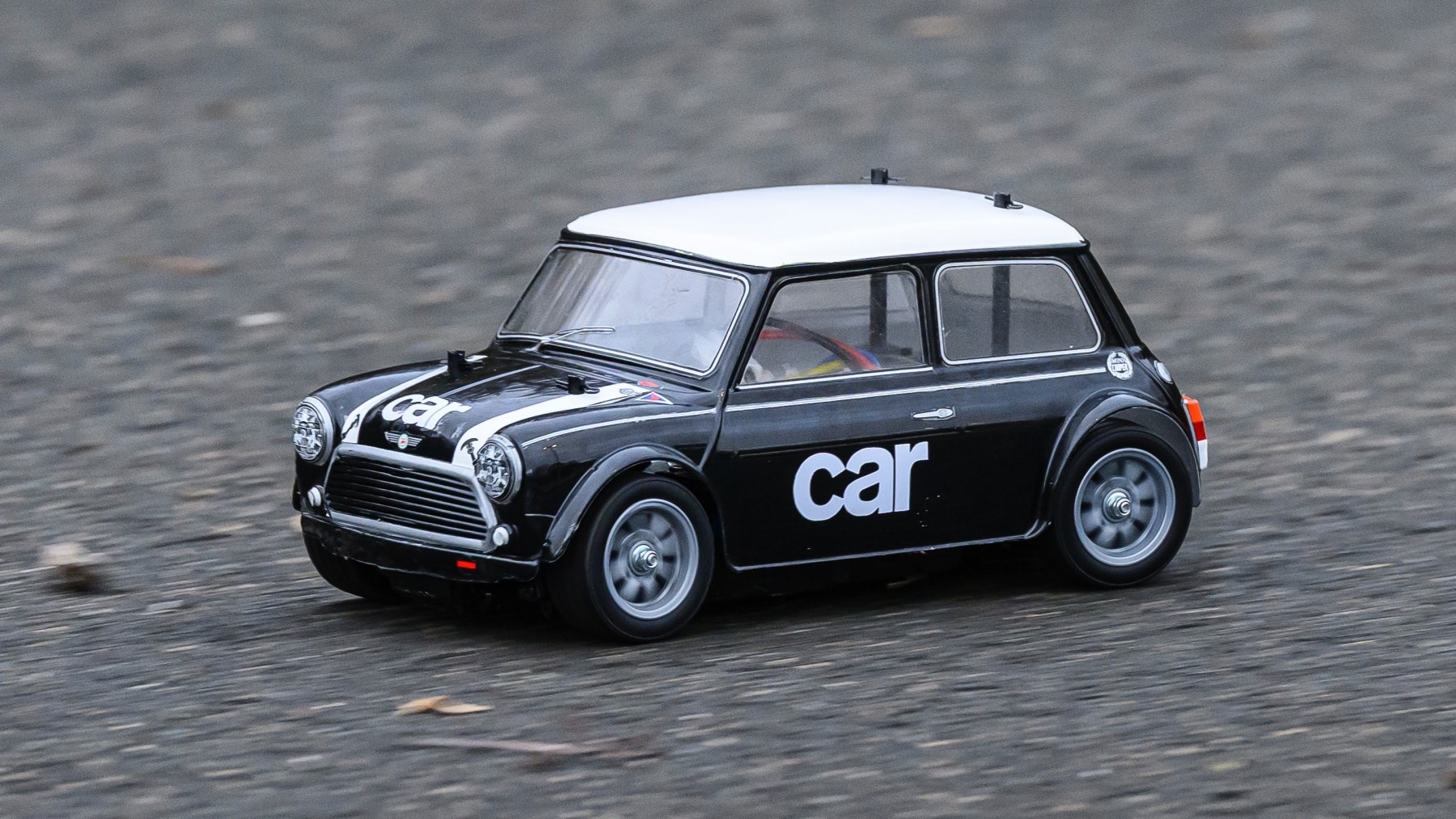
I have deviated from the standard build in a couple of small areas. Firstly, I have replaced all the plastic and metal bushings that the axles run on with metal ball bearings. This improves runtime and speed for around a tenner, and will reduce wear and tear, too. Secondly, I added some thin shims to reduce play in the suspension arms, and thirdly I went off script on the bodyshell with a different colour and some custom CAR stickers.
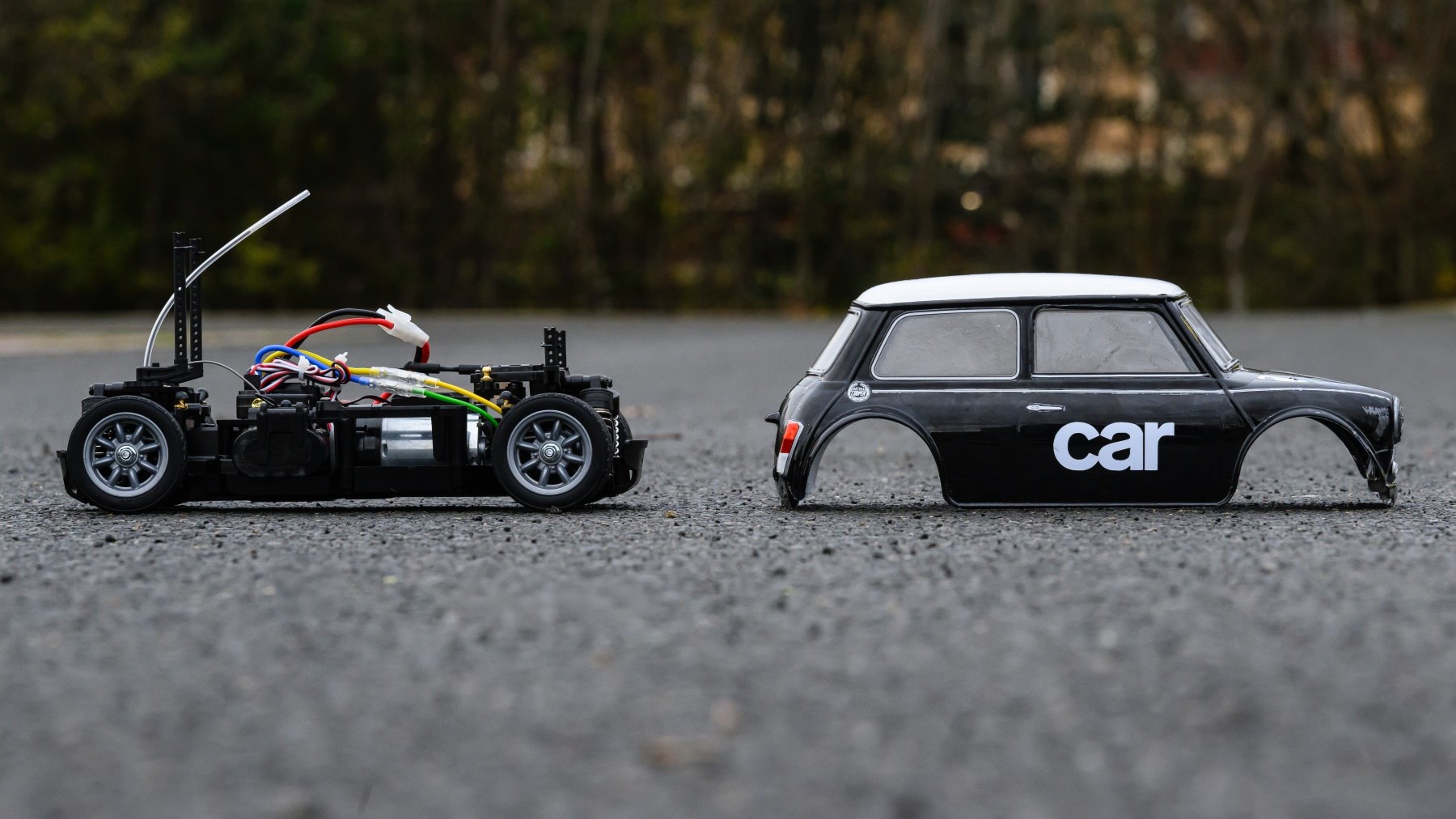
It’s certainly a more complicated kit to build than the TT-02 touring car. Instead of a single-piece bathtub chassis, the MB-01 consists of front and rear assemblies that screw together in a few different lengths to suit different bodyshells and tune the handling. The short wheelbase on this Mini is great for agility, while the longer Citroen DS kit is better for stability.
A separate instruction sheet to the manual shows you how to build all the different configurations of the chassis, and all the bits you need are in the box. It’s a nice touch that certainly gives you the opportunity to completely change how the car drives, but it feels like this has come with a penalty.
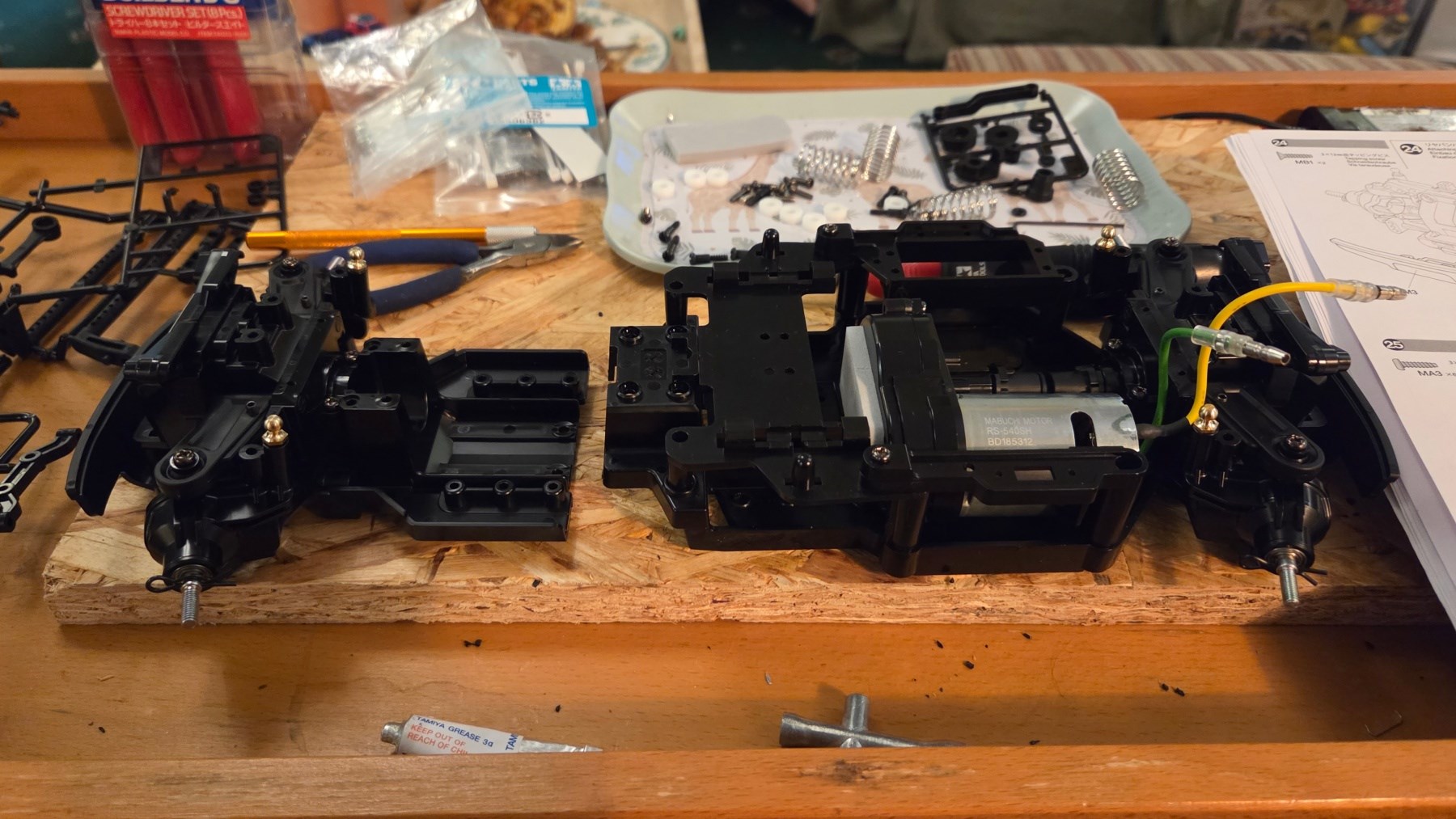
The complex construction can at times frustrate during the build, and there’s an awful lot of play in the suspension and steering. If I hadn’t previously built the related BT-01 911 Carrera RSR, I might have assumed something was wrong, but that car also suffers from plenty of slop that negatively affected the handling.
Thin Traxxas shims (part number 1985) on the suspension arms took much of the play here and are well worth having. However, the steering issues would require all new balljoints, a beefier servo saver and low friction metal suspension balls instead of the kit plastic ones. Even then, you can see the bit of plastic the steering mechanism attaches to flexing in use, while too much lock makes the whole chassis bend.
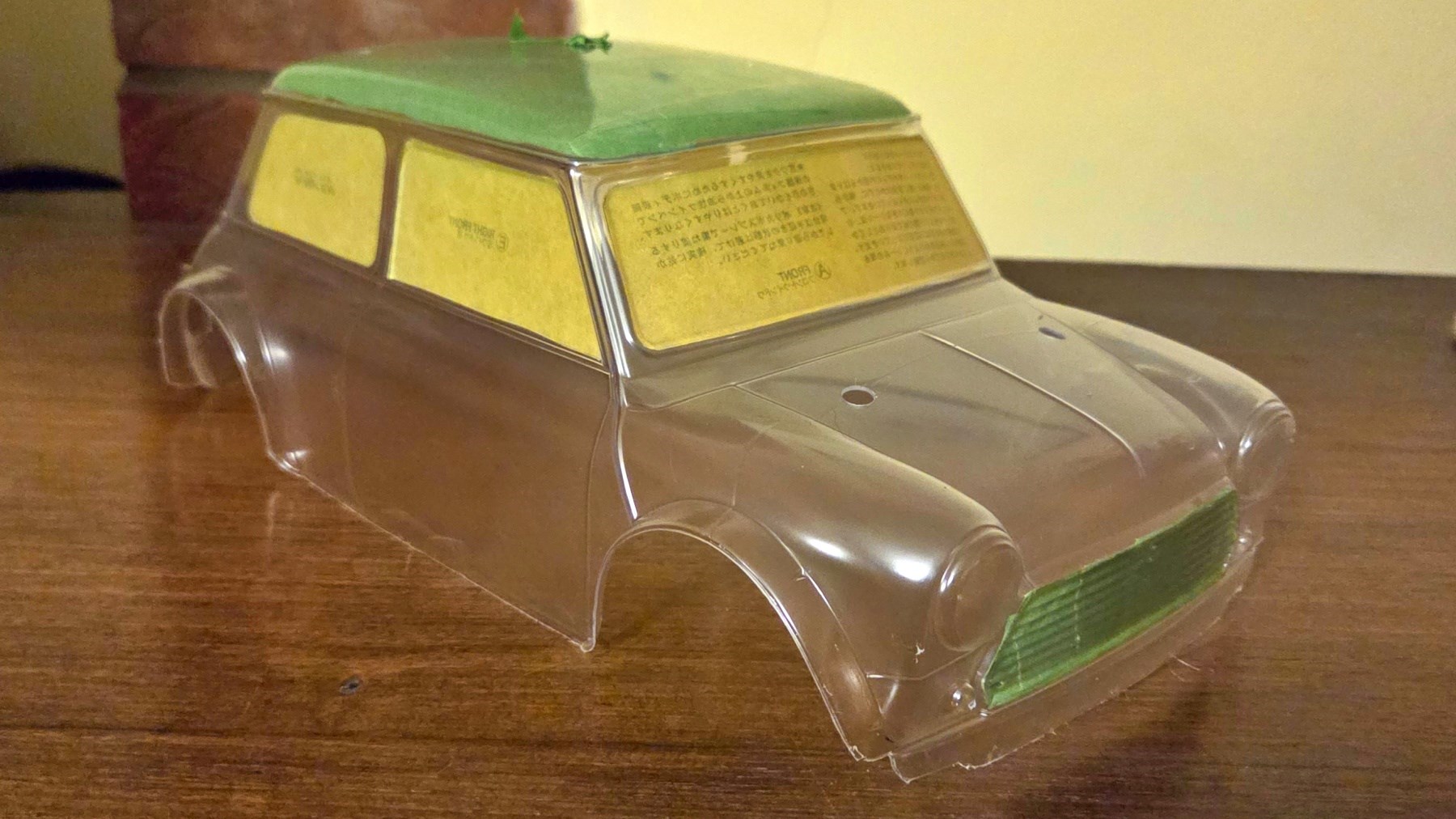
Tamiya’s detailed Mini shell comes pre-drilled for the body posts and the wheelarches are pre-cut, too. I use a pair of scissors to cut out the rest and then sand any sharp edges or wobbly bits until smooth. Then it’s time to clean, mask and spray, with black paint being used instead of the recommended blue. There aren’t that many stickers, but you’ll still spend hours carefully putting them on. I’d recommend using a hairdryer to heat them up as you’re sticking them down for tricky areas like the lights and grille.
I’m not the best masker, so I was glad to see a white stripe that goes around the roof to hide the fuzzy line I’d left. The lesson here? Make sure you use fresh tape and smooth it down properly rather than dig out a roll that was at the bottom of a toolbox. The finished result looks great just sat on the shelf. It’s low and moody with no bumpers like something you’d see at the Goodwood Revival, and the wide Minilite wheels finish it off perfectly.
The drive
This is a little hooligan of a car that’ll happily spin up its front tyres on grippy carpet. That’s with a regular 7.2v NiMh pack fitted, so I didn’t feel the need to try a punchier 7.4v LiPo battery. If you do want more speed, different gearing is available and there are loads of different motors available, too.
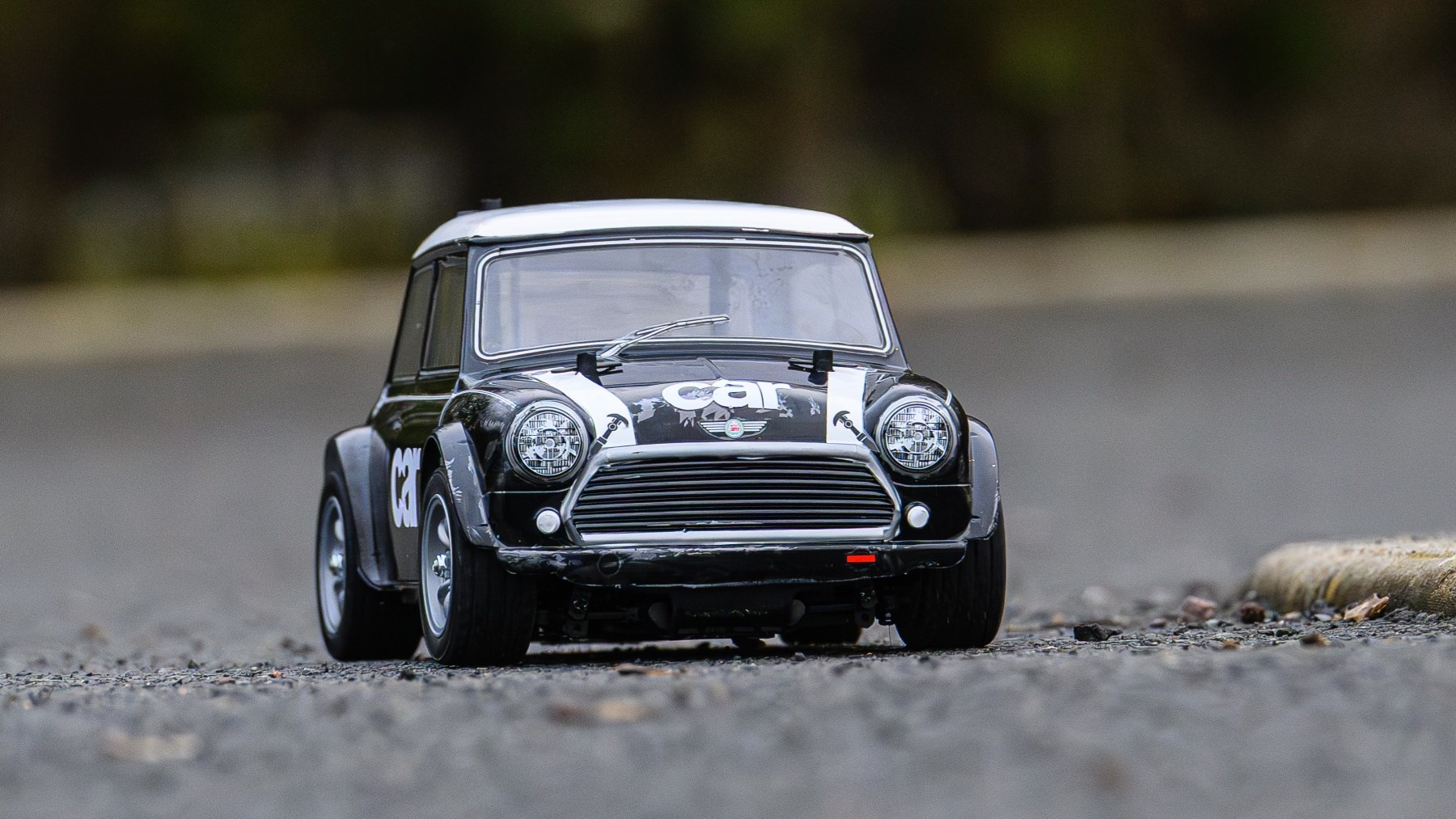
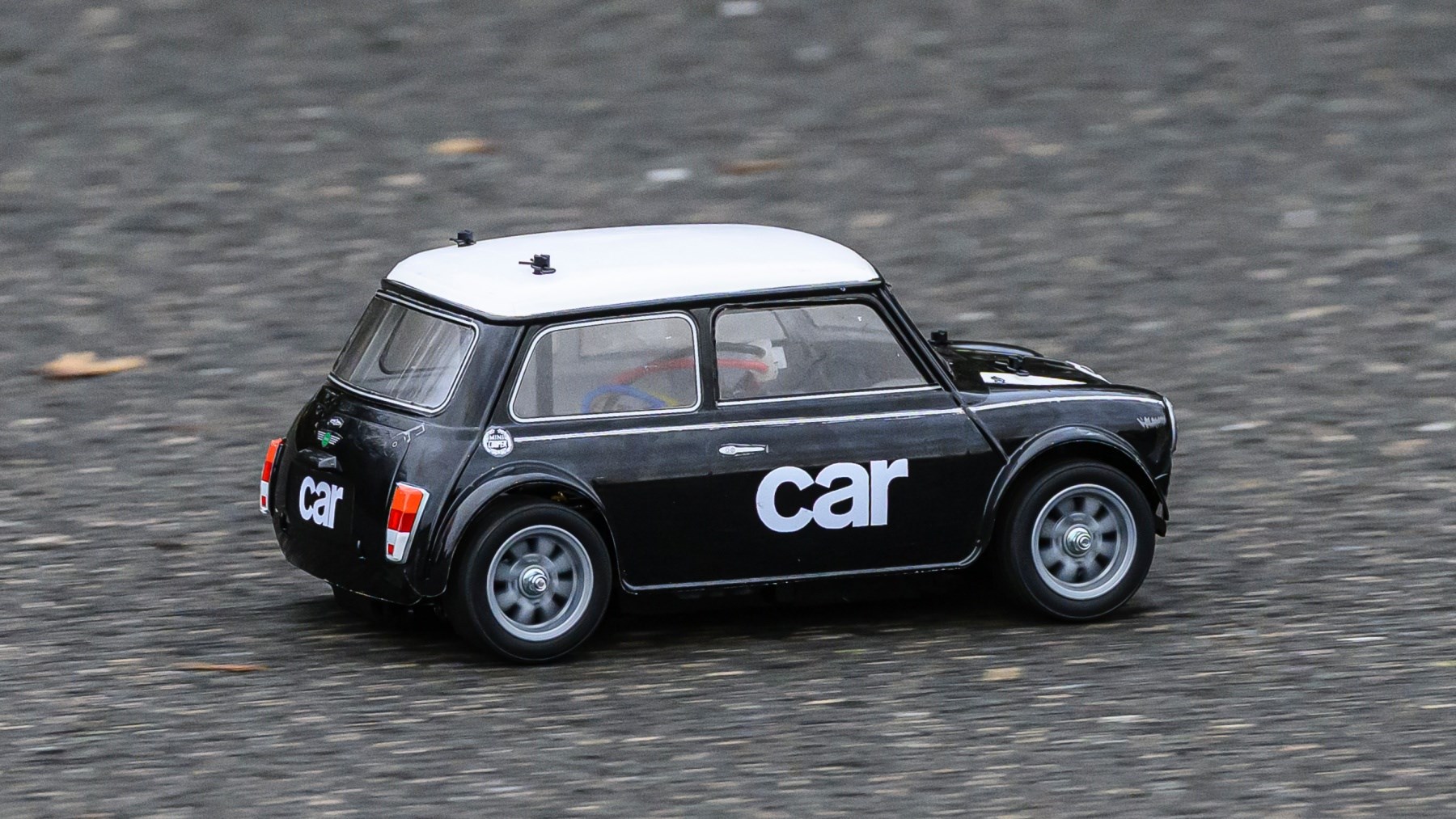
For me, having sufficient punch to do reverse donuts is enough to keep me happy with the performance, and it doesn’t handle badly, either. It likes being bunged into corners off throttle and the only way you’ll roll it is to hit something or launch it off a kerb. It strikes a good balance between agility and stability, feeling lively but not like it’s going to swap ends.
Durability
I certainly had an awful lot of fun racing it, and the only lasting damage is some flaky paint on the bodyshell. Not bad when you consider the beating the MB-01s received at the hands of novices.
Wallop something solid too hard and you’ll find those plastic suspension balls can easily pop out of the arms, rendering you helpless and often hunting for the driveshaft. It wouldn’t be too much of a problem if you’re just messing around with friends in a carpark, and should stop you from breaking stuff, too. However, if you’re racing, a relatively light tap could have you off track for a lap or two.
That said, there’s no real damage to the MB-01 chassis save for a few scrapes from hitting gravel. The body wasn’t so lucky, with a few big impacts loosening the paint. That’s almost certainly my fault for putting it on too thickly, and the shell itself is yet to split or crack.
Any downsides?
It’s most enjoyable in big open spaces, with tighter spots and a few obstacles quickly highlighting this car’s biggest issue. All the slop and play in the steering means it’s hard to precisely drive around a miniature circuit, and it’ll even wander in a straight line. On our tight indoor track, it was way too easy to clobber a barrier by accident especially when the motor’s torque corrupted the steering further.
I also found the turning circle to be surprisingly wide for such a small car, even though the front tyres would catch on the bodyshell on full lock. I wound back the steering to compensate, but there’s so much slop they still hit when you get on the power. You can spend lots of money tuning an MB-01, although I’d suggest the solely front-wheel drive M-05 is a much better bet at similar money.
Price and competition
There aren’t many Tamiya chassis cheaper than the MB-01 Mini which makes it a great entry-point to the hobby. RRP on the kit itself is around £150 with many retailers offering useful discounts. There are cheaper ready-to-run touring cars out there like the FTX Banzai, but that isn’t a Mini, is it?
Verdict
I’ll be honest, after my experience with the BT-01 911 I had my reservations about the MB-01 Mini. Unfortunately, my concerns about the steering slop (even after shimming the suspension arms) were perfectly justified, but overall this is still a fun little RC.
I think being front-wheel drive helps with the drivability, and the rampant torque steer is quite amusing. Performance is good and, with bearings fitted, you should get over 10 minutes of run time with a decent battery.
Building is fun and painting the body means there are customisation options before you’ve even Googled the long list of tuning parts available for the MB-01. However, its ability to be front or rear-wheel drive is more of a curse than a blessing in my opinion. You’re better off waiting for the Mini shell to come out on the older but sweeter-steering M-05 chassis. It’ll drive better, and you’ll be getting a Monte Carlo rally shell, too.
Ratings:
Driving: 3.0
Building/maintaining: 3.0
Value for money: 4.0
Overall: 3.0
Specifications:
Size: 1/10th, length 315mm, width 167mm, height 140mm
Chassis material: ABS plastic
Power: 7.2v NiMh or 7.4v LiPo
Motor type: 540 brushed, 27T
Driven wheels: Two, gear drive
Top speed: 15-20mph
Who tested the Tamiya MB-01 Mini Cooper Racing?
Alan Taylor-Jones is the head of testing for CAR magazine, and also Parkers. He’s been writing about cars professionally since 2015 but has been obsessed with them since not long after birth. When he’s not sampling the latest and sometimes greatest cars, he’s got his hands full with a young family and menagerie of pets. Even so, he still finds the time to have a play with RC cars and Hot Wheels.
How was the Tamiya MB-01 Mini Cooper Racing tested?
I built the kit from scratch using Carson radio equipment and a 2100mah battery supplied by Tamiya UK. Once constructed, we drove it on a flat tarmac carpark and on carpet in our office.
Just so you know, whilst we may receive a commission or other compensation from the links on this website, we never allow this to influence product selections – read why you should trust us