► We drive the latest version of the Honda Civic hatch
► Not sold in huge numbers anymore…
► …which is a shame, because it’s good
It turns out there are three things – not two – that you can’t avoid in life: death, taxes and the Honda Civic. I jest, of course, but the Honda hatchback has been around for so long that it’s witnessed the launching of multiple space missions, seen the Berlin Wall come down and has been around for the election of multiple Popes.
Through that time, it’s been everything from simple city runabout to futuristic, family-friendly space odyssey to hybrid efficiency hero. So, what’s this latest version like?
At a glance
Pros: Sweet to drive; well-built and sensibly laid-out interior; quiet; efficient; useful boot
Cons: Annoying speed warning tech; limited rear headroom; not all that interesting
What’s new?
It’s the 11th-generation Honda Civic – but mildly upgraded and tweaked based on customer feedback. For the most part, the Civic remains largely the same thing it always has been – a reasonably practical family hatchback that’s had more personalities through 60 years than Madonna.
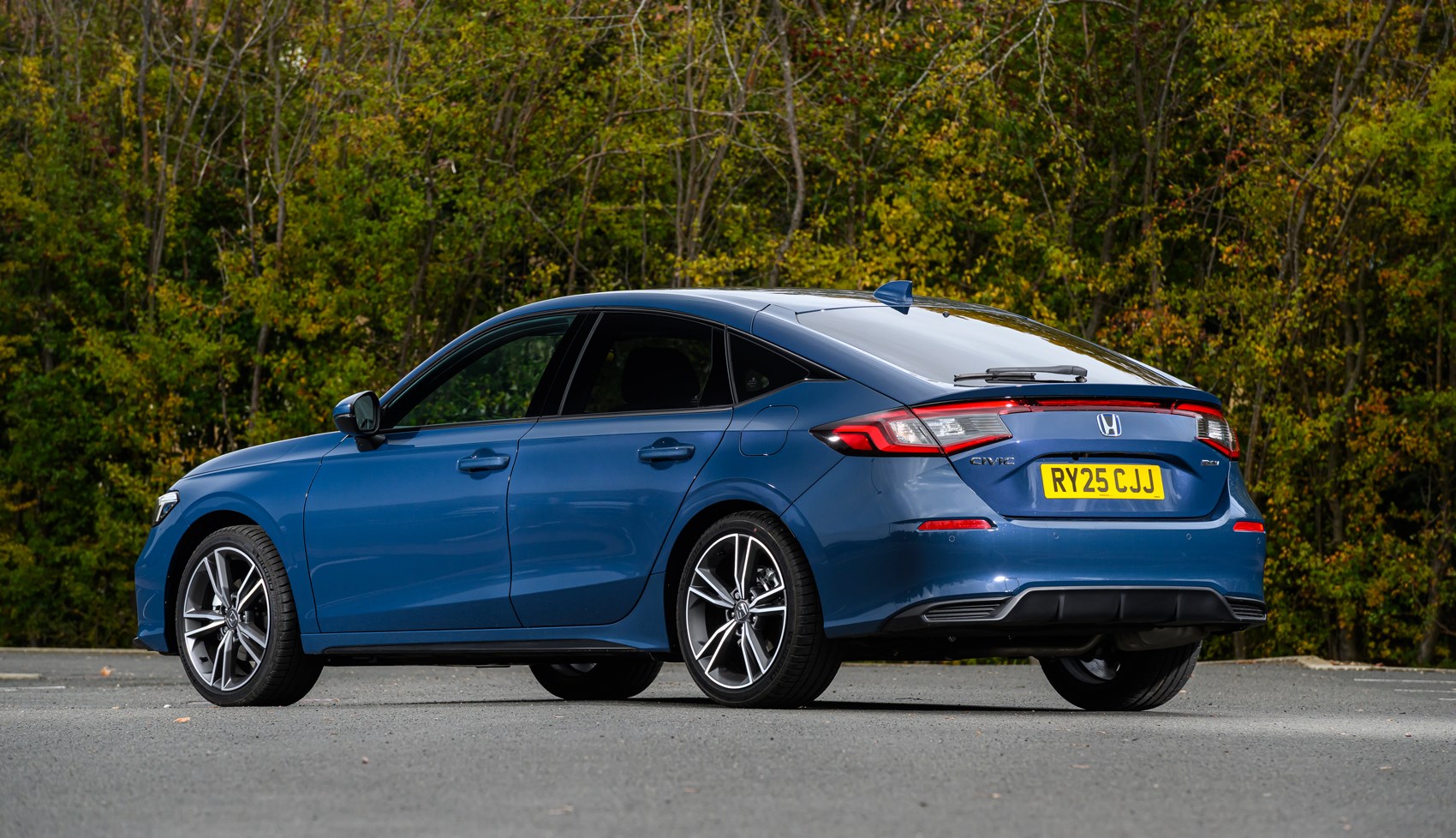
This generation sticks with hybrid-only power (and is now your only option, now the very excellent Type R model has been retired) and launches with an extremely minor set of visual tweaks – including new colours and wheel designs. Tech upgrades also feature, with new safety tech and luxuries thrown in.
What are the specs?
There are three trim levels to choose from: Elegance from £33,795, Sport from £35,395 and Advance from £38,695. Even base ones are well equipped, coming with a nine-inch infotainment screen with Android Auto and Apple CarPlay, auto LED lights, dual-zone climate control and a whole load of safety kit.
Sport adds a wireless charger, part-leather upholstery, heated steering wheel and a larger digital instrument cluster as well as 18-inch wheels. Advance then adds powered, leather seats, Bose audio, a huge glass sunroof and adaptive headlights.
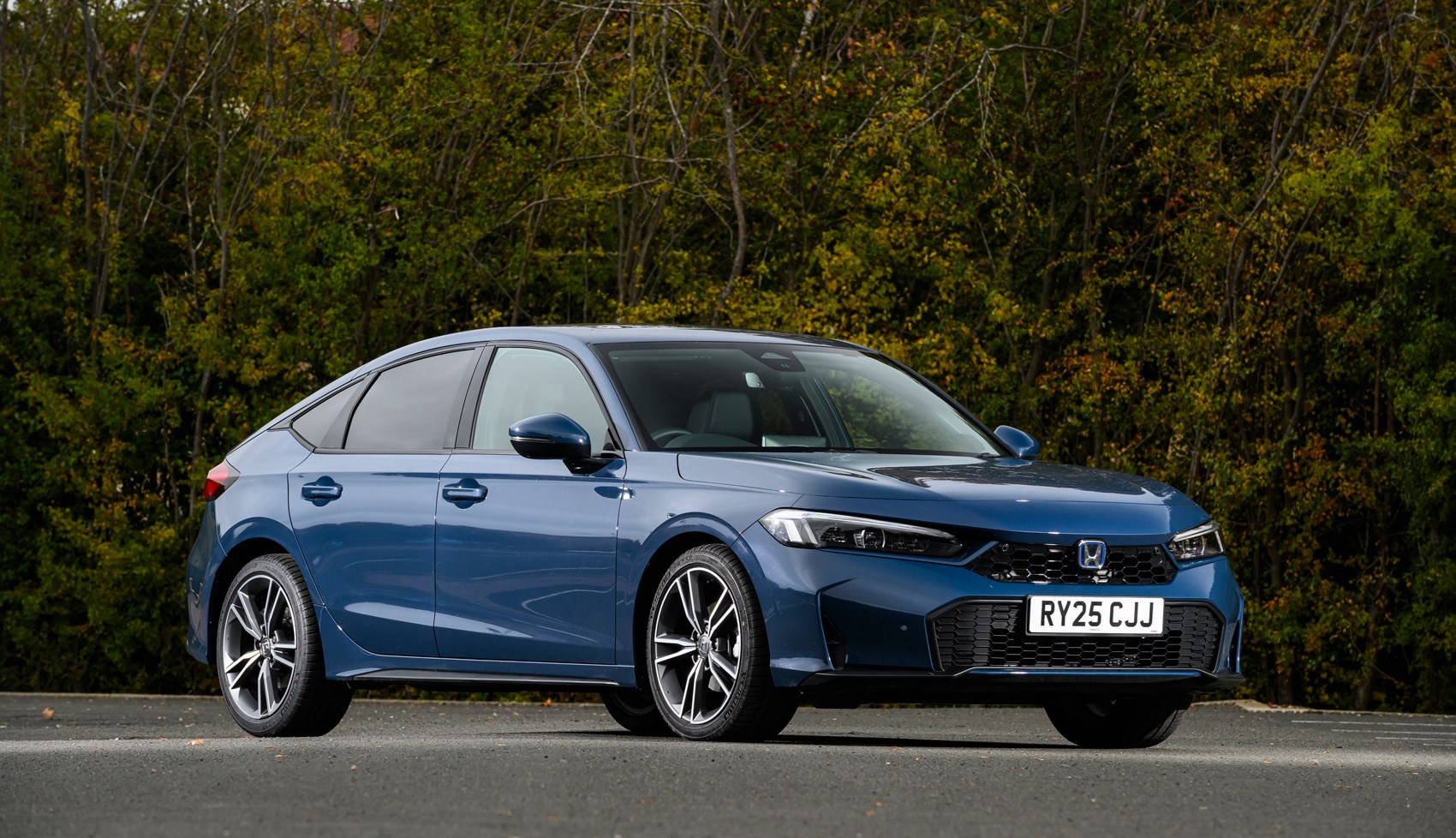
As before, your only powertrain option is the latest e:HEV powertrain that includes a complicated mix of four-cylinder combustion power as well as a battery and two e-motors. The setup allows for sporadic engine-off driving for a few miles – even at motorway speeds – but is mostly designed to assist the combustion element of the powertrain. Honda claims up to 60mpg from the basic Elegance spec, or 56.5mpg from Sport or Advance. That slight drop in economy will be due to the larger wheels and extra weight on Sport and Advance versions.
Our test car was an Advance model finished in the new Seabed blue colour.
How does it drive?
One major element the Civic hasn’t lost sight of is how it drives – even after 11 generations.
What impresses most is the steering. It’s remarkably heavy for a car in this class and yet is super accurate, giving you this assuredness when you’re out and about. That, along with the plump-but-not-firm ride means that you can really chuck it around and it won’t break a sweat.
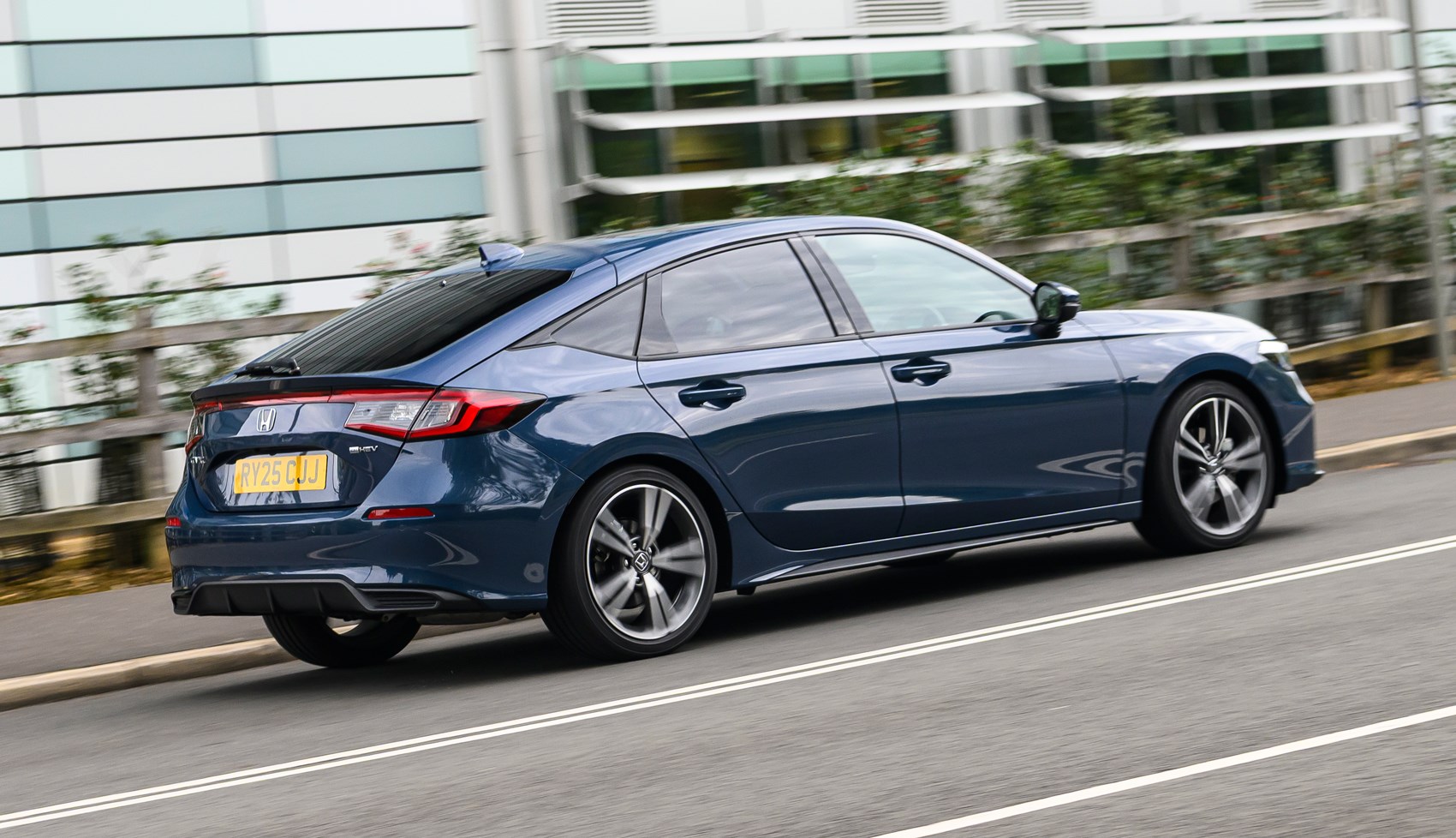
Is there tonnes of power? Nope. This is a fairly straight-up and very conventional-feeling hybrid powertrain. But it’s quiet, without much of the usual ‘mooing’ you’d expect from a CVT-equipped car. Acceleration is perfectly good, and the whole experience is smooth and simple. There are paddles on the steering wheel but, unlike the Prelude with its simulated shifts in S+ mode, they dictate the amount of brake regeneration.
It’s also pretty easy to achieve those claimed fuel economy figures, too, with even long-distance motorway drives gleaning at least 50mpg if not more. Our average over a few hundred miles was 53mpg without any effort being made to drive efficiently.
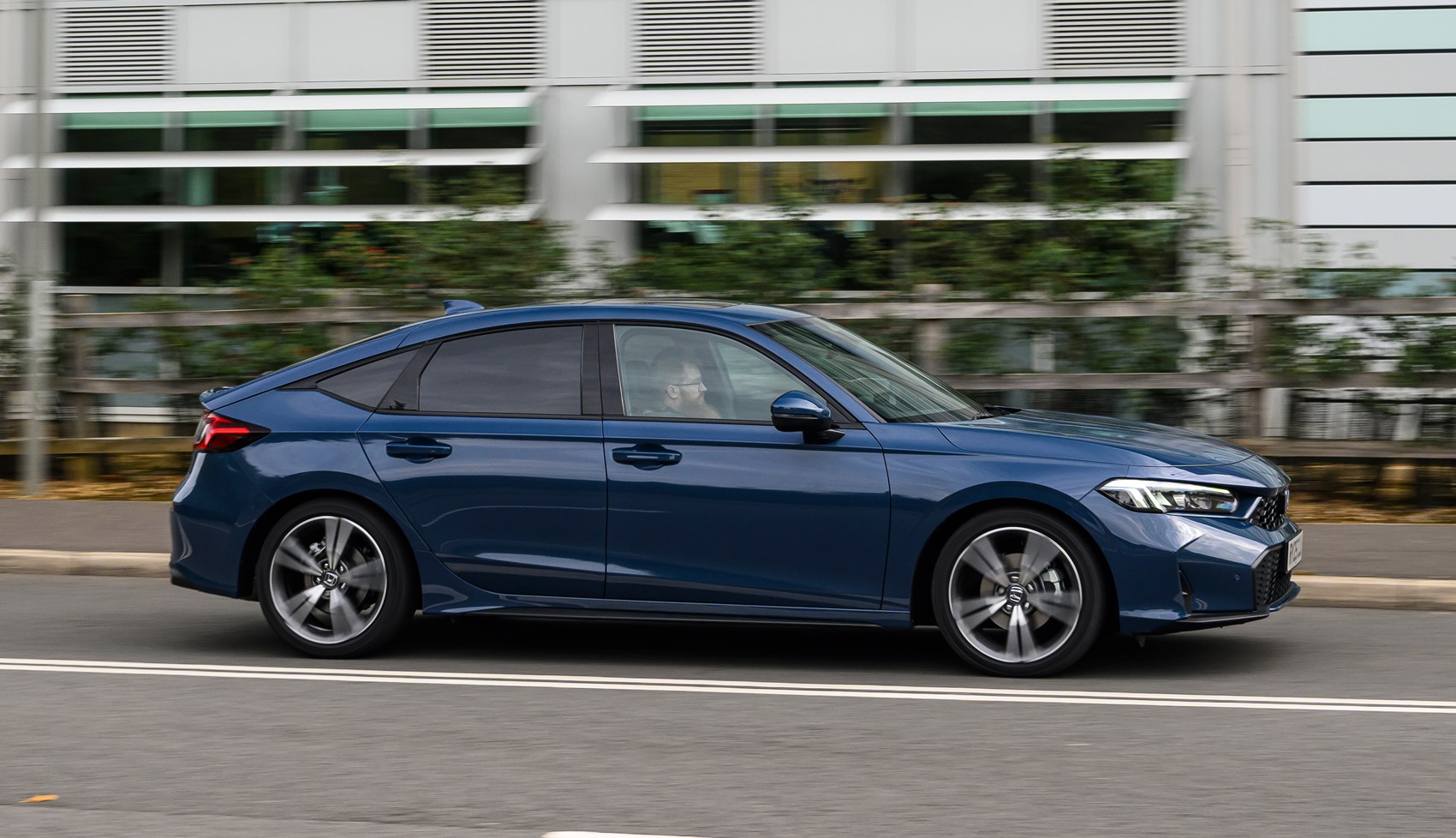
What’s slightly bizarre, though, is the application of Michelin Pilot Sport 4 S tyres on the model we tested; serious performance rubber applied to what is a relatively low-powered car that’s not designed to be driven in a sporty manner. So much so that I’d suspect changing to different tyres would eliminate some of the unnecessary road noise these 4 S tyres emit. That said, they do help the Civic feel sure-footed and grippy.
What’s the interior like?
Super solid and smartly laid out. Honda gets things right straight from the off with all your key touchpoints exactly where you’d expect them to be. Everything feels durable, even down to the rather weighty indicators and solid door handles.
There’s a good mix of physical and digital elements to the interior, including physical climate controls and a reasonably sensible layout for the buttons on the steering wheel. The digital instruments are clear and customisable, too. Big cupholders, decent central armrest and door bin storage gives you plenty of cubby room, and the 415-litre boot is a good useful space with a huge opening.
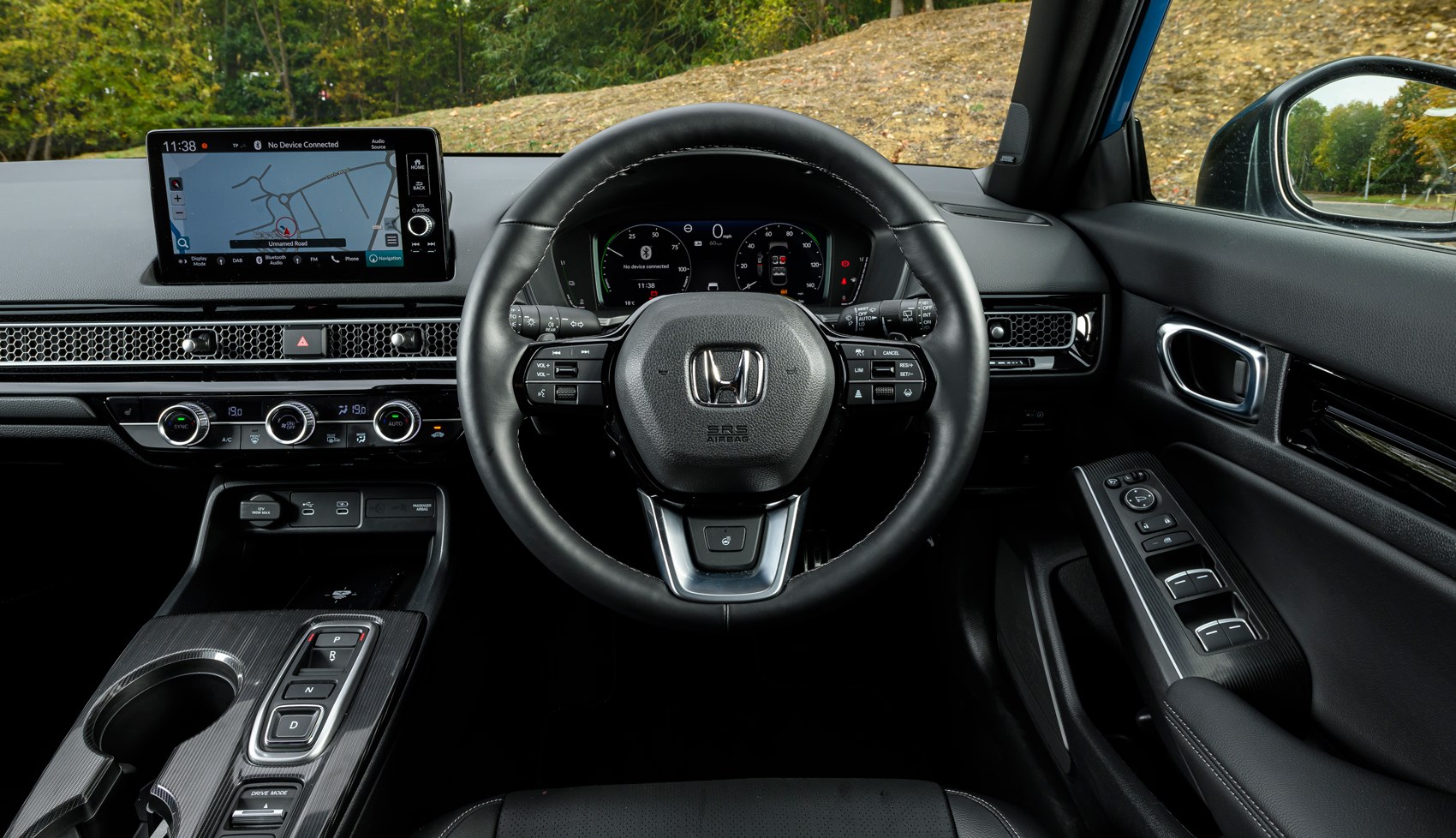
The infotainment screen is right-sized for what you need – not too big where it’s excessive or difficult to navigate unlike some of the Civic’s rivals. Android Auto and Apple CarPlay still requires a wire, mind you, but overall the system is straightforward to operate. No frills, but that’s welcome. Comfort-wise, the seats are plump enough but could be softer.
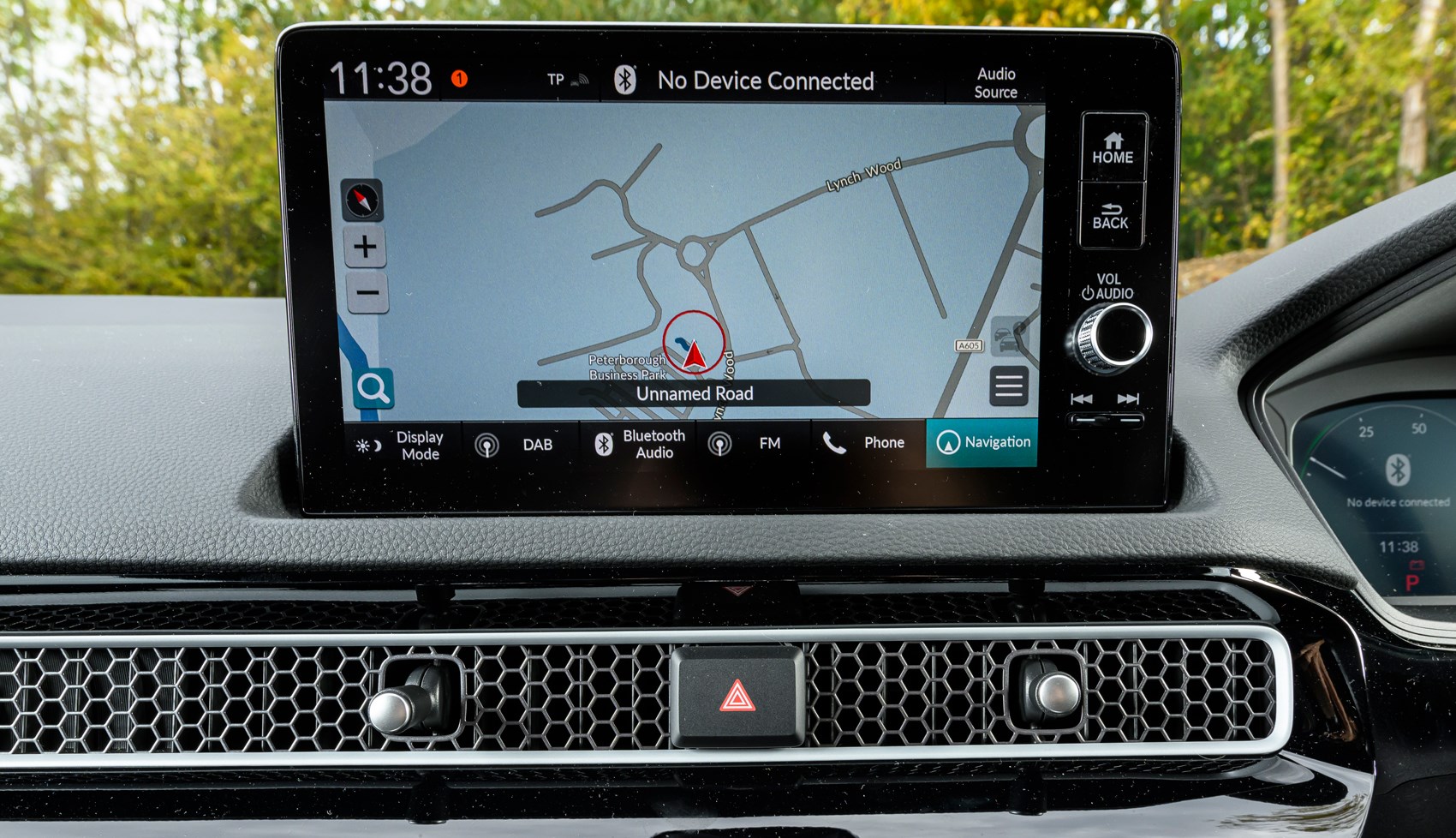
Any issues? The biggest is the mandated overspeed warning system and its irritating bonging, mainly when it tends to read speed limits incorrectly (I saw 10mph come up once while on the motorway). Unlike other car brands that have included quicker ways to turn the tech off (pressing and holding a steering wheel button, or two taps of a safety system button usually do the trick), Honda hasn’t implemented that with the Civic despite the driver being able to turn off other aids via the steering wheel buttons. Instead, it can only be turned off while at a stop, in park, via a toggle in the infotainment system that’s three menus and a scroll of your finger deep. And doing so removes all traffic sign recognition – not just the bong.
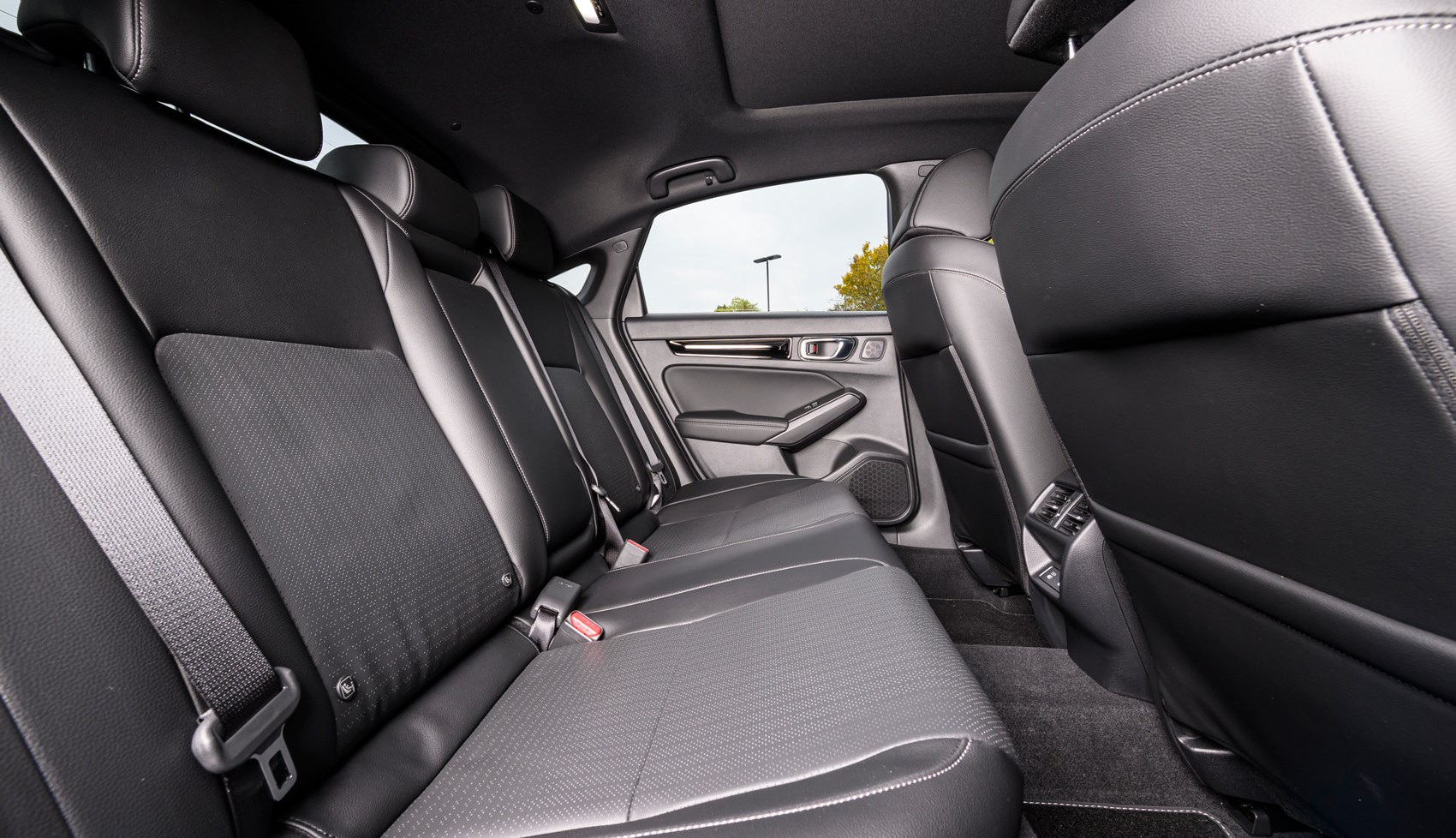
The only other gripe is in the rear seats. Legroom is good for adults, but headroom isn’t – largely due to the Civic’s sloping roofline and made worse by the Advance model’s panoramic glass roof. You have to really duck your head to get in and, while Honda’s sculpted the headlining to improve it somewhat, the top of your head still touches the roof.
Before you buy
It’s a family hatchback, meaning the Civic has no end of conventional rivals from big brands. The closest is the Toyota Corolla, given its similar powertrain and style. But you’d likely be looking at a VW Golf or Vauxhall Astra.
However, the Civic’s defence starts to weaken given its pricing. Going on list prices alone, a Corolla is around £4k cheaper than a Civic. Mild hybrid versions of the Astra can be had for under £30k, while plug-in hybrid Golfs that offer way more electric-only range are around £36k.
Honda may retort somewhat by pointing out how much equipment is standard, but their pricing isn’t helped by financing numbers – a Corolla is around £80 per month cheaper for a 10,000-mile, three-year lease via Leasing.com at the time of writing.
Verdict: Honda Civic
Overall, the Civic is comfortable, quiet, good to drive, efficient and feels well built. It’s the kind of car that (speed warning not withstanding) simply will not be a headache to own and will almost certainly return good fuel economy without you really trying. Is it interesting? Not really. Is it good? Yes.
But the Civic is battling against several industry headwinds and is, frankly, losing. Part of the problem is that eight out of the top 10 best-selling cars in the UK in September 2025 were SUVs; that the Civic isn’t one will likely be why its sales numbers are dwindling. It’s also starting to price itself out of being competitive against fellow hatches, making it a hard sell. Which is a shame.
Specs below are for a Honda Civic e:HEV Advance