► All-new VW California campervan tested
► On the road and at the camp site
► Interior is easier to live with – and in – than ever
There was a time when even the best campervans were mildly ridiculed, perceived as only slightly less miserable than a mouldy B&B on a windswept seafront and owned by people you wouldn’t want to hang out with. But no more.
Campervans are now entirely mainstream, the ideal accompaniment to an active family life. Why the shift? Half a billion (probably) Instagram posts that make ‘vanlife’ seem like a glamorous lifestyle choice, and the immense competence of modern campers – as exemplified by this latest Volkswagen California.
The California nameplate has been around for three decades and it has a devoted following in the UK, largely built on the back of the previous T6 generation. So this T7 California – as it will inevitably and erroneously be known – has very big shoes to fill.
It gets off to a controversial start by being spun off the Multivan MPV, rather than the commercial Transporter, but that promises improved handling and refinement. It also means improved interior packaging and potentially invaluable features such as a sliding rear door on both sides, not just one as in the old version.
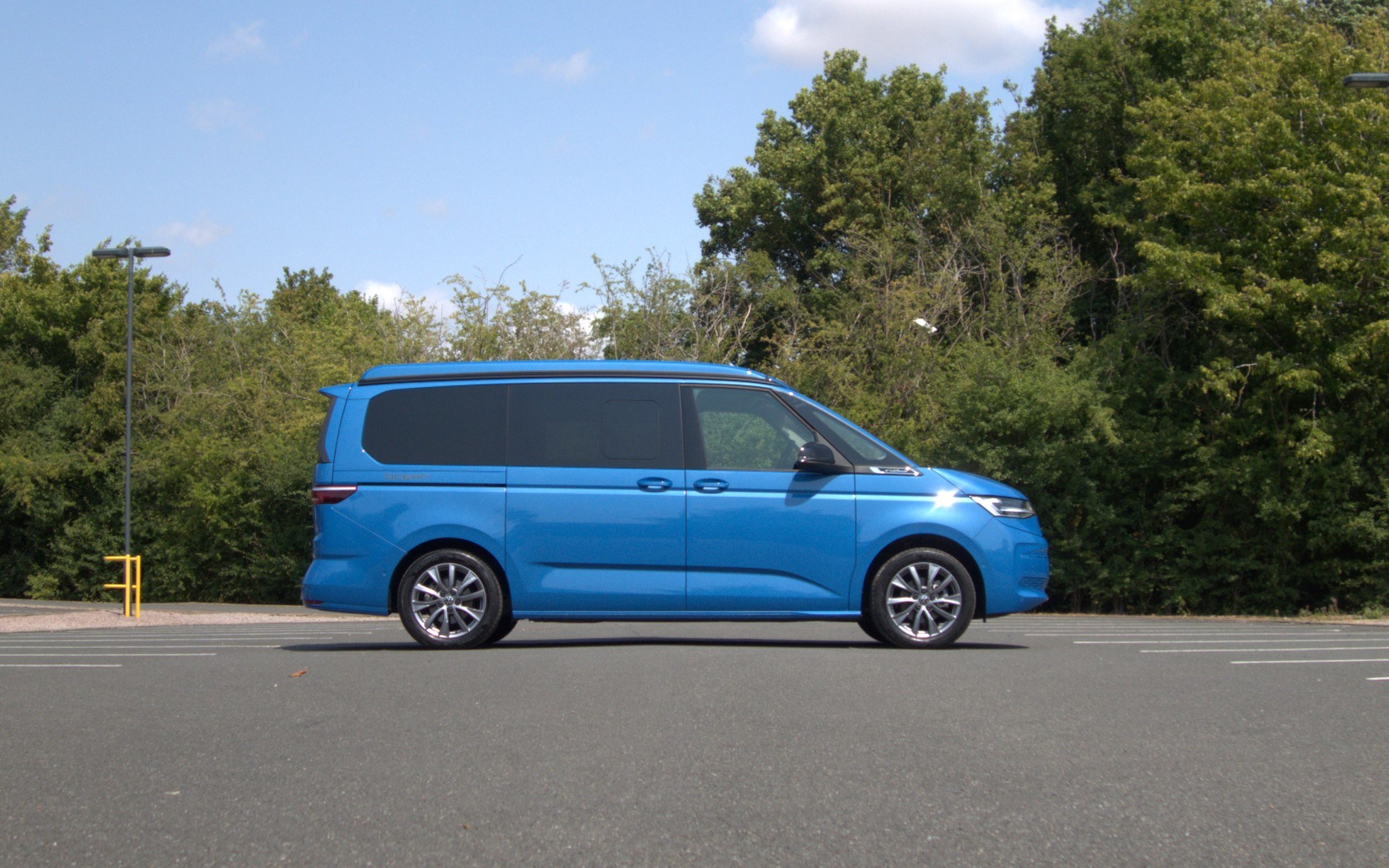
As well as its vaunted predecessor, the new California has to better the increasing competition in the manufacturer-backed campervan market. The Mercedes-Benz V-Class Marco Polo is already well-established, the Ford Transit Custom Nugget has a growing following, and the Citroen Holidays has just been launched. However, VW remains the only firm to design and build its campers entirely in-house. Is that enough to keep the California ahead? Having followed it from concept to production, we’ve now spent plenty of time driving and living in the latest VW California to find out.
At a glance
Pros: Better to drive than before, twin sliding rear doors rule, clever touches throughout
Cons: It’s not cheap, Mercedes Marco Polo has self-levelling suspension
What’s new?
The biggest news for this new generation of VW California is that it switches from the T6 Transporter commercial vehicle platform to the MQB-based Multivan MPV. Why? Because the latest T7 Transporter is a lightly reworked Ford Transit Custom and built on the same production line in Turkey.
As VW likes to keep things in-house for its campers, there was no way of closing the loop – the Custom-based Nugget campervan is fitted out by Westfalia in Germany. Fortunately, the Multivan was already in production at VW’s Hanover factory that built previous generations of California.
The MQB platform also means this is the first California available with a plug-in hybrid powertrain – VW’s latest based around a 1.5-litre petrol engine – alongside the petrol and diesel versions. And there’s twin sliding rear doors, rather than the single driver-side one of old – much better for getting the kids out safely.
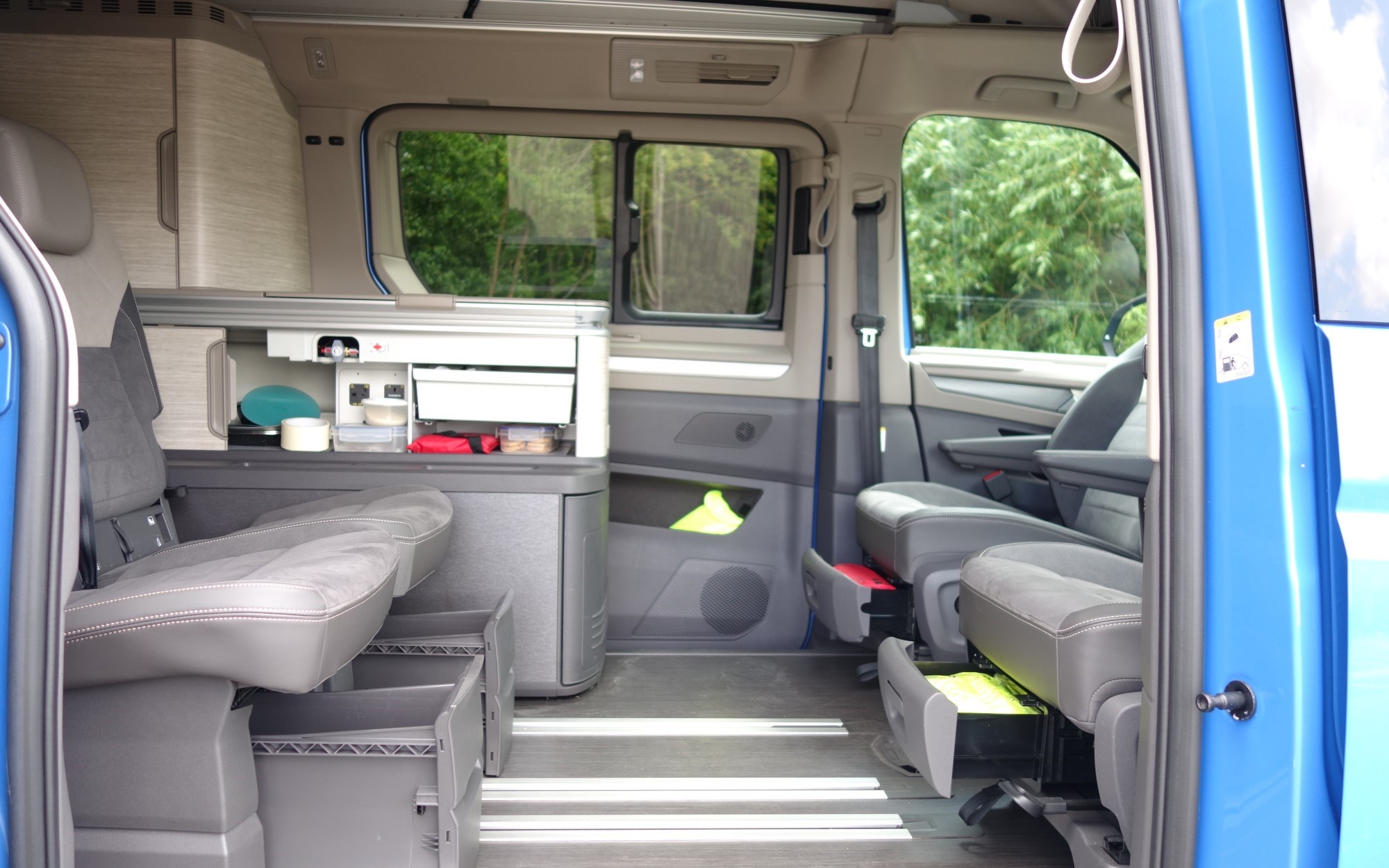
There are other changes inside designed to make living in the California easier. The reconfigured kitchen makes it possible to cook outside. The drawer-style fridge is more easily accessed. There are now two individual rear seats instead of a bench (three in the base-model Beach). There’s a new camping control panel in the back and an external shower. It’s all really useful stuff that shows a lot of thought has gone into the Cali’s living space.
What are the specs?
The T6 California was diesel-only in the UK (aside from a very brief petrol flirtation) but the new Cali has a much broader choice encompassing petrol, diesel and plug-in-hybrid. We have most experience of the diesel, which has VW’s standard-issue 2.0-litre TDI with 148bhp, coupled to a seven-speed DSG gearbox. 0-62mph takes 12.6 seconds and its got more than enough mid-range to haul the thing’s 2.3 tonnes past country road dawdlers. Fuel economy is pegged at 41.5mpg on the WLTP cycle, but we saw 50 without really trying.
The 201bhp 2.0 TSI petrol engine is inevitably quicker – 0-62mph in 10.0 seconds – but its 30mpg makes it largely irrelevant. Then there’s the plug-in eHybrid which is aimed squarely at company car users who want something more adventurous than an SUV. It combines a 1.5-litre petrol engine with a chunky e-motor, six-speed DSG ‘box and 4Motion all-wheel-drive.
We haven’t yet tried it to gauge the performance – VW doesn’t quote a 0-62mph time – but we expect its 241bhp and 2.6-tonne bulk will result in similar acceleration to the diesel. Though the electric boost should make it feel nippier. The WLTP figures suggest 282.5mpg and 53 miles of EV range.
How does it drive?
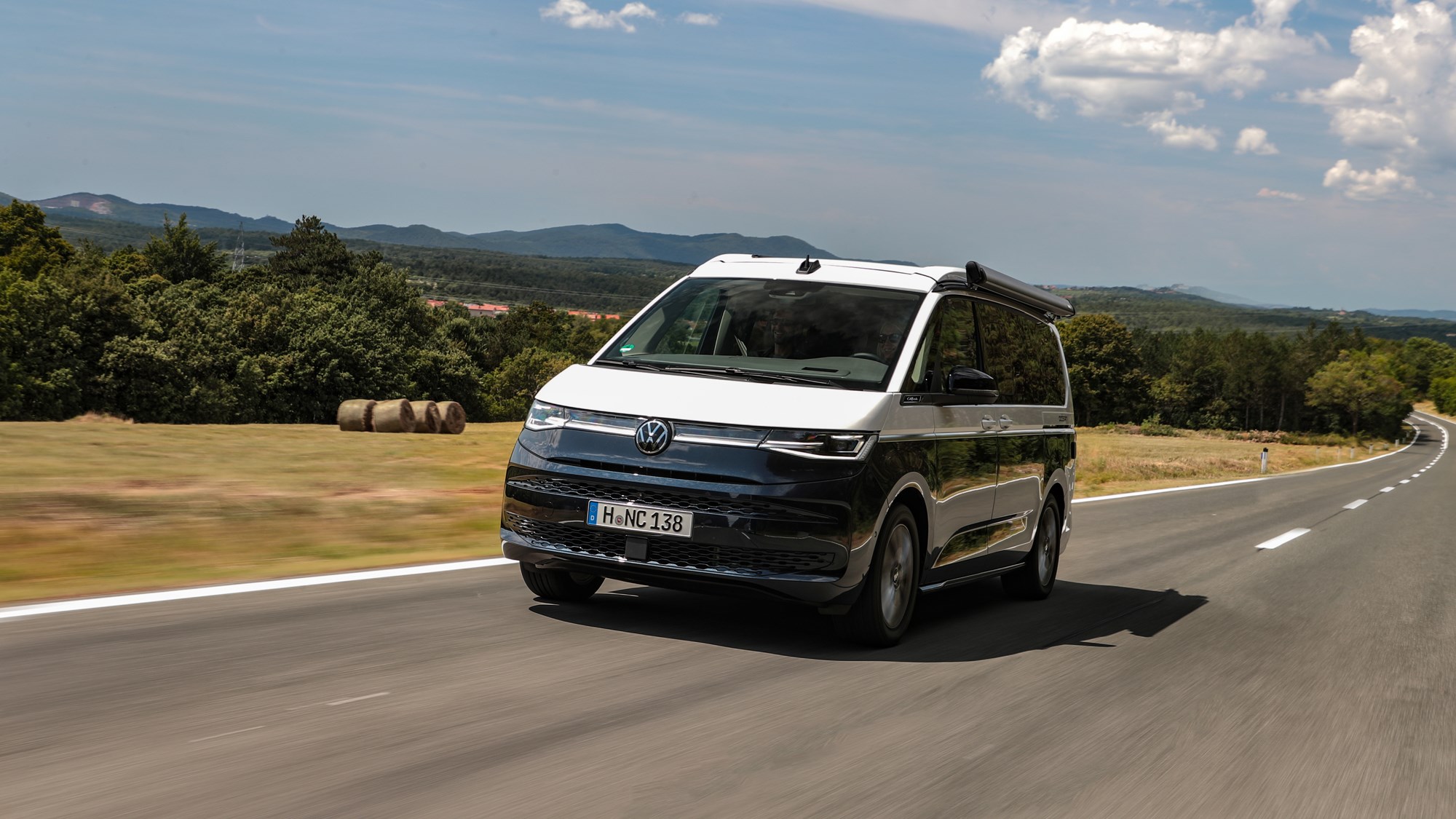
In switching to the MQB platform, the California driving experience has improved hugely. Not that the old T6 Cali was a disaster on the road, but it could feel decidedly top-heavy and the driven front wheels lost traction easily.
From behind the wheel, the new California feels much like a well-sorted SUV. The steering’s accurate and precise, body control’s excellent, it puts the power down cleanly. It can get a bit out of sorts if you push your luck in hairpins or a quick succession of corners – this is still a big, heavy, tall vehicle and physics wins eventually. But drive smoothly and you can make surprisingly rapid cross-country progress – no excuse for holding up the traffic, here.
Town driving and narrow country lanes are entirely stress-free thanks to the near-panoramic view out. The ride is mostly very smooth, only big ridges and holes eliciting a thud – but not a trace of shudder. After five hours of motorways and country roads, I got out feeling as fresh as I did at the start.
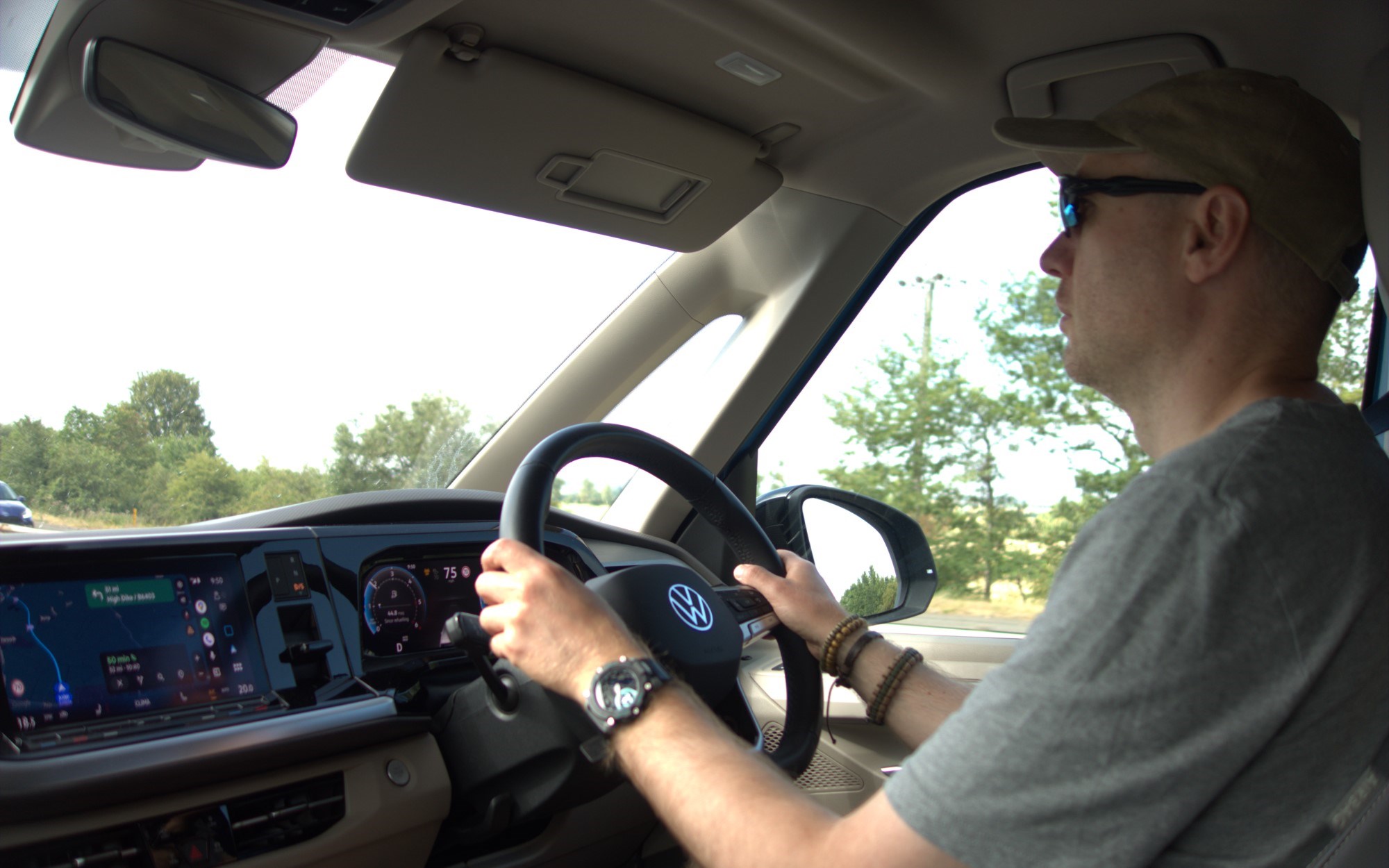
Only the seven-speed DSG ‘box lets the side down. It’s often too hesitant to change, then seems to overcompensate with aggression when you least need it. Contrast that with the super-slick nine-speed auto in the Mercedes Marco Polo. Indeed, with 233bhp and rear-wheel-drive it’s the more satisfying camper to drive, but you won’t be bored in the California, either.
What about the interior?
In any campervan of this size, there are compromises in the layout of the living space and it takes a bit of time to learn how to work around them. There are compromises in the latest VW California, as well, most of which are highlighted in this section. However, the compromises are generally smaller and easier to live with here than in other campervans and, once you’ve worked out your systems, it’s a comfortable, homely place to spend a holiday.
The new California is 20cm longer than the old T6 but it’s interior volume is a very different shape which has dictated some changes to the cupboard layout that may not be entirely welcomed by experienced owners. The switch to individual rear seats has reduced under-seat storage, as well.
Having said that, there’s still a decent amount of built-in cupboard space on the left side of the vehicle, a large boot below the bed platform and a multi-compartment storage bag mounted over the rear-right window. The door pockets are huge, too. There’s an art to packing everything you need into a campervan – especially when you have kids – but the process is made relatively easy in the California.
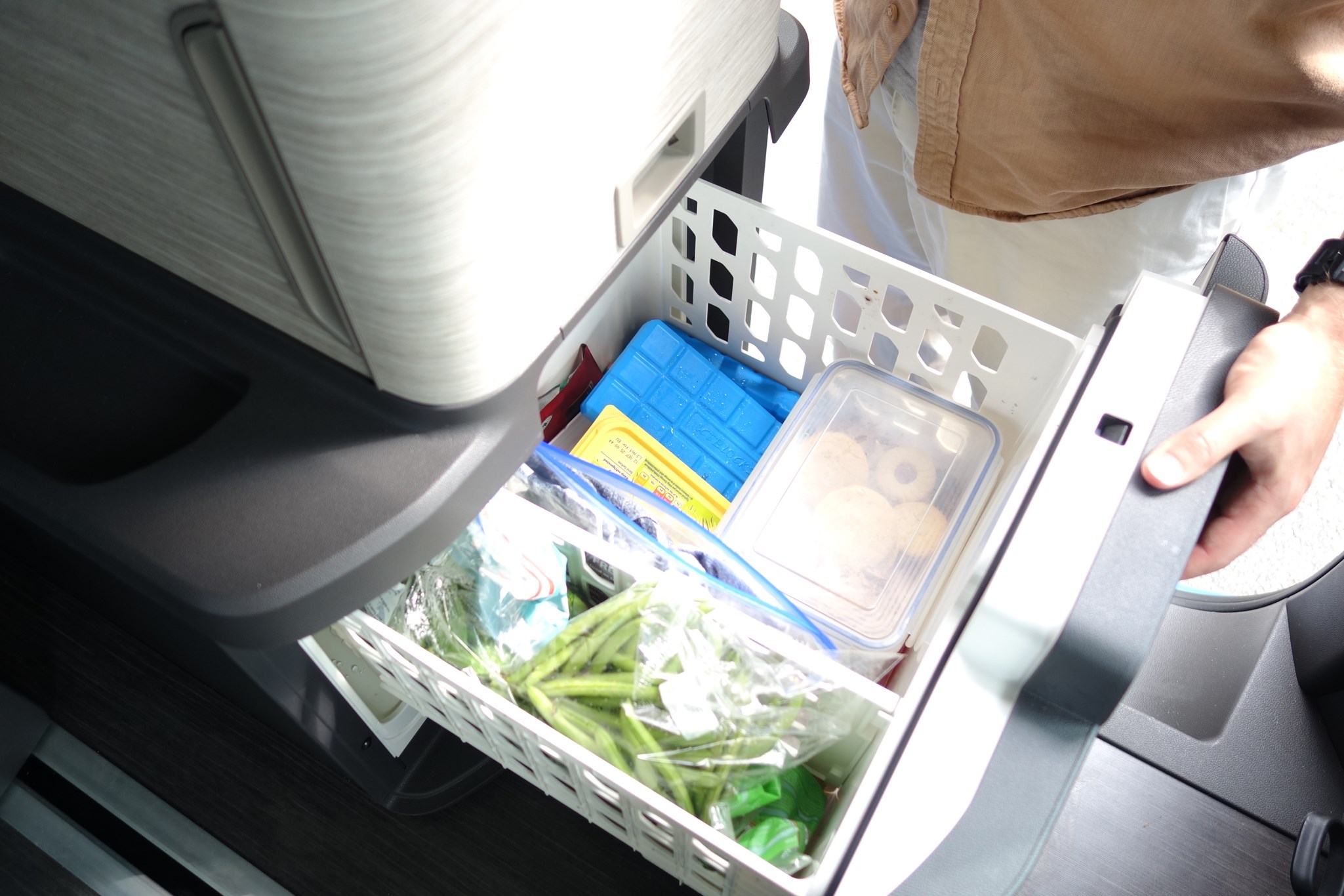
The kitchen unit has been redesigned with outdoor dining in mind. It extends about halfway into the left-hand rear door opening giving easy access to the drawer-style fridge. There’s also a fold-out table – plus three-pin and USB sockets – on the back of the unit that you can use outside; the table can also be mounted inside. The single burner hob and sink are on the small side – we found a proper camping stove easier to use.
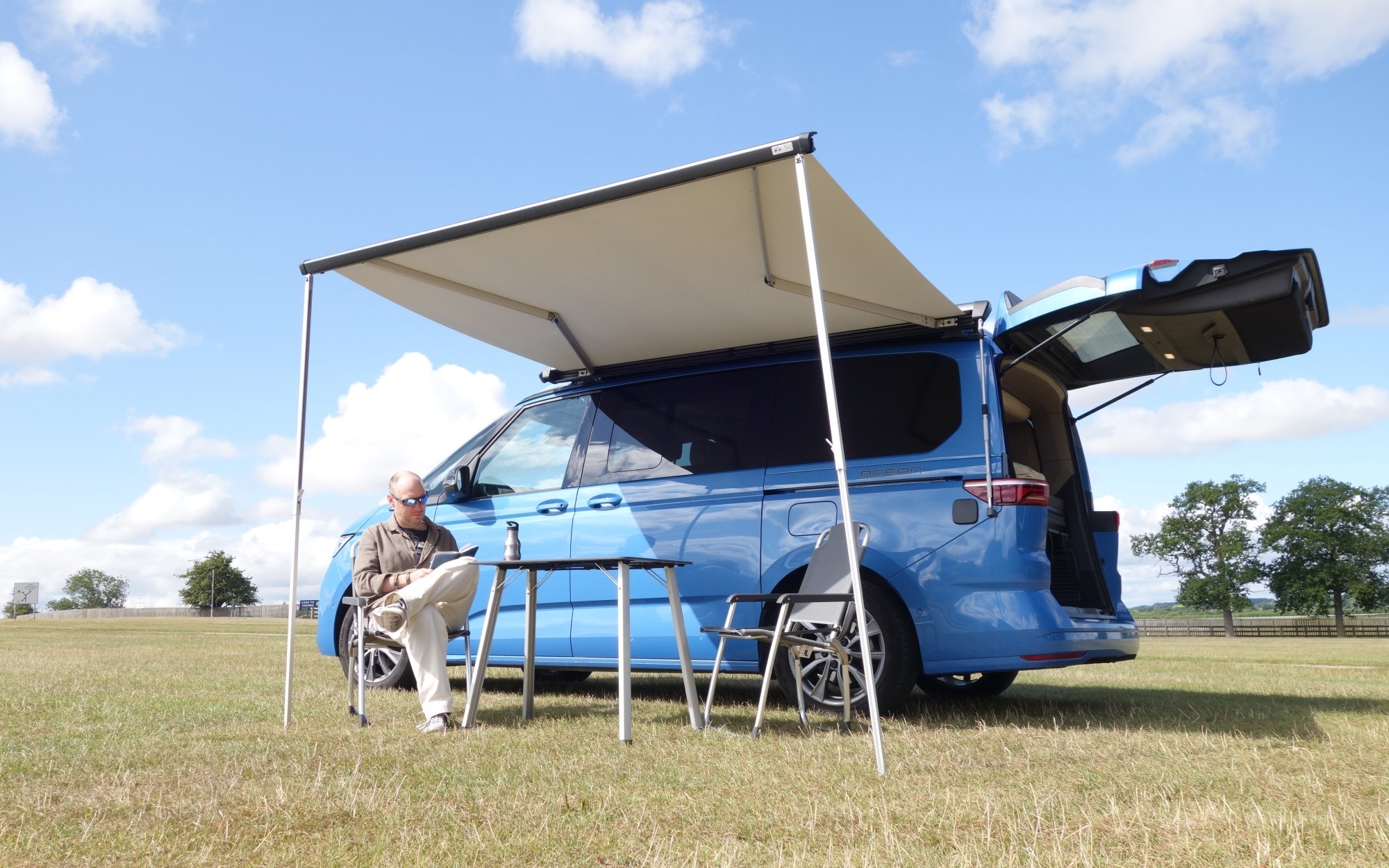
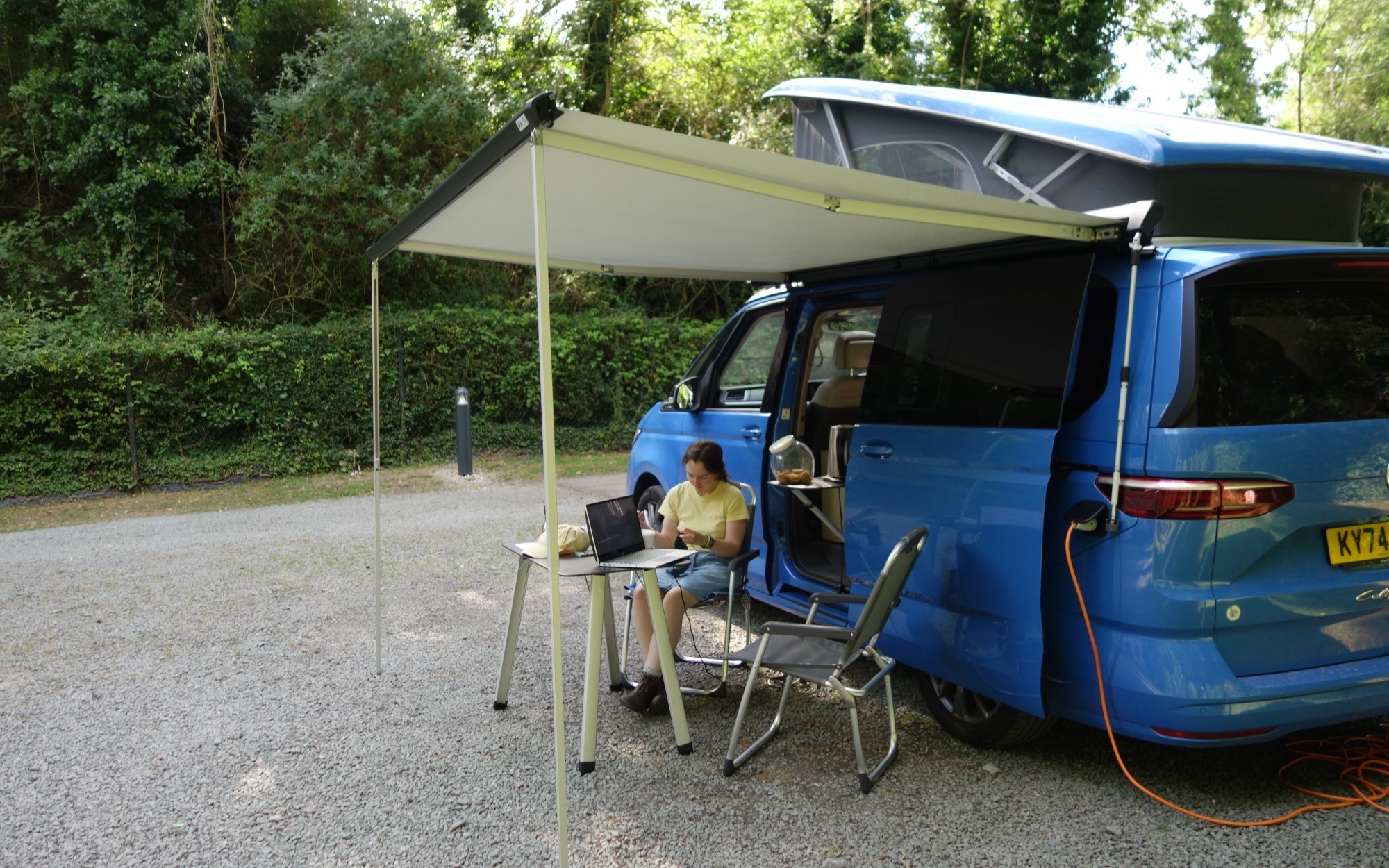
In the UK, all models have a wind-out awning on the vehicle’s left side; the folding outdoor table has moved from a pocket in the rear door to a slot under the lower bed platform (much more convenient); the outdoor chairs (now higher backed for improved comfort) are still in a compartment on the tailgate. Al fresco dining on a balmy summer evening was very pleasant.
Incidentally, the tailgate takes huge effort to close because it’s on super-strength, incredibly stiff gas struts that can support the weight of several rack-mounted bikes.
Back inside, the rear seat runners allow you to position them wherever you want; they lift out entirely relatively easily as well. The front seats swivel round to face the rear; having to open the front doors to do so adds an unwelcome layer of faff.
Entry-level Beach models have a manual lifting roof; Coast and Ocean models have electric operation. The latter is quieter than in the T6 but quite slow and picky about when it’ll work. The roof’s canvas sides don’t necessarily fold in when the roof lowers, either, so it can be a multi-person operation. Amusingly, there are no less than five ways to open and close the electric sliding rear doors.
The California sleeps four in the usual two up two down format. Building the lower bed involves sliding and folding the rear seats into position, then flipping out the mattress – not the easiest of operations. The lack of any steps means getting into the upper bed requires a degree of strength and athleticism.
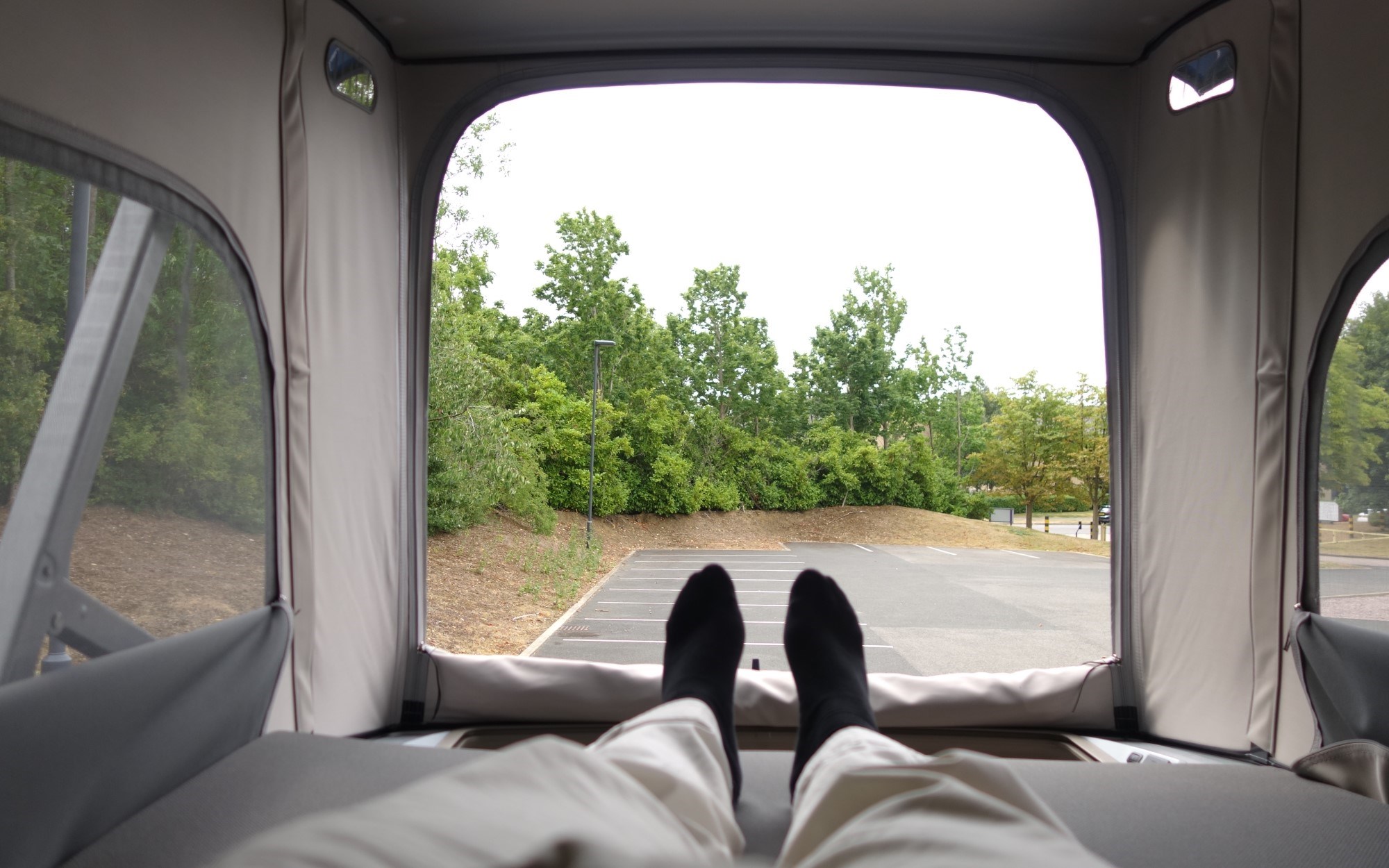
Once you’re up there, though, you’ll find plenty of space and the built-in sprung mattress is comfortable enough. There are three zip-up vents that let in light and air and keep bugs out; with them all open you feel at one with nature.
Downstairs, the bed is again perfectly comfortable but, in Coast and Ocean models with built-in cupboards, rather too narrow for two adults. Magnetic window blinds are provided; the windscreen blind’s frame requires construction but it’s worth doing on a cold night as all the blinds are insulated. There’s an on-board night heater, as well. Add them all together and the Cali should be a lovely warm and cosy place on a cold night – downstairs at least, upstairs isn’t insulated.
There are many lights and USB and three-pin sockets spread throughout the interior – the three-pins can only be used when hooked up to mains electricity. There’s a smartphone-size touchscreen on the right-hand C-pillar – the camping controller. Through it, you can control the lights, fridge and heating; it also shows read-outs for leisure battery and water levels but not gas. We found it very useful for turning all the lights off in one touch. Many of the functions are also available on the front infotainment screen and the vehicle’s app.
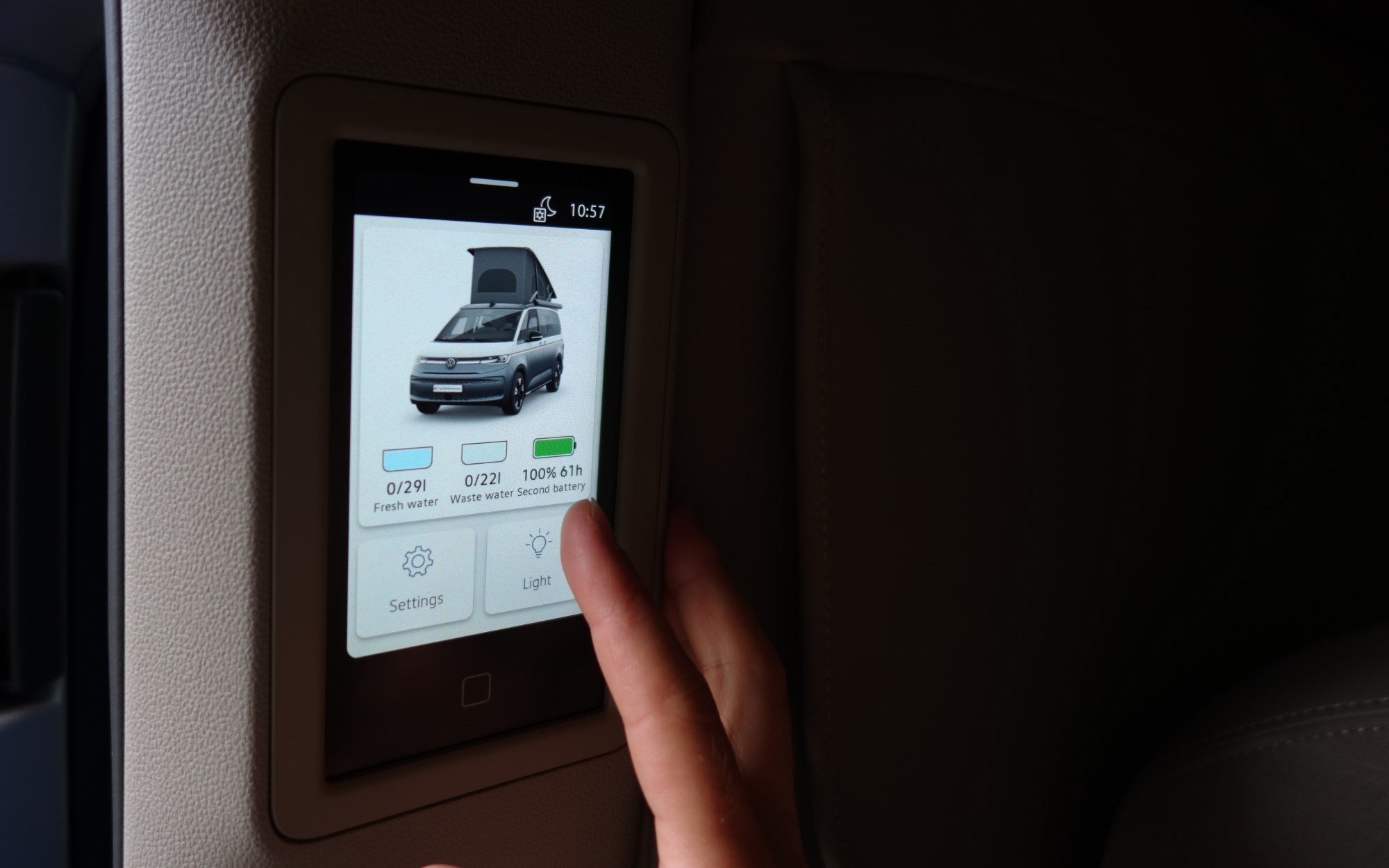
The leisure batteries hold enough charge for 60-plus hours of light work in mid-summer; expect that to halve with constant heater use in winter.
When you’re travelling between campsites, the California is a lovely place to be for both front and rear passengers. There’s a massive amount of space, a great view out and all the seats are very comfy. There’s walk-in access through every door, too – though watch your head when getting out of the back.
Before you buy (trims and rivals)
There are three VW California trim levels available in the UK: Beach, Coast and Ocean. Beach does without the build-in cupboards and kitchen, instead coming with a cooking/storage unit that slots into the boot. But it still sleeps four and has a manual lifting roof.
Coast adds the cupboards and kitchen and an electrically operated roof; Ocean gets plush recycled upholstery and heated front seats, extra storage and a night heater. On top of all that, every model has an Apple CarPlay/Android Auto compatible infotainment system, air conditioning, adaptive cruise control and lane keeping assist.
The latest Ford Transit Custom Nugget is probably the California’s biggest rival. It’s available in a broader range of models and it’s a bit bigger overall. We’ve not tested it properly yet, but we know there are interior layout compromises that could be difficult to live with. There’s also the new Citroen Holidays, which vastly undercuts the California on price. Again, we’ve not tested it yet, but it looks highly promising on paper.
Then there’s the Mercedes V-Class Marco Polo, which costs a big chunk of money more than the Cali but is better to drive and has self-levelling suspension that can make for a more comfortable night’s sleep. Not everyone will chime with its Berlin luxury apartment vibe, though.
Verdict
The latest VW California is a very impressive thing. The interior tweaks that take advantage of the Multivan platform work overwhelmingly well, and intelligent packing will overcome the minor storage issues. It’s better to drive than the old T6, looks sleeker and feels more civilised to travel in.
The Mercedes Marco Polo’s air suspension USP requires careful weighing if you get on with the interior’s rather cold aesthetic and can stomach the extra cost. Not that the California is exactly cheap. Prices start north of £60,000 and stretch well into the 80s – you can get a very nice coachbuilt motorhome for that kind of money.
But the California occupies a different niche, one with very broad appeal as it’s much better suited to a really active, outdoorsy family lifestyle than an SUV that costs similar money.
Specs below are for the VW California Ocean 150 TDI