► Alfa’s compact SUV gets a facelift
► Produces 276bhp and can drive 40 miles in EV mode
► Lots of small changes make a big difference?
Remember the Tonale? Alfa’s first compact SUV (and first electrified car, before the Junior) is just two years old, but it’s already time for a mid-life facelift. The changes aren’t exactly extensive – consider this a deep moisturise, rather than a full nip and tuck – but they promise to make the Tonale both more refined and more driver-centric.
To find out if those small changes add up to anything, I drove Alfa’s ‘car for everyone’ on some scenic and often very broken roads around historic Pisa, as it turns out it’s not just the tower that needs a seeing to. Still, that gave me a chance to thoroughly test Alfa’s changes – and it also gives a better idea of how it’ll handle the UK’s equally dodgy roads. I ran an original Alfa Romeo Tonale for six months back in 2023, so this was a chance to reflect on just how effective Alfa’s changes have been.

Should I buy an Alfa Romeo Tonale? Maybe, but it’s not the rational choice. Despite its looks and relatively fun driving experience, the competition is easier to recommend.
At a glance
Pros: Styling works for me, interior has aged well, powertrain much improved
Cons: Steering quick but detached, the competition is better
What’s new?
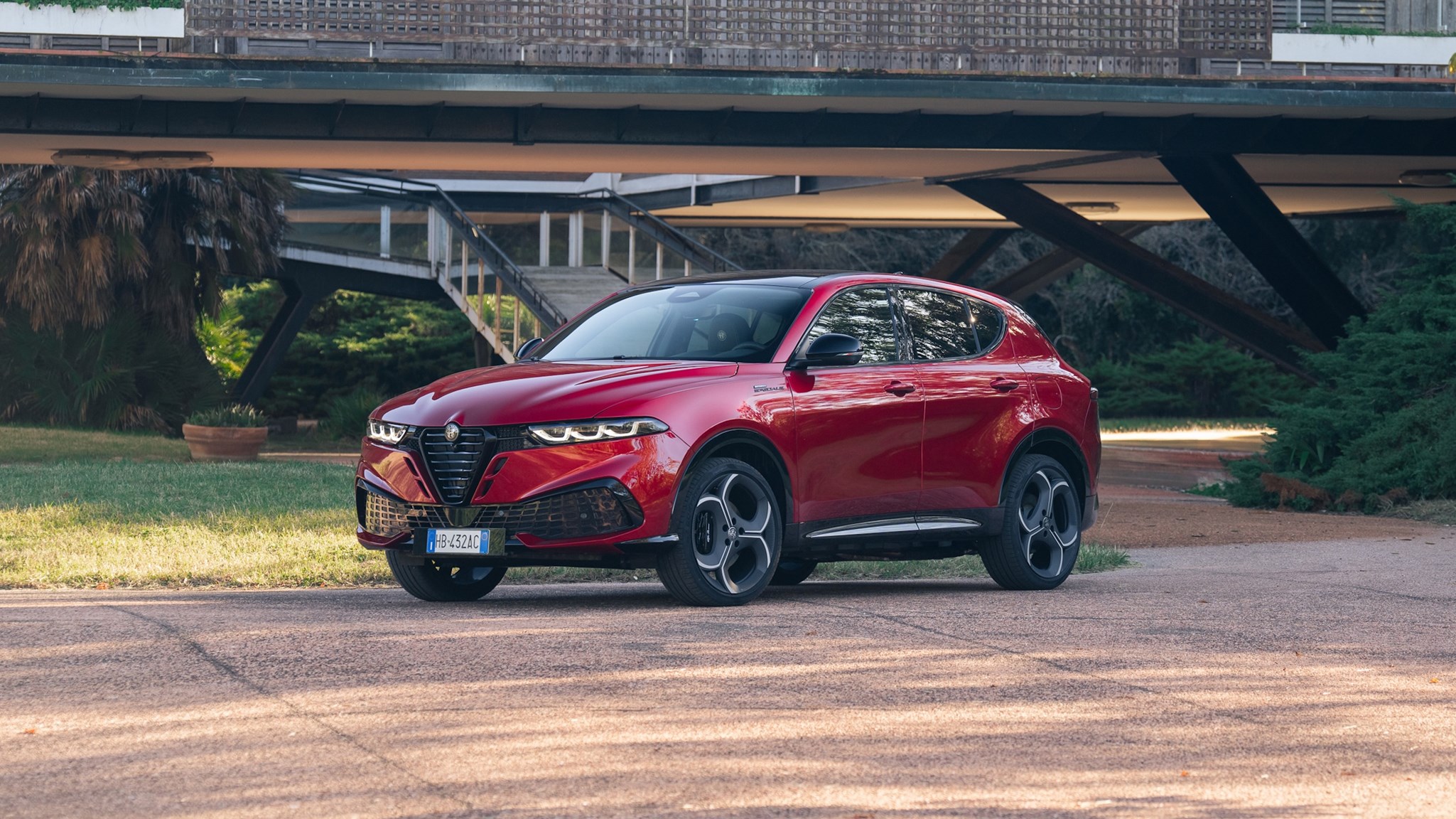
Not a great deal. The most obvious changes come at the front of the car, where Centro Stile has upped the aggression factor somewhat. The numberplate is now centralised (which does look better on this car) and above it the new grille has horizontal slats along with extra vents like the 33 Stradale supercar and Junior EV. The effect is quite nice, and even more ‘Alfa’ than before.
Inside is pretty much the same as before, though there’s a new rotary gear selector and ventilated wireless charging pad. There are also three new exterior colours: Brera Red, Monza Green and Ocra. There are two new wheel designs, including a 20-inch Fori design, (a Trilobe design) and now eight interior choices – including Alcantara.
What are the specs?
The same as before, essentially. If you’re expecting the Tonale’s new electrified engines to exhibit the same sort of character as Alfa Romeo’s old TwinSpark units, you’re sure to be disappointed. The cheapest option we get in the UK is a 158bhp 1.5-litre petrol-hybrid, complete with seven-speed automatic gearbox and 20bhp electric motor.
I drove the PHEV, which is also largely unchanged from before: The system comprises a turbocharged 1.3-litre four-cylinder petrol engine driving the front wheels and an electric motor powering the rear, for a combined output of 276bhp and a 0-62mph time of 6.2 seconds.
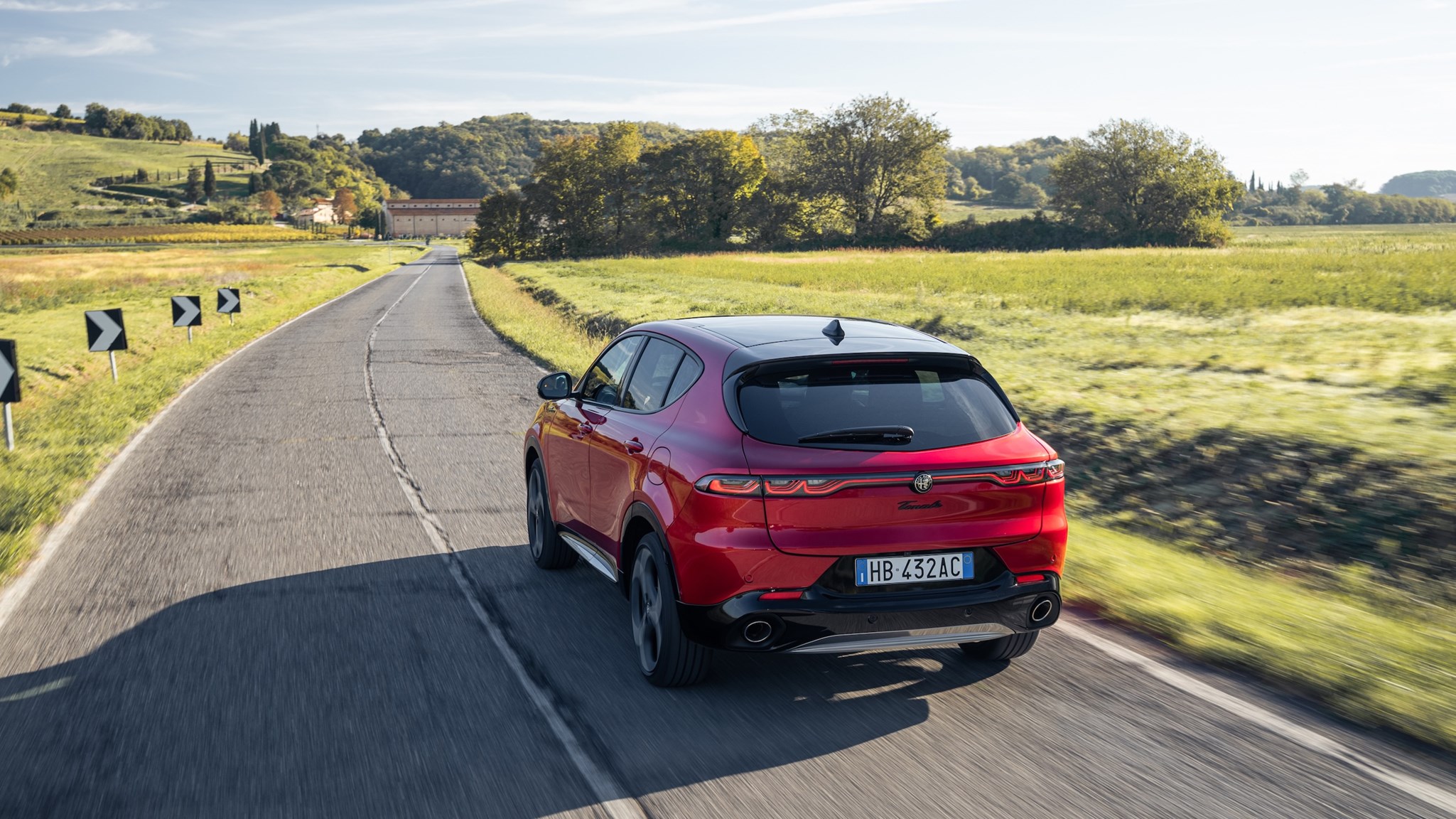
The Tonale PHEV can drive for up to 43 miles on electric power alone, which puts it well ahead of the 28 miles Volvo claims for the plug-in-hybrid-powered XC40. It also puts it in a lower tax band for company cars, which might mean for the first time in a long time you can ask your fleet manager for an Alfa without their eye twitching.
The battery pack is a 15.5kWh unit which takes just 2.5 hours to fully recharge using the car’s onboard 7.4kW charger. This is also better than the Volvo.
The track has been made ‘1cm wider’ better for road holding, while the powertrain has also had refinements on the software and calibration side.
What’s it like to drive?
The Tonale was never a bad car to drive, though it did feel a little gutless, due to a few key issues, the most glaring of which was an indecisive, somewhat lumpy powertrain. In the old car, you’d often feel as though you were in the wrong gear, with the car bogging down or straining mid-corner.
The facelift has fixed that. The powertrain is now significantly smoother and more intuitive than before, and more faithfully represents the 276bhp it can produce. The Tonale seems to have more zip on faster roads, feels less clunky on slow ones – and is a more refined product overall.
Power is delivered in a more linear fashion, and traction is good even on slippery roads, without understeer creeping in too much. Finally, the hybrid system comes into its own accelerating through the gears – with the electrical kick adding some performance spice on top of the ICE engine’s laboured noises.

The brakes are untouched, which is fine as they were suitable before, but nor has Alfa interfered with the steering. That’s not a good thing, because now with a better powertrain in the mix, the steering’s failings are more evident. The Alfa has a quick, darty rack, but it feels relatively light – and it doesn’t weigh up much at higher speed or in more exotic driving modes.
The result is a wheel that can feel somewhat disconnected from outside events. Not the sort of feeling you want from a drivers’ car – which is exactly what Alfa is pitching this as. Still, it’s fine and easy to use around the narrow streets of Pisa, at least.
As for the increased track? I can’t say I noticed an improvement in road-holding at all.
What’s the interior like?
Nicer than I remember. It doesn’t feel a parts bin special, and it wraps around the driver in a satisfying, relatively premium way. There are lashings of design flair, from the beautifully backlit strip across the dashboard to the unusual wheel-mounted starter button and stunning aluminium paddle shifters. The driving position is fashionably lofty, but the raised centre console hems you in and makes the cabin feel sporty.
Technology is present, and there’s a 12.3-inch digital instrument panel and 10.25-inch cockpit display, like the original car. But there’s a range of buttons here, too. Common sense wins again.
New for the facelift is a rotary gear selector that reduces clutter around the transmission tunnel and phone charger/cubby hole. However, it’s the only part of the interior that looks a little out of place. It’s big, brutal and usable – unlike its more stylish, delicate surroundings.
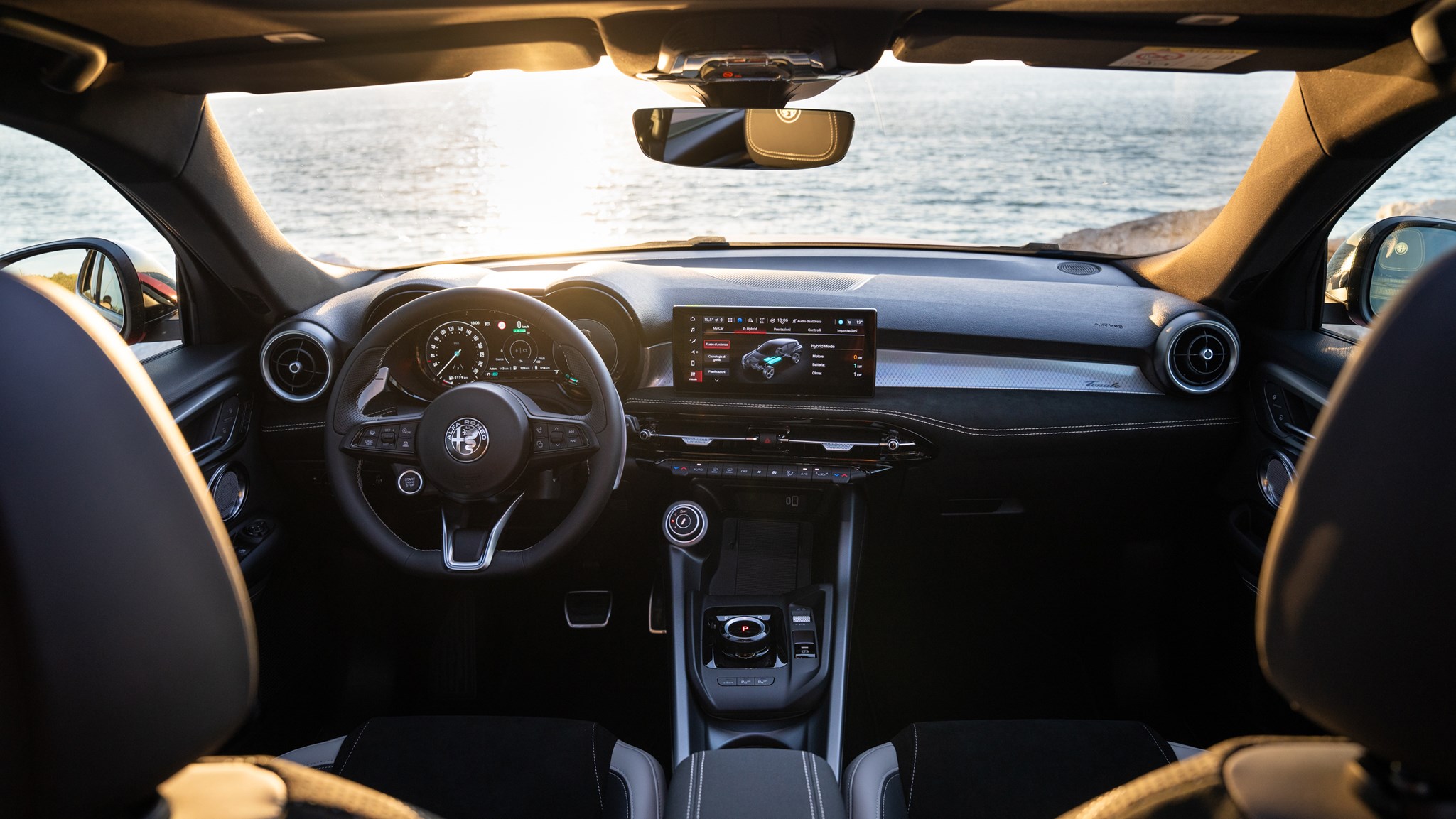
The Tonale now has a wireless ventilated charger, which helps on the tech front. A dongle is also available to unlock the car, and now Alfa will sell you a rubber strap to wear it. It works, but it’s not really necessary.
Some of the plastics are still a little mediocre. However, there is now Alcantara available in selected trims.
Before you buy
The facelifted range kicks off with the basic Tonale trim which gets 17-inch diamond-cut Aerodinamico wheels and black fabric seats. The Ti takes things up with gloss black window frames and you also get eight-way electric seats at the front as well as lumbar support. This mode also gets the paddle shifters.
The Veloce sits at the top, with 19-inch Stile wheels, LED Matrix headlights, red Brembo brake calipers, and a blacked out Tonale logo. It also gets trick ‘DSV’ dual-valve electronic suspension.
We drove the ‘Sport Speciale’ launch edition which builds on the Veloce for a limited time. That gets silver accents, gloss black calipers and a black, white and Alcantara interior.
Verdict
The facelifted Tonale doesn’t add much, but it’s still a useful step over the original car. The exterior looks are even better, the powertrain works now, and the interior feels premium and sporty if you don’t pay too much attention to some of the materials. However, the Tonale is still hard to recommend: numb steering stops it from being a true drivers’ car – and therefore a serious Alfa – and it’s still not as good at the sensible stuff as the competition.