► The 4.7m long Smart
► 100kWh battery and 800v charging
► Its best car yet
If you thought Mini was pushing its luck when it introduced the Countryman, you should see the Smart #5. At 4.7 metres long it’s straying towards the segment above the not-so Mini and is available with up to 637bhp if you pick the twin motor Brabus version.
Underneath the Smart flavoured bodywork is the same platform that underpins the Zeekr 7X, which means 800v charging for big battery models and clever drive assist tech. There’s also a heavy focus on ‘premium luxury’ with real leather seats for some models and interior plastics that would shame a modern electric Audi.
It’s not like it’s that pricey, either. Prices start at a smidge under £40k, and top out a little over £50k if you must have a Brabus. Kit levels are still very impressive, so the new Kia EV5, excellent Renault Scenic and ever sensible Skoda Enyaq had better watch out.
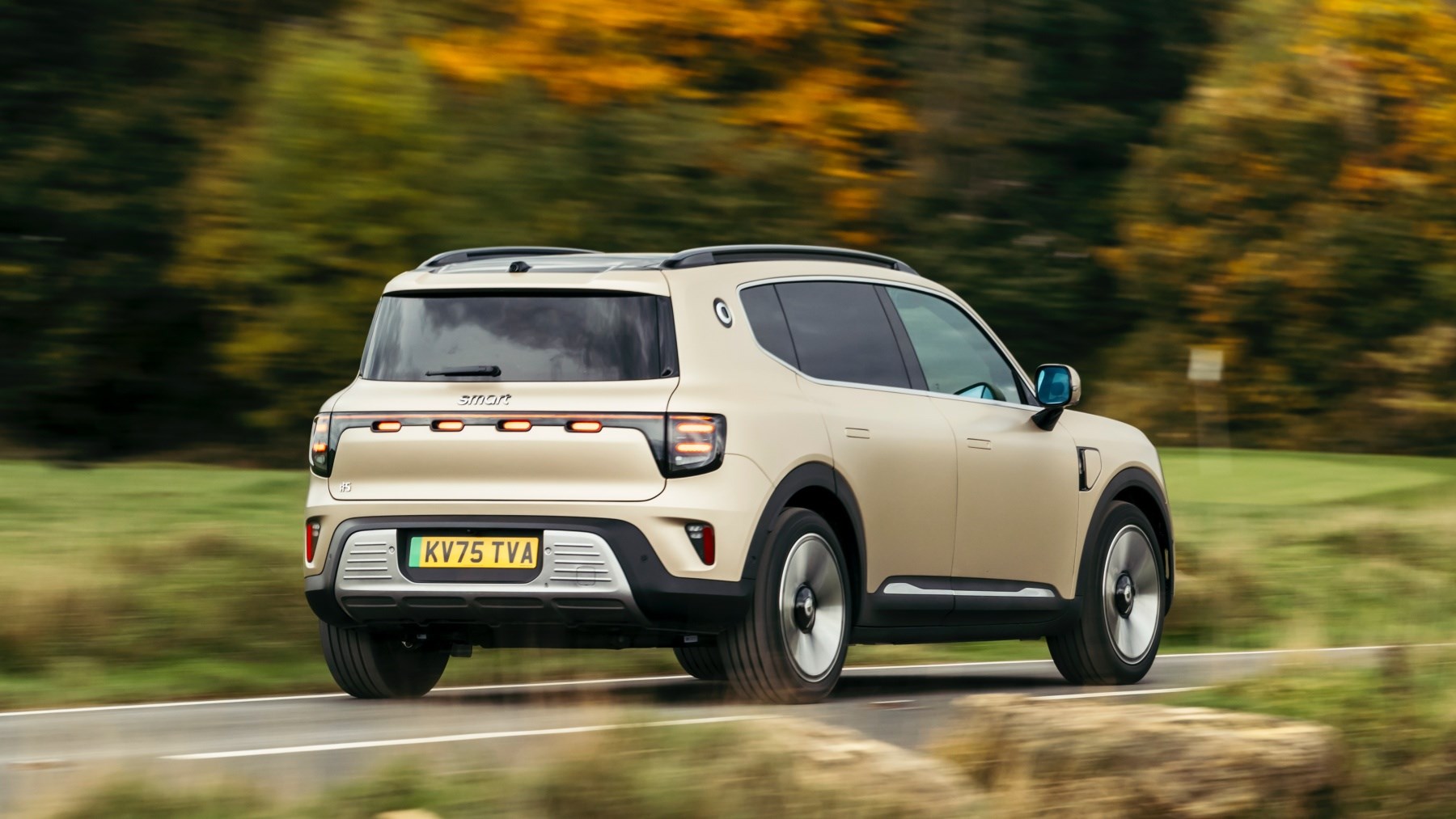
We’ve now driven a few versions of the #5, starting with the Brabus in Portugal and in the UK. We’ve also driven the entry-level small battery Pro, and a plush Premium with the big battery. Both of these versions were rear-wheel drive, although a four-wheel drive non-Brabus Pulse model is also available. If you’re curious about how we test, have a look at our explainer page.
At a glance
Pros: cushy ride, strong performance, upmarket and spacious interior
Cons: Poor efficiency, Smart assistant isn’t smart
What’s new?
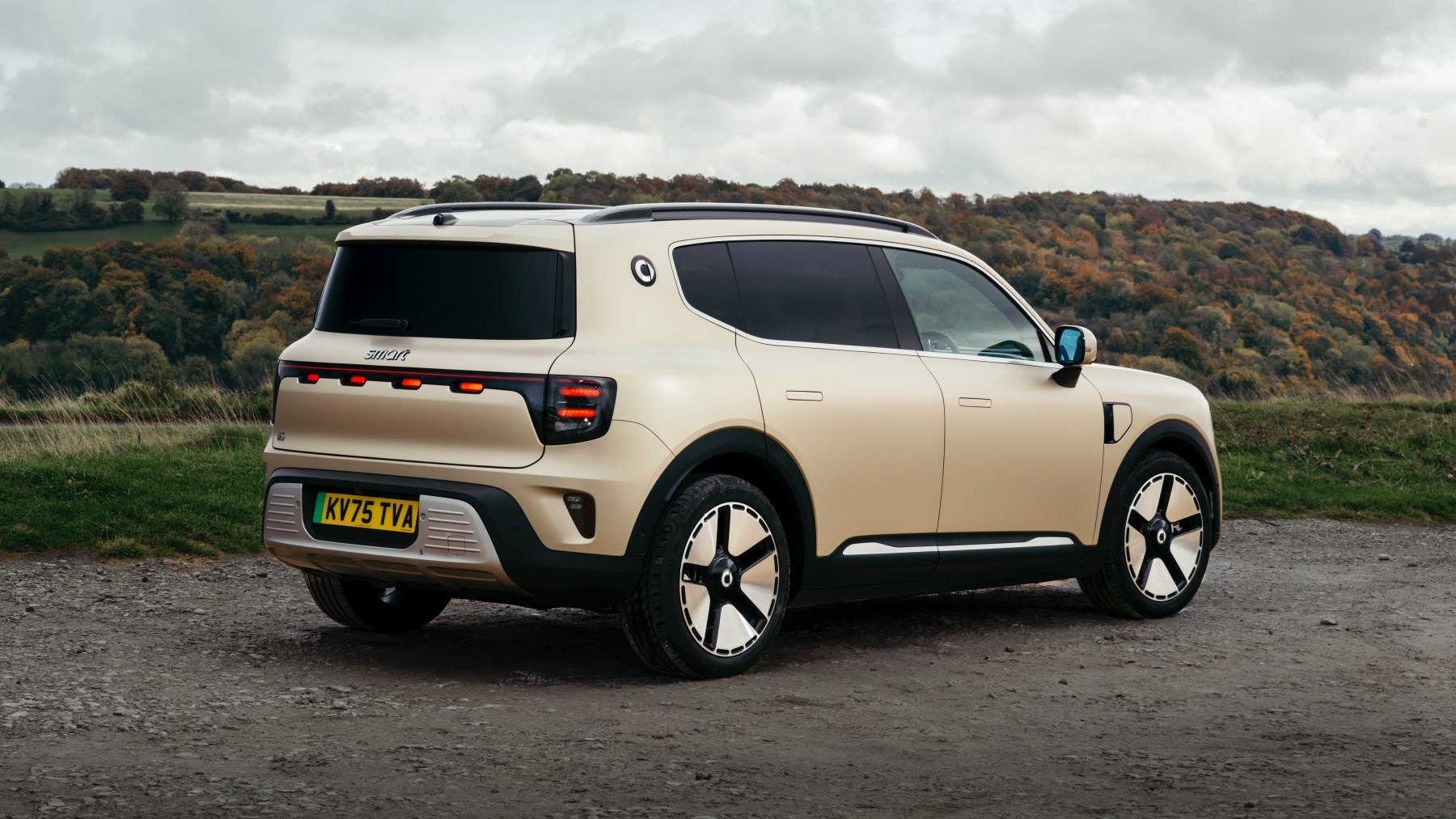
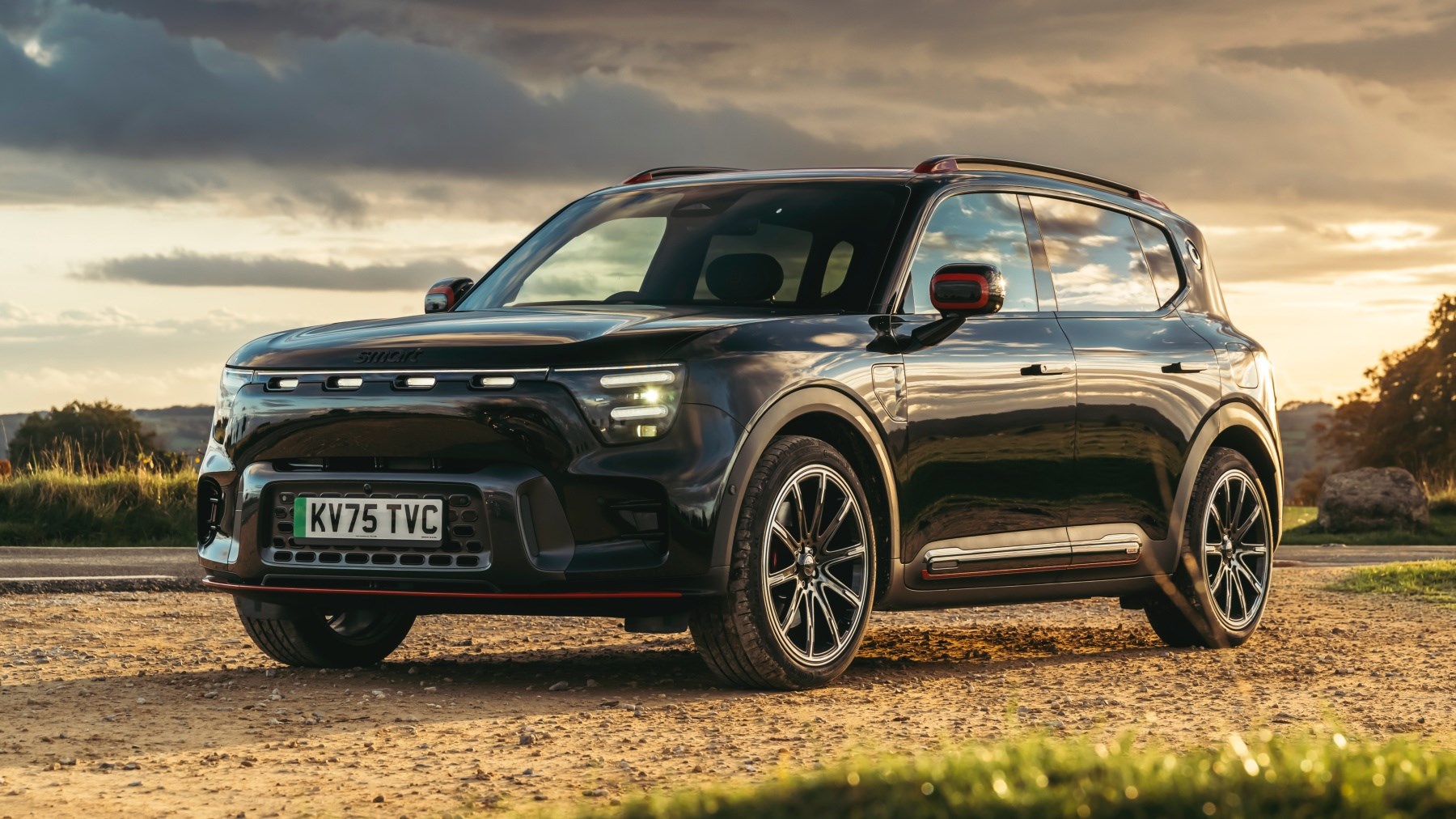
Smart remains a partnership between Geely and Mercedes Benz, with the latter responsible for design and the former taking care of hardware. Stuttgart has come up with a more handsome and cohesive design for the Smart than some of its in-house cars, and the result something that looks both handsome and rugged in equal measure – though toned down compared to the concept car.
The theme is ‘beyond urban’ and that’s evident in the car’s squared off looks. It’s also evident in a new light signature, which remixes the continuous light bar of the #1 and the #3 into four oblongs which make everything look very utilitarian. It’s a good-looking car on the road, and it wears its 4.7-metre length and substantial 1920mm width well.
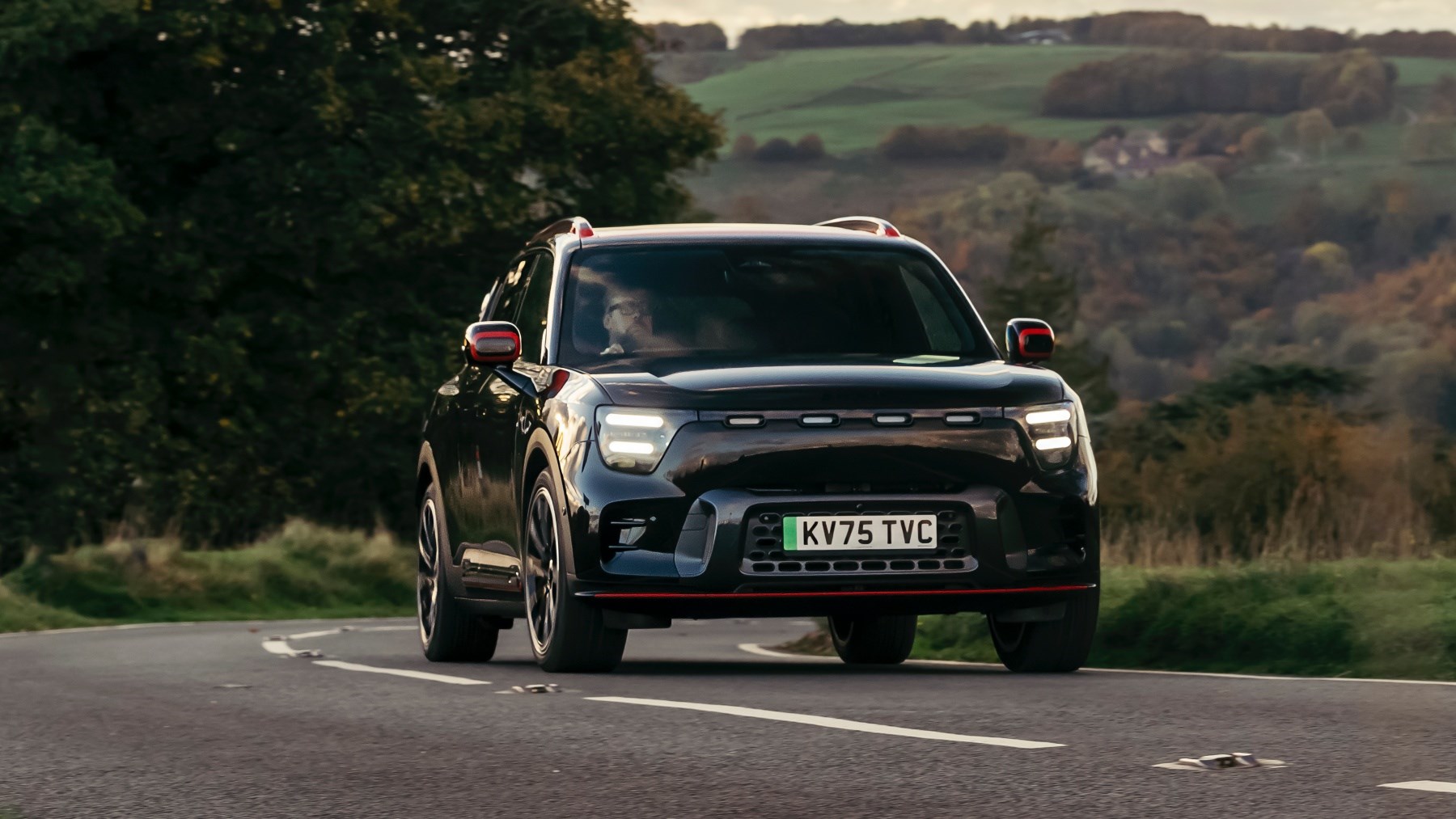
The sums looked good enough to jump into the D-segment, but according to both Xuan-Zheng Goh, head of product management at Smart Europe and Jason Allbutt, CEO of Smart UK, this is the biggest product you’ll see for a while from the brand.
And let’s get it out the way now, Smart execs say the brand follows the design philosophy of ‘the smallest possible footprint with the biggest possible space,’ and always has. With that in mind, the Smart #5 is huge, but keeps to the formula.
What are the specs?
The range starts with off with the 335bhp, 2200kg Pro, which uses a smaller 76kWh battery (74.4kWh usable) for a range of 288 miles, and 0-62mph launch of 6.9 seconds. It’s rear wheel drive only and will take 30 minutes to charge from 10-80%, due to its slower 150kW charging.
Next up is the 358bhp Pro+ and Premium that are good for 0-62mph in 6.5 seconds. They get a 100kWh battery (94kWh usable) to give a WLTP combined range of 366 miles which is good, but not outstanding for the class. When do you need to top-up, you’ll be able to 400kW charge from 10% to 80% in less than 18 minutes. Not many rivals can beat that, and the weight penalty is only 60kg over Pro.
The range-topping Brabus has a 2378kg kerb weight and packs in 637bhp of power. It uses the 100kWh battery for a WLTP range of 335 miles. 0-62mph is a ridiculous 3.8 seconds thanks to the efforts of the twin motor four-wheel drive. A slower twin motor Summit with a mere 579bhp is also available, covering off 0-62mph in 4.9 seconds and with a WLTP range of 335 miles, too.
What’s it like to drive?
It doesn’t matter which version of the #5 you pick, you’re in for a comfortable ride. Supple springs and gentle damping allow it to breathe with the road’s surface better than most tightly-damped rivals. Poorly surfaced stretches and potholes don’t upset any version too much, including the Brabus, but things are a little better on the smaller 19-inch wheels.
Light and accurate steering in Comfort mode builds some useful and not OTT weight as you move up to Sport and Brabus mode, where fitted. Brake pedal feel is worth a mention, with no squishy regen before you hit disc and pad. Instead, there is a consistent and reassuring response that makes them confidence inspiring and easy to modulate.
Even the base Pro has plenty of pep, outpacing many similarly-priced electric SUVs, with the Pro+ and Premium a little brisker still. Usefully, they don’t run out of puff at speed, either, so A road overtakes can be carried out in confidence. Rear-wheel drive ensures there’s no torque steer and, for the most part, good traction.
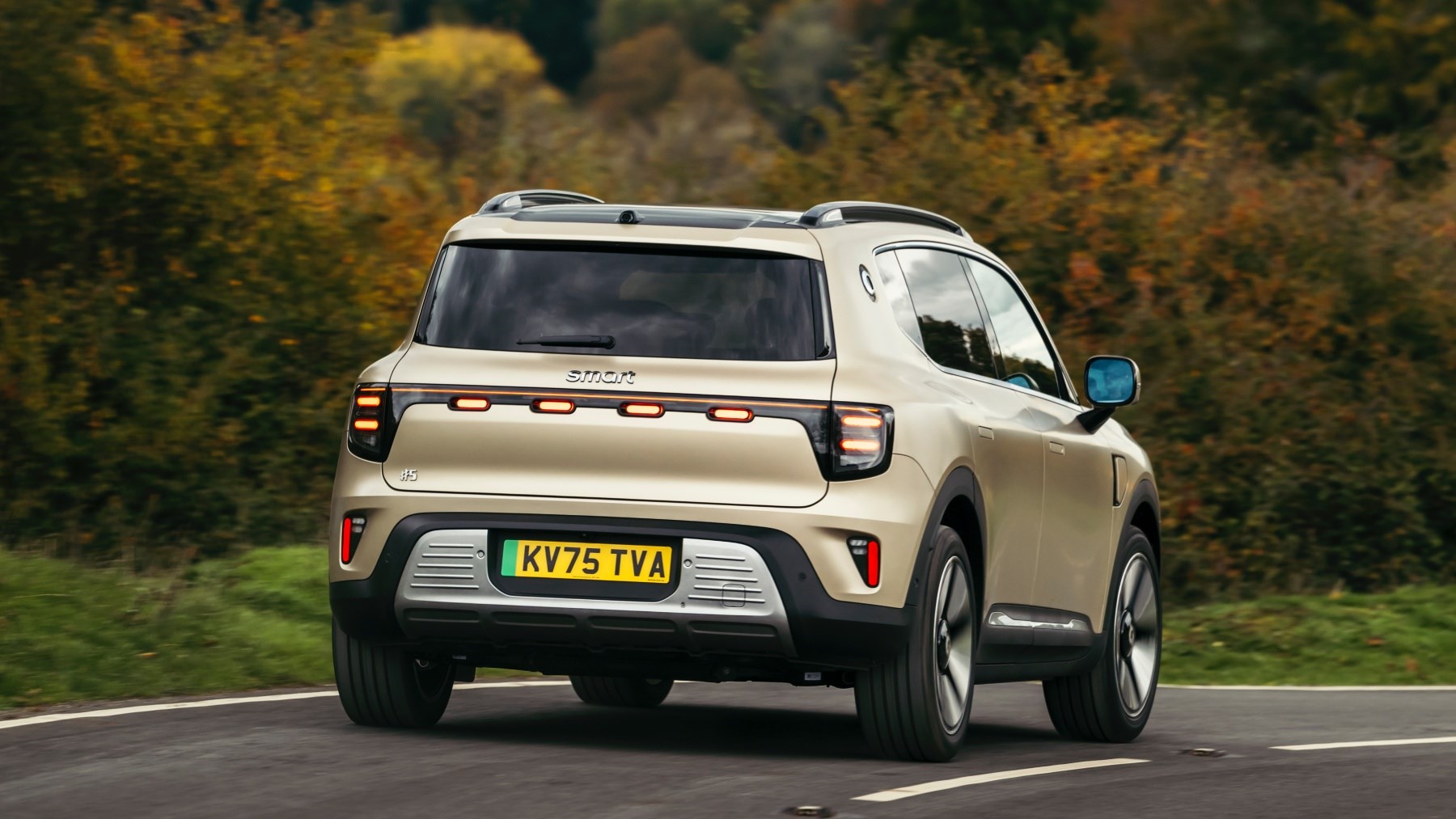
Place the RWD #5 into corners at pace and you’ll get some tyre squeal but not the inevitable roly-poly mid-corner experience you’d expect. There’s less lean than you might initially expect and good levels of grip, plus the pleasant feeling of being pushed out of corners rather than pulled. Disable the ESC and it’ll even be persuaded sideways, at which point the long wheelbase does wonders for stability.
As with the #1, the Brabus is designed to feel much like the regular Smart, just with weapons-grade levels of power. Thankfully, it seems to handle its prodigious reserves of power better than its little sibling, even if the front motor does kick in a little suddenly at times. It retains a rear-biased feel on corner exit, and doesn’t mind being chucked into corners, but certainly can’t match the sharpness and involvement of the admittedly pricier Ioniq 5 N.
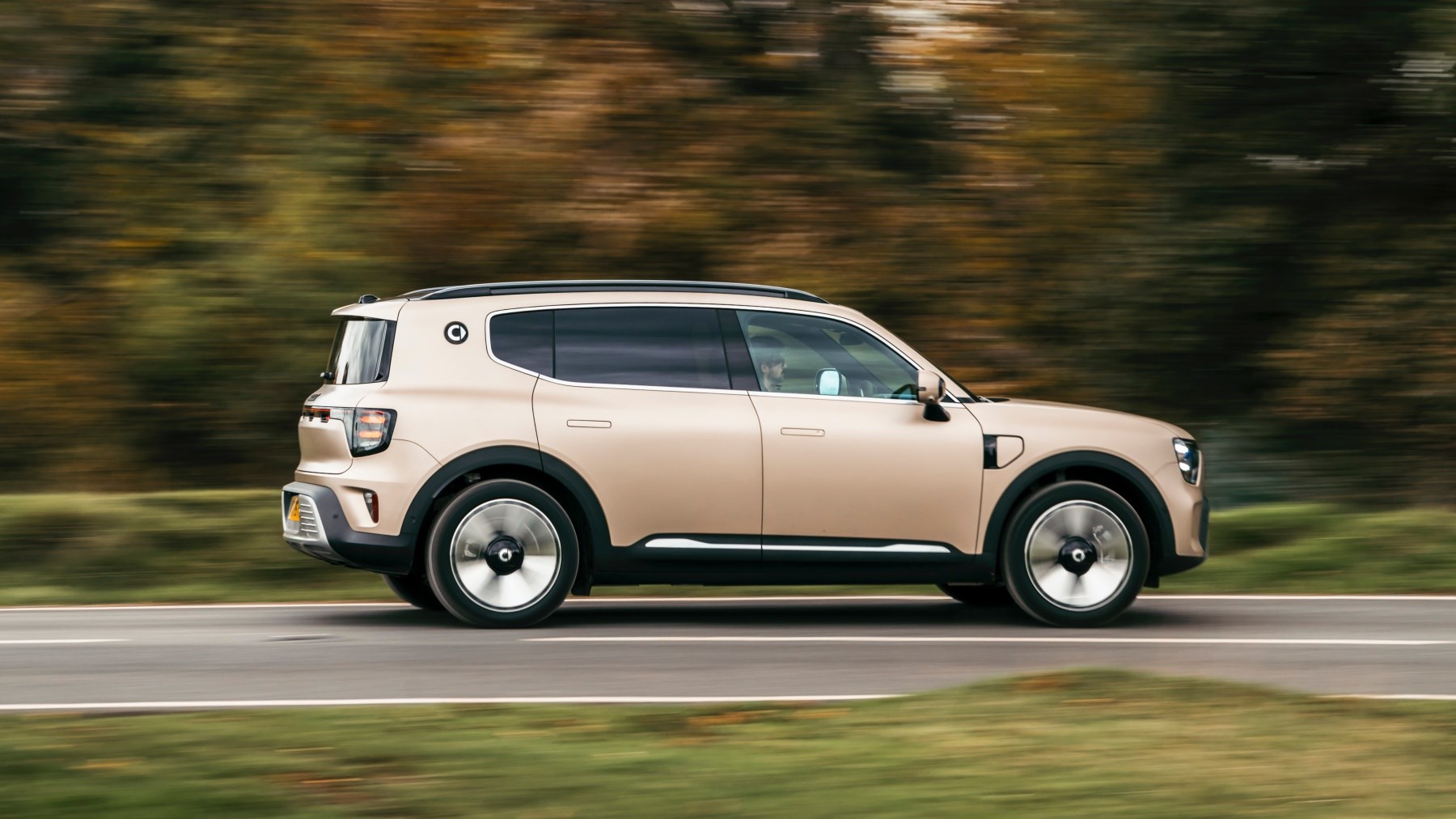
The final part of the Brabus equation is the power delivery, which is bordering on obscene. It’s fast enough in Eco or Comfort modes, but flick to the spicier settings and the #5 has that alarming acceleration you often get with EVs. If anything it feels faster beyond 30mph than below, and is still pulling hard at motorway speeds. It’s relatively linear and addictive, and better yet, the chassis can handle it about 80% of the time.
That performance does come with a few caveats; particularly around efficiency. We averaged around 2.4 miles per kWh from the Brabus on a long drive, and managed around that from a single motor in the UK. Admittedly we did make use of the performance on offer at times, but we would have expected more.
What’s it like inside?
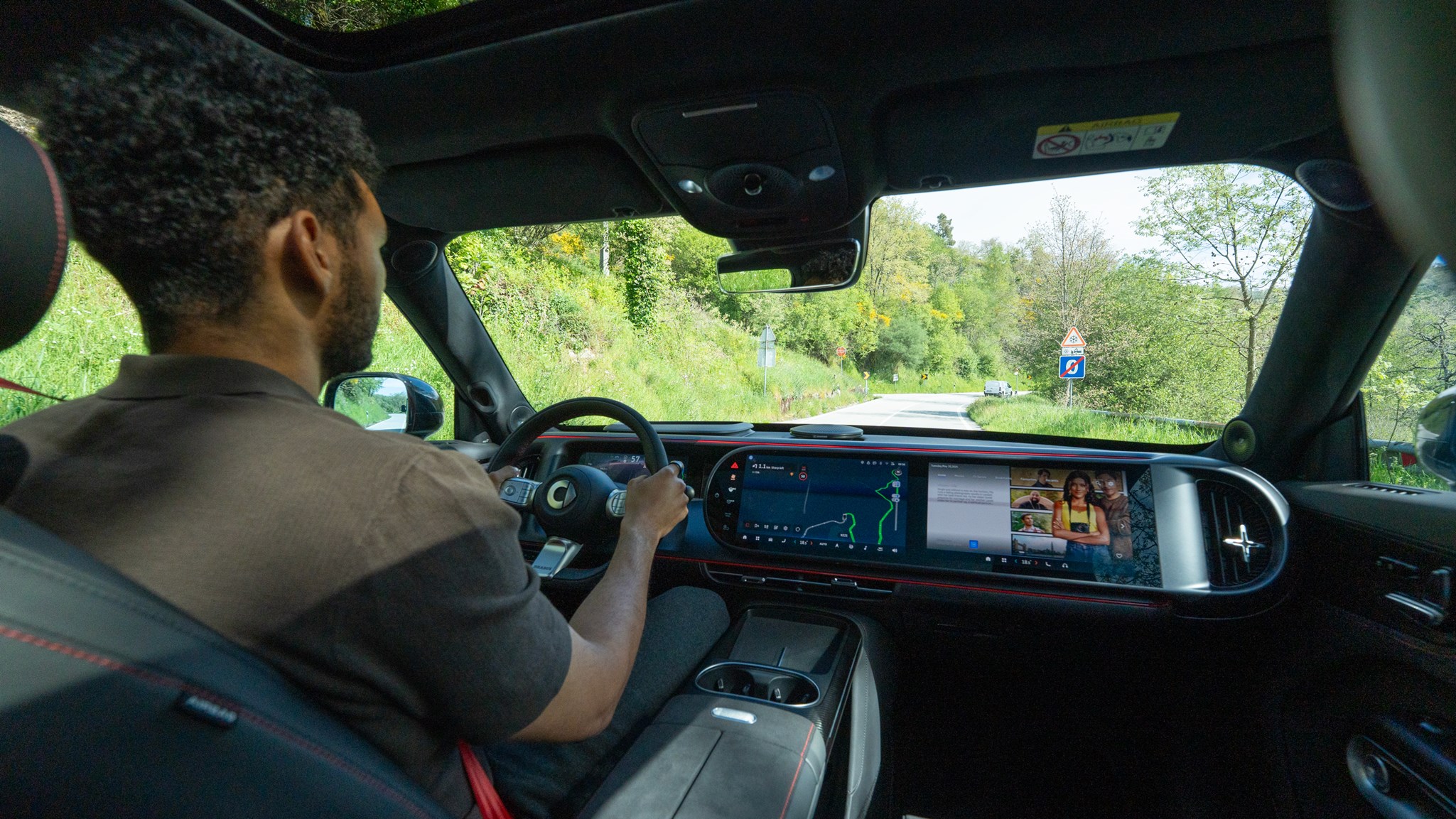
Somewhere between Teletubby land and a Mercedes C-Class. Smart says it’s aimed for ‘luxury saloon with SUV space,’ and we’d say it’s there or thereabouts. Front and centre is a large 13-inch touchscreen on Pro and Pro+ models, with Premium and up getting a second 13-inch display next to it for the front passenger. Smart has done a lot of work on the UX front, particularly focusing on persistent menu buttons, which it says are a neat halfway house beyond endless menus and real switchgear. Other bits, like the Drive Modes have dedicated haptic switches, but more buttons for things like the temperature would still be welcome.
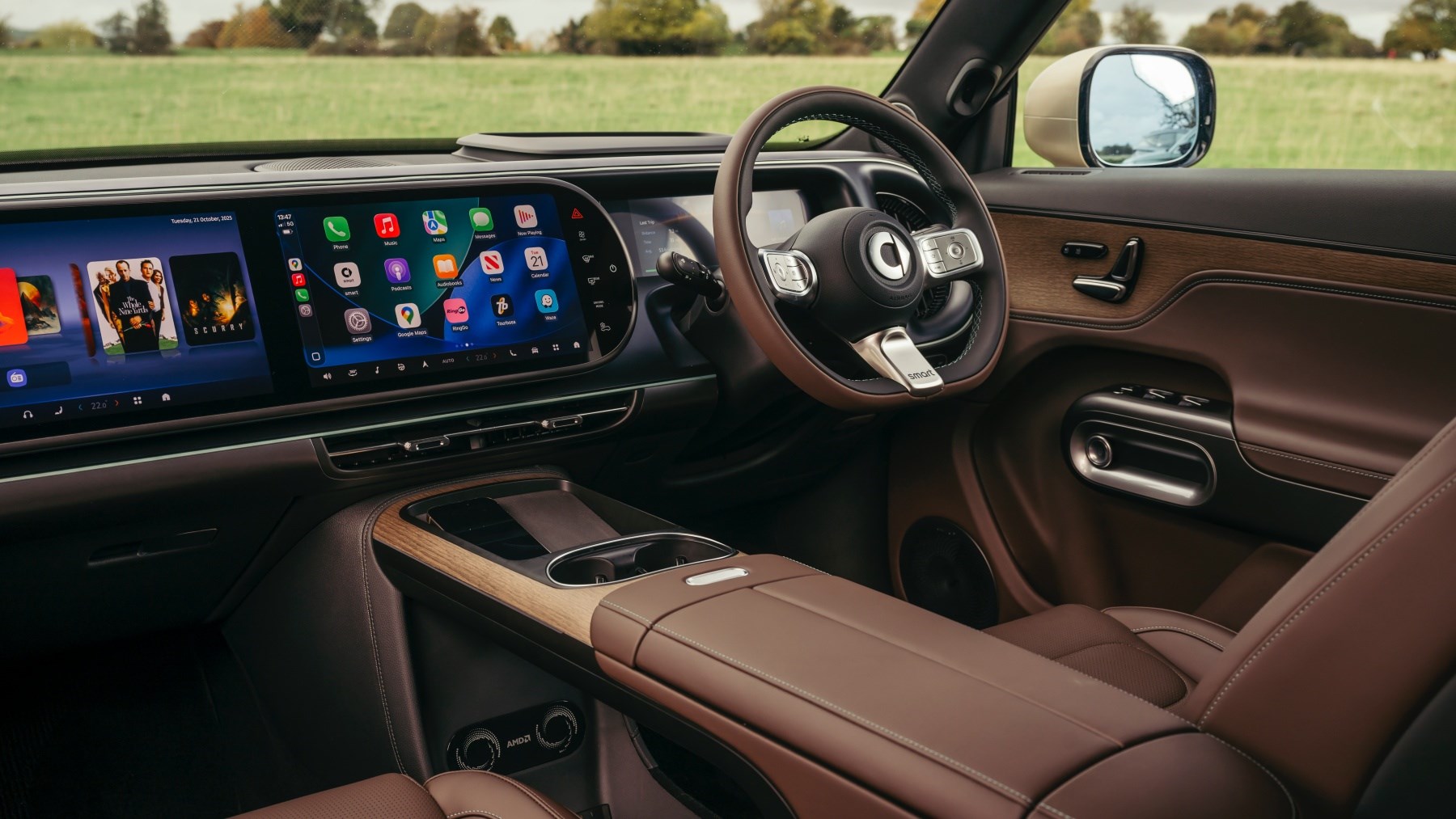
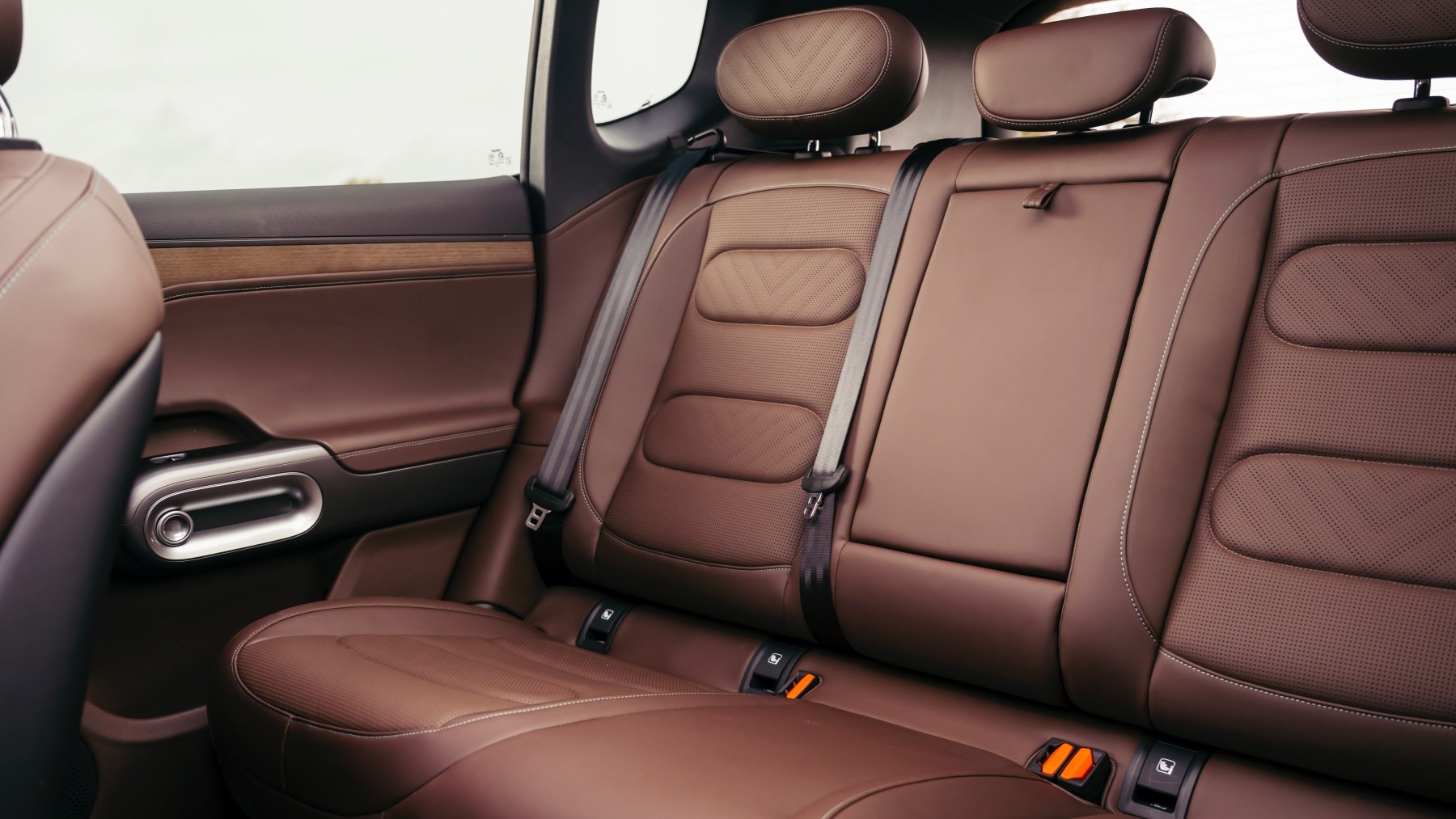
The materials of all models are also of a good quality, with lots of soft touch plastics including on the rear doors. Upgrade to Premium, Pulse or Summit and the electrically adjustable seats get covered in leather, with Brabus getting Alcantara.
The seats were comfortable and supportive during all types of driving, and they could be adjusted with a switch on the door like a Mercedes. Less good was the Smart assistant which seemed to eavesdrop conversations a little too attentively, often interrupting – and ruining numerous video takes.
Smart was also keen to point out a new 20-speaker Sennheiser-badged system, capable of Dolby Atmos sound. Weirdly the proper Atmos effect is only available through Amazon Music (who has that?) as opposed to Spotify or CarPlay – but we were able to test the system. It’s loud, crisp and certainly a step above most in-car stems – even at higher volumes – but unless Smart sorts better app support for Atmos playback, we’ll never know how good it could sound.
Elsewhere, rear passengers have generous amount of both leg and headroom, while the 630-litre boot (1530 with all seats down) is certainly competitive. Less impressive is the frunk, which is super shallow on the two-motor models, but able to swallow a cabin bag-sized item on the single, rear-motor models. Still, a frunk isn’t a guarantee, so we’re glad it’s there.
Before you buy
Only entry-level Pro dips under £40,000 with its smaller, slower charging battery, but you still get loads of kit. This includes dual-zone climate control, heated front seats, a panoramic roof, electric tailgate, 19-inch wheels, a 360-degree camera and all-round parking sensors, 256 colour ambient lighting and adaptive cruise with steering assist.
Pro+ gets you the big battery with 400kW charging and automatic main beam, with Premium really ramping up the luxury. Headlights become adaptive, front seats gain ventilation and the rears heating, there’a a heat pump, an augmented reality head-up display, auto parking, the passenger screen, 20-inch wheels and the Sennheiser stereo.
Pulse gets a bit less kit than Premium, ditching the stereo, head-up display and adaptive lights in favour of four-wheel drive, a different front bumper and some very attractive 20-inch wheels. Summit adds a gesture tailgate and a few model-specific stying touches. Brabus gets its own styling, 20-inch wheels, Alcantara seats and every luxury Smart can throw at it.
Verdict
If the Brabus impressed abroad, the regular #5s have cemented our admiration for Smart’s sizeable SUV. Its keenly priced against the likes of the Skoda Enyaq, and while a Renault Scenic is cheaper to buy, it doesn’t have the Smart’s premium feel inside and isn’t as comfortable, either.
There are keener handling cars in the class – Scenic included – but fun can be had in the #5, and its slightly soft nature is worth it for the ride comfort you’ll appreciate more of the time. With lots of kit and a spacious interior, this is a family car you should take very seriously indeed.
Specifications are for Brabus model.