► Read all our Hyundai reviews
► Hyundai Ioniq 6 N plays big brother to wilder 5 N
► Same power as 5 N but quicker to 62mph
► Not just a 5 N in a different outfit
Let’s be clear – we love the Hyundai Ioniq 5 N. It was the first electric car to take part in CAR’s fabled Sports Car Giant Test, competing on merit with the world’s best combustion engined cars. It’s obliterated every other electric hot hatch it’s ever come across. It brings joy to electrification. In short, it’s superb.
But there is a potential problem, in that Hyundai has chosen to build the Ioniq 6 N. Surely it doesn’t make sense to have two near-identical cars occupying the same forecourt? The result, though, isn’t quite as clear cut.
At a glance
Pros: Great balance between handling and comfort, outrageous pace in N Grin Boost mode, false gear changes
Cons: Still too many N modes and overly complicated set-up, Marmite looks, range when pushing on
What’s New?
Compared to the regular Hyundai Ioniq 6, pretty much everything. Compared to the Ioniq 5 N, there are less alterations but still with subtle differences that have the potential to yield big results.
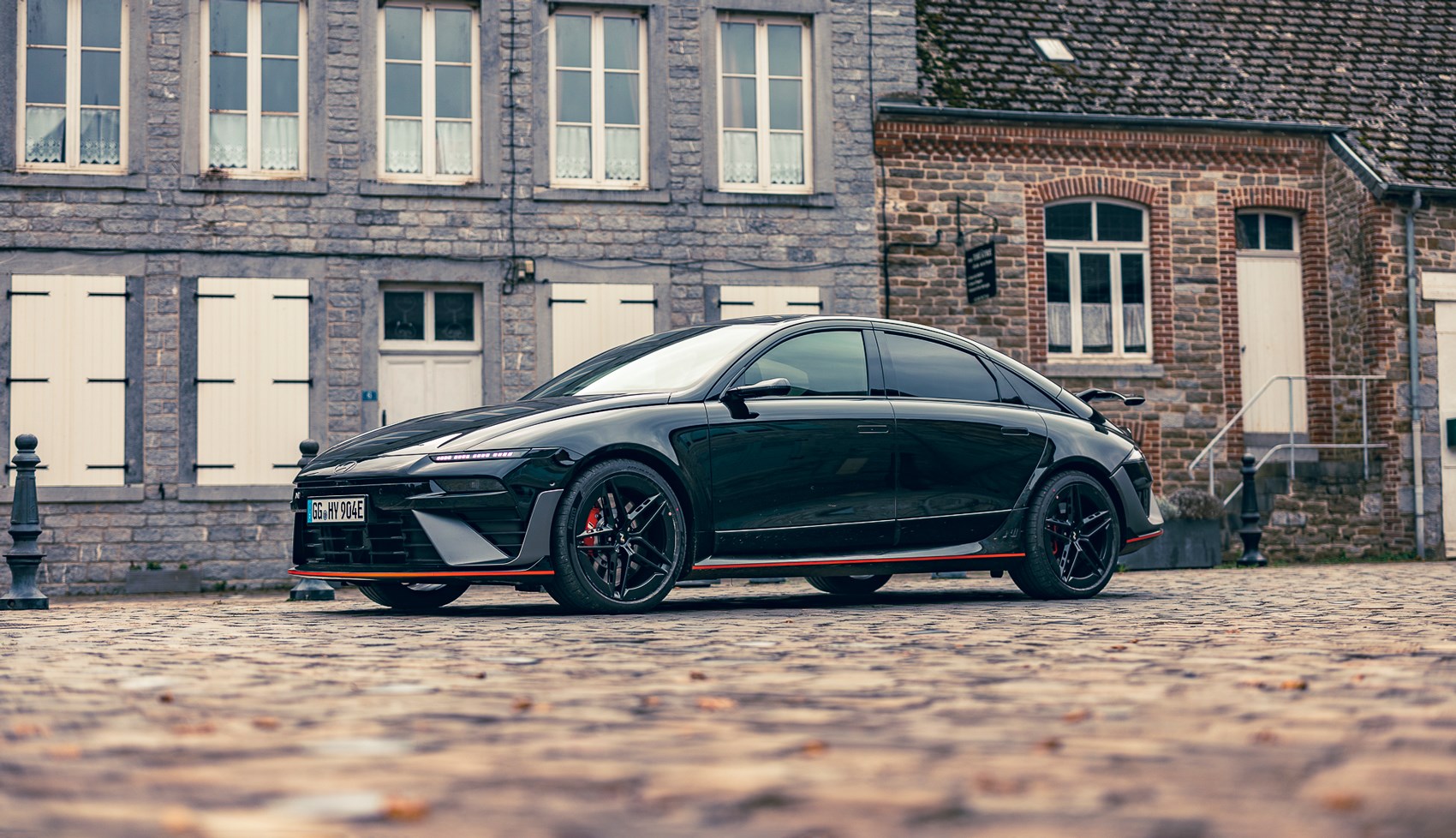
Outside, it gets a swan-neck rear spoiler (contributing to the 96kg of downforce), wider track (+ 60mm), fatter arches, and all sorts of bolt-on jewellery designed to keep things stable at big speeds.
But the cleverness lurks under the exterior. Hyundai N’s engineers have gone to town on the dynamics, gifting the 6 N a lower roll centre compared to the 5 N, new dampers, stiffer spring rates, new hub knuckles and better battery cooling.
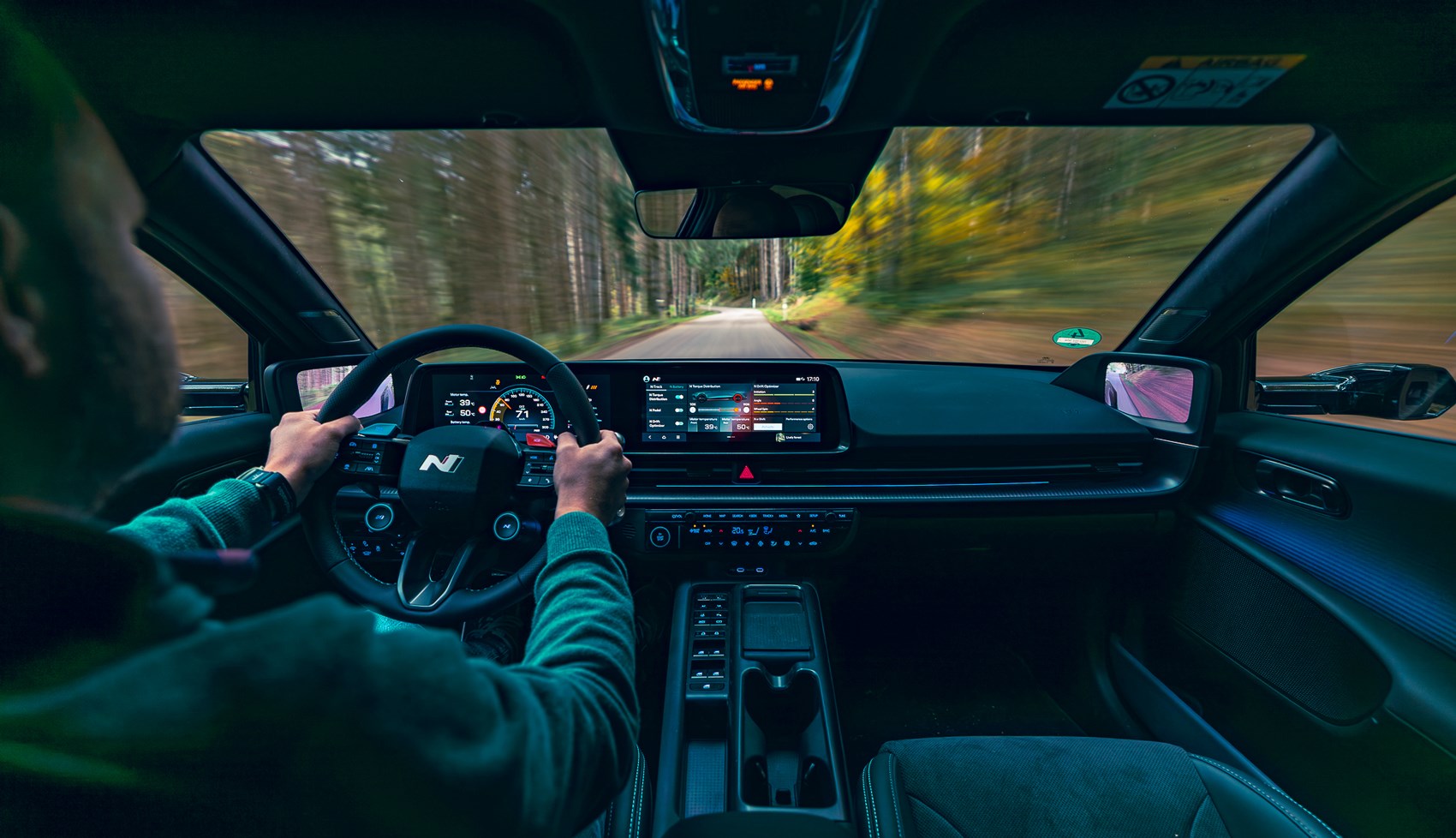
There’s also even deeper configurability within the N driving modes than its (already complicated) Ioniq 5 N sibling. There are N modes, of course, but in the 6 N’s case the N Drift Optimiser offers fine-grain control over rear-wheel braking, slip angle and wheel spin. There’s even a Track Map function that pings up details for the nearest circuit.
It gets the same multi-function steering wheel as the 5 N but in this case the centre infotainment display is a bit more clearly laid out.
It means this isn’t just a badge job. The 6 N wants to be the multi-tool of electric performance cars, with a wider breadth than anything its sibling-hot-hatch managed. Everyday comfort? Check. Track fun? Also check.
What are the specs?
The headline figures are, predictably, bananas. The Ioniq 6 N uses an E-GMP skateboard chassis (just like the 5 N), and slings a monster 641bhp to all four wheels (albeit in ten-second bursts, courtesy of N Grin Boost – normal power levels are ‘just’ 600bhp). There’s 546lb ft torque on tap and 0-62mph takes just 3.2 seconds, 0.2 seconds up on the 5 N.
There’s 800V wiring so charging from 10 to 80 per cent is possible in just 18 minutes. We stopped at a Fastned charger in Northern France and saw speeds of up to 254kW, the quickest I’ve ever seen in the real world.
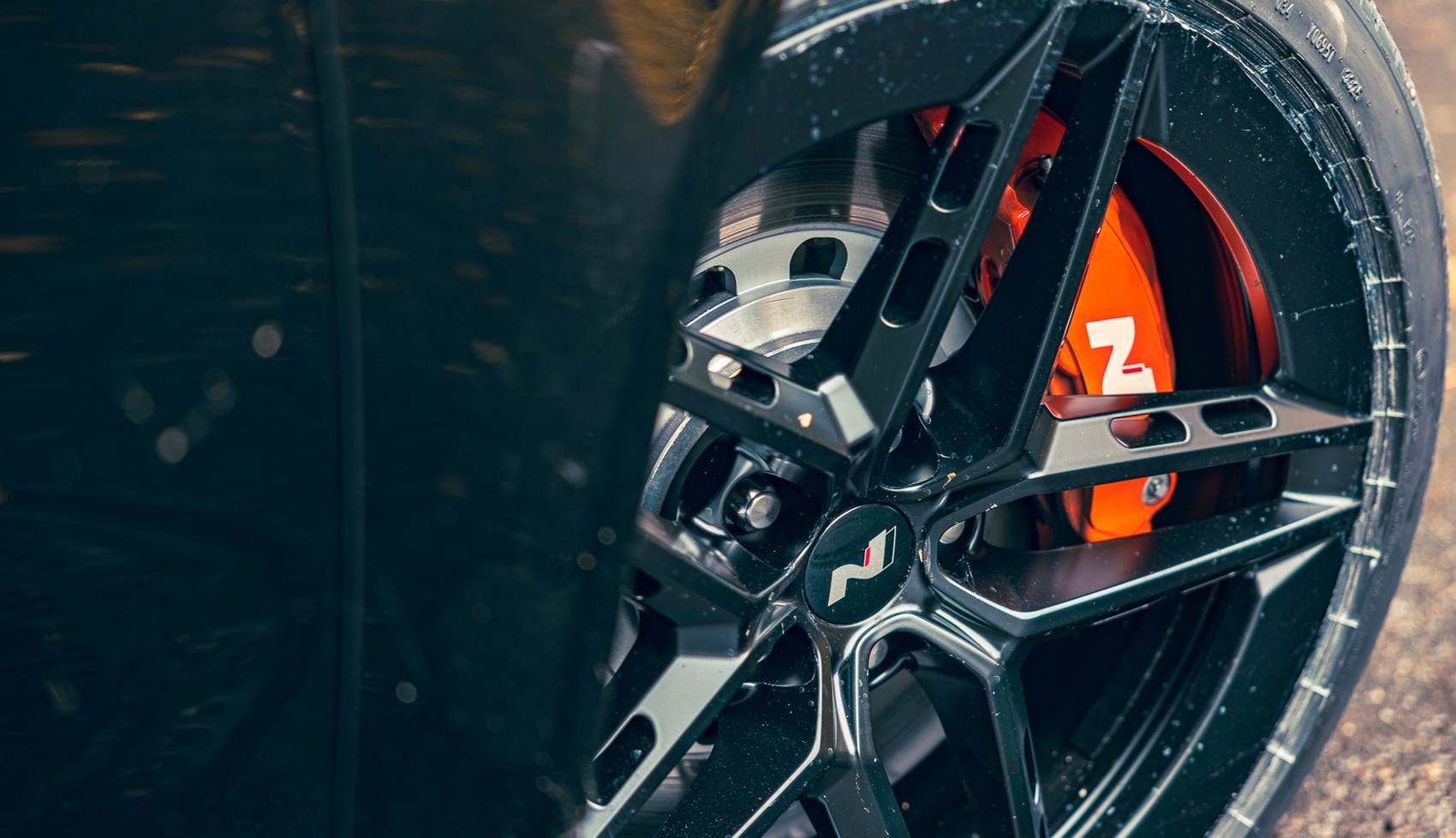
It runs the same 84kWh battery as the 5 N but also suffers from the same lack of efficiency. Hyundai might claim the 6 N has a wider breadth of ability than the 5, but our range flexed from 143 to 235 miles, depending on how silly we were being. But then that’s no different to the vagaries of a performance petrol car.
How does it drive?
This is where the Ioniq 6 N’s bi-polarity comes into play. Start your drive with the “calming forest” mode – birds chirping, faux-streams burbling – and you could be forgiven for thinking you’re piloting a mild-mannered eco saloon. But flick a wheel-mounted N button and it’s as if the clouds part, revealing a snarling soundtrack piped through to the cabin. It’s a lie, of course – a synthesised thrum that sounds improbably V6-like, complete with cheeky overrun pops on downshifts. But you know what? It’s brilliant.
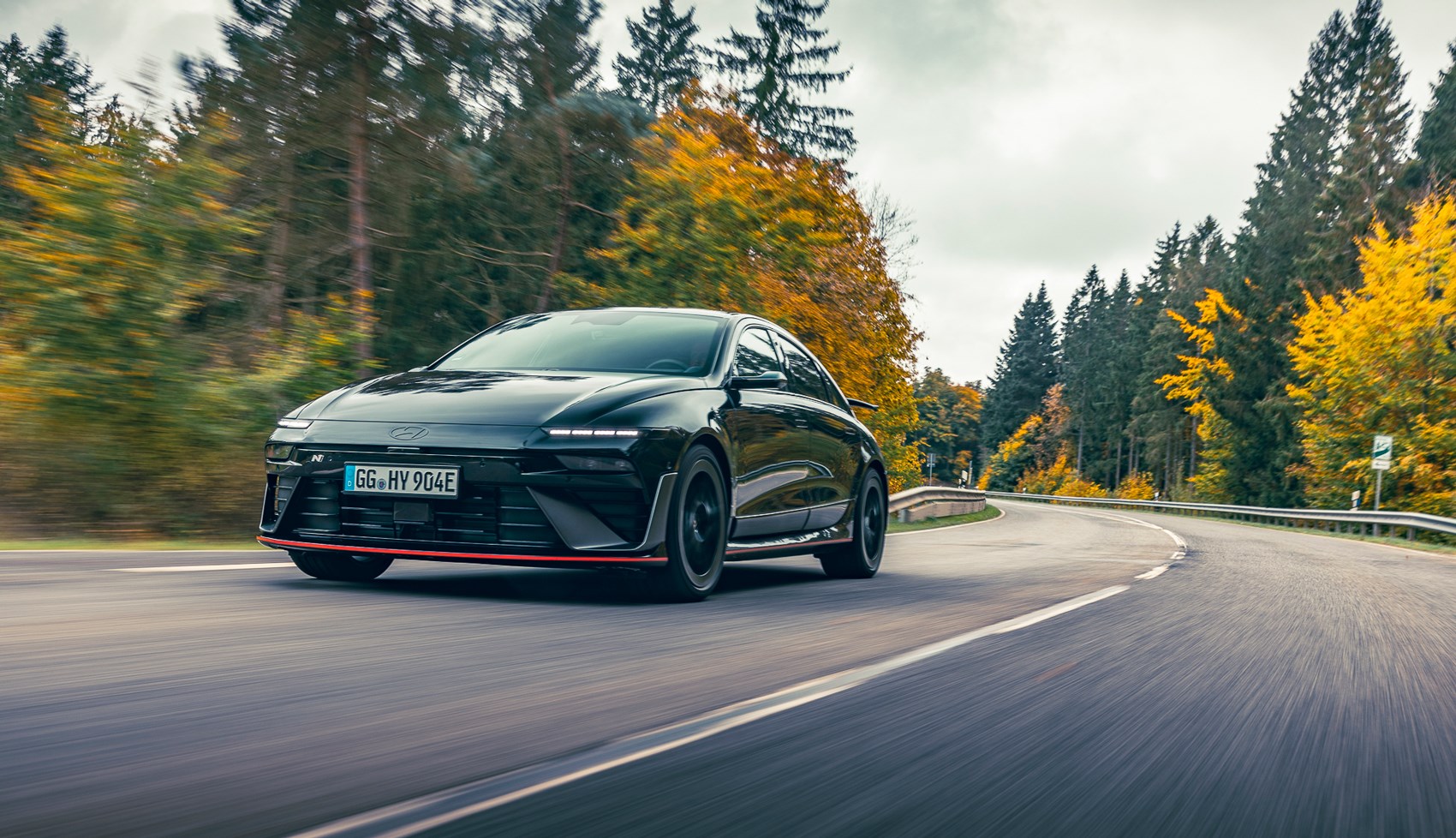
On the move, the 6 N isn’t quite as blood-and-thunder wild as the 5 N, but it’s no less fun. It feels reassuring – where the Ioniq 5 N could be a bit hair-trigger, the 6 N is composed. There’s still edge and enjoyment there, but with a bit more sophistication. My favourite N mode was Drift Optimiser.
There are three settings within this: Initiation, Angle and Wheel Spin. Then within those there are varying degrees of each and to get into this mode, you need ESC off (press and hold) and be in Sport mode (that toggle on the steering wheel I mentioned). By the time you’ve done all this, your pal in his VW Golf GTI would be in Scotland.
Anyway, once you have got it all selected, it works brilliantly. I put Initiation in the highest setting as this gives the most brake bias to the rear (effectively mimicking a hand brake turn) and the 6 N reacts exactly as I want it to. It feels like the car has been building to this point over the length of our test, slowly revealing more of itself as I work out the infernally complicated modes, and peaks at just the right moment.
The steering is not the most feelsome but it’s sharp and direct. The brakes could do with a bit more feedback but they’re firm enough to give you confidence. More importantly, though, it’s a car that’s fun and humorous. Interesting. Not one-dimensional.
Flicking up and down the paddles, it’s a joy to sling through a series of corners, not suffering from the same weight transfer issues that afflict the 5 N, reacting just as I want it to. A quick lift on the way into a corner, and the rear tightens nicely, the car pivoting around you and feeling lithe in your hands. For something that weighs nearly 2.5 tonnes, it’s remarkably athletic.
Go hard at the gear changes, extending the revs all the way to the red line (remember – all this is fake) and the torque cut is aggressive, banging into the next one like a dog ‘box. The burble on the overrun adds to the theatre.
Do I forget that I’m in an EV? I don’t think it matters. It works. It’s fun. End of.
Open roads give me a chance to come out of N mode and see how the car relaxes into an easier gait. One click on the drive mode toggle (top left on the steering wheel) and we’re back into Normal. The engine note remains so I kill that as well and it’s here that the 6 N reveals a wider remit than the 5 N.
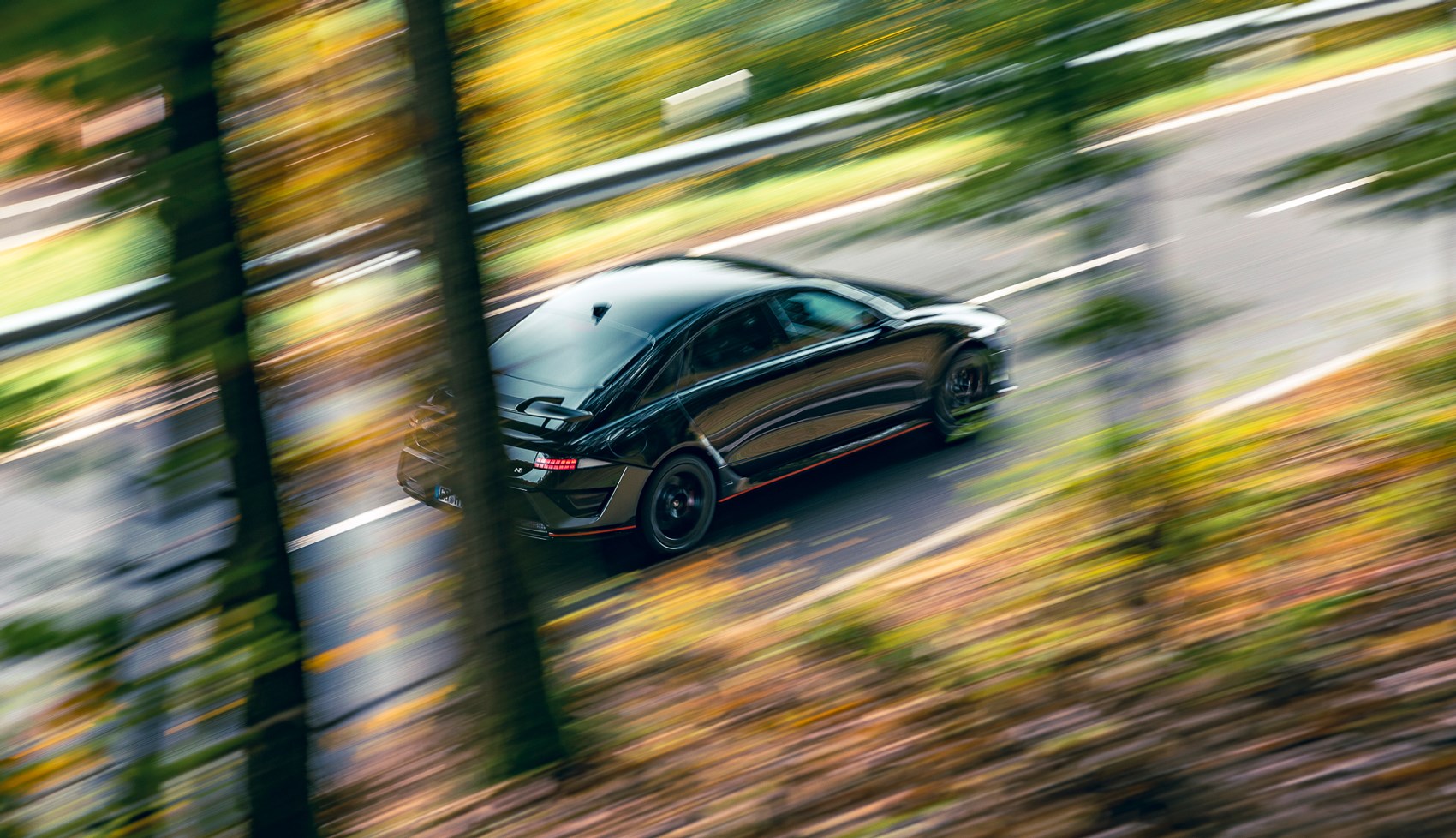
The 6 is still firm but the uprated damping gives the car a more sophisticated feel. Where the 5 slightly crashes into bumps, the 6 rounds them off more and you get less awkward body movement over mid-corner bumps. It’s easier to make it flow down a road and you fight it less
When you’re in Normal – soundtrack silenced, car relaxed – the 6 N is ready to chew up the motorway with ease. That ability to do both is the Ioniq 6 N’s real trump card.
What’s it like inside?
If you’ve been in a regular Ioniq 6, the basics are the same – loads of rear legroom, flat floor, minimalist dashboard – but N touches abound. The seats are brilliant: plenty of support, heating and ventilation, and more of a cocoon than the Ioniq 5 N, which by comparison feels a touch airy.
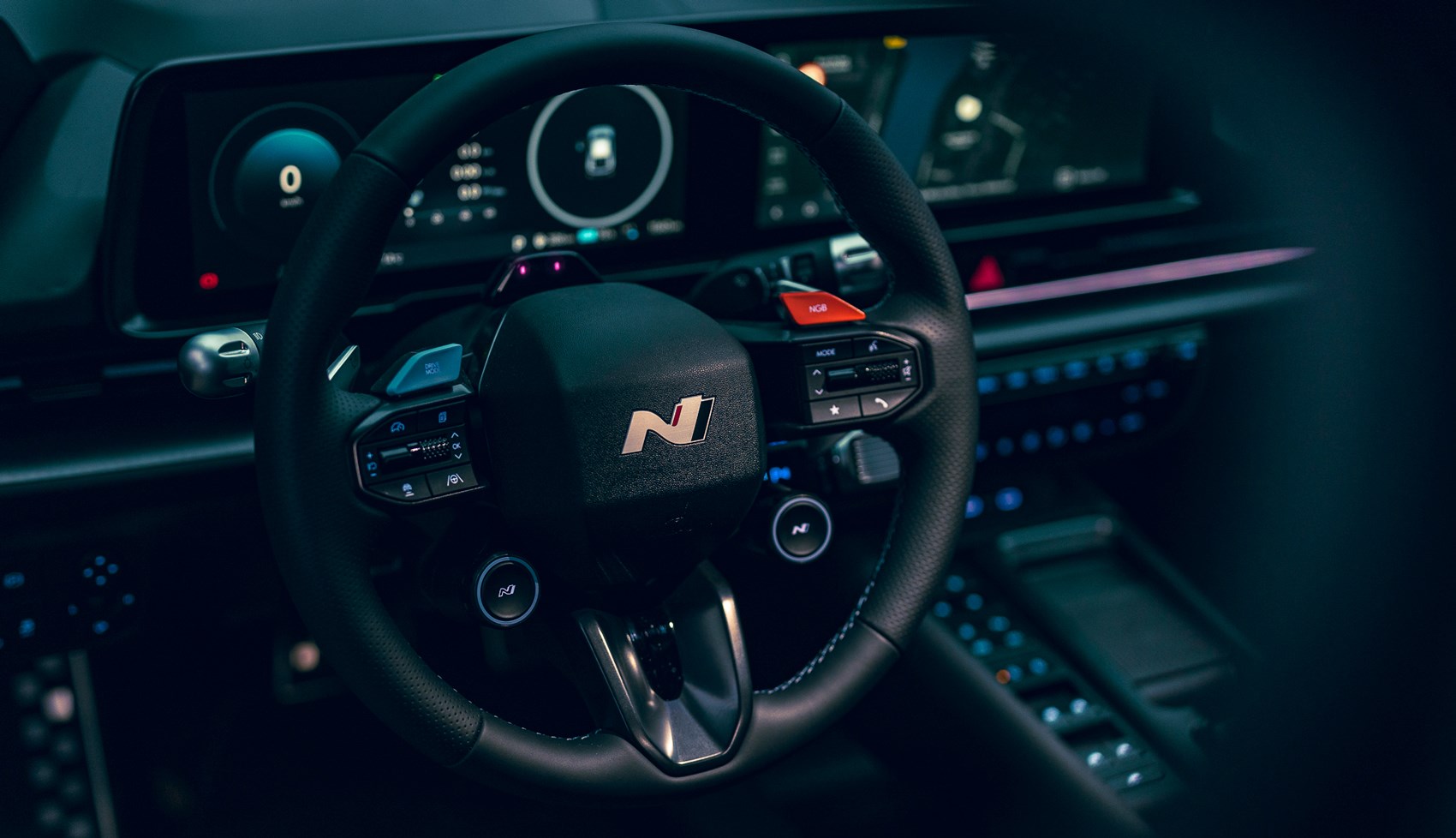
The digital stuff gets N-flavoured tweaks, too. The big screens are easy to use but, as discussed, overly complicated. N modes are a tap or button-push away, and you no longer need to bash a “Grin Boost” button each time you want all the power in Sprint mode – the car’s smart enough to know that if you’re in the zone, it should just deliver.
Before you buy (trims and rivals)
Hyundai UK hasn’t quite nailed down the full range of N performance accessories, and official UK spec and pricing are still TBC as of writing – but expect prices to be largely similar to the 5 N, at around £65,000.
The rivals? You’re looking at a tiny club for now. The Tesla Model 3 Performance beats it for acceleration but can’t match the Hyundai’s engagement or customisation. The BMW i4 M50 is another option: bigger, heavier, less overtly fun. Possibly the keenest competition comes from within Hyundai itself – the Ioniq 5 N, which is more upright and extrovert, but not as mature.
Verdict
What the Ioniq 6 N does – better than most – is bring a genuinely dual-purpose nature to the EV fast saloon. It’s fun and quick-witted without being snappy, and committed enough when roads or circuits demand it. By the same token, it’ll get you to your destination in quiet comfort, and it’s stuffed with practical touches.
It isn’t pretty – at least to my eye, that cartoonish aero kit and black paint do the 6’s lines no favours – but it has personality by the bucketload. It’s definitely close between it and the 5 N but I prefer the slightly wider abilities of the 6, as it feels like this car will slot into my life with fewer compromises. Some will wish for a Golf GTI’s old-world simplicity, but as hot rods for the post-petrol age go, the Ioniq 6 N is a very well sorted bit of kit.
Fun, functional, and a little bit mad. I’ll take all three, thanks.