► We drive Kia’s new electric hatchback
► Surprise, surprise – it’s an excellent car
► Just make sure you buy the cheap one
Kia has a reputation to uphold. Since it launched the EV6 in 2021, it’s consistently produced some of the very best mainstream electric cars on the market. After the EV6, it gave the world the seven-seat EV9 and the city-sized EV3 – and we love them all for their expert blend of packaging, build quality and efficiency.
But, as any 80s hair metal band will tell you, remaining commercially successful into your fourth album is tricky. Kia seems to be relishing the challenge, however, as it’s now set about reforming the UK’s electric hatchback market with this – the new EV4.
Kia’s biggest rivals in the sector include the Cupra Born and Volkswagen ID.3, both of which are undeniably talented electric hatches. But the EV4 is wading into battle with a longer maximum driving range, more boot space, better practicality and stronger value for money.
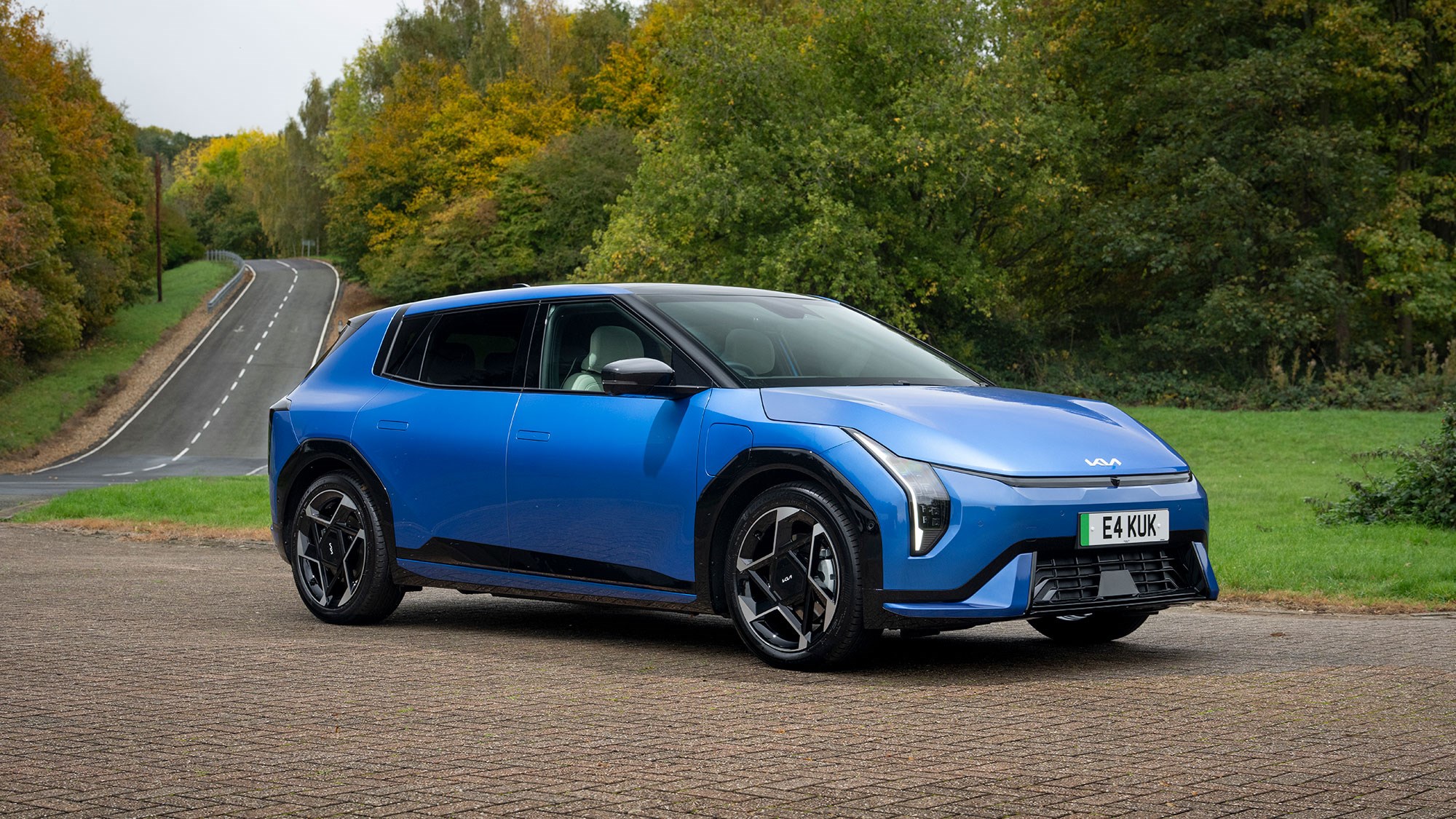
On the face of it, Kia seems to have the market stitched up. But is there any reason for the EV4 to not be on your shortlist? Keep reading to find out.
At a glance
Pros: Efficient electric motor, long driving range, comfortable ride, excellent build quality
Cons: Top-spec models are expensive, annoying safety technology, no 800-volt tech
What’s different?
The Kia EV4 is mechanically identical to the EV4 Fastback. It’s built on the same version of the brand’s E-GMP architecture, but it has a slightly taller roof line and a more practical hatchback boot that’s better suited to family life. It’s also 300mm shorter than the Fastback, which makes it a little easier to park. That’s your lot, though.
What are the specs?
Kia kept the EV4’s line-up simple. You can only have it with one electric motor that produces 201bhp and 209lb ft of torque. That’s enough for a 0–62mph time of 7.5 seconds and a top speed of 105mph, which is more than enough for a family runabout in my book. Cars of this ilk don’t need 700bhp. I’m looking at you, MG.
The only hardware differentiation in the EV4 line-up comes from its battery packs. There are two options – a standard-range model with a 58.3kWh battery and an official range of 272 miles, and a long-range model with an 81.4kWh battery and a maximum range of 388 miles.
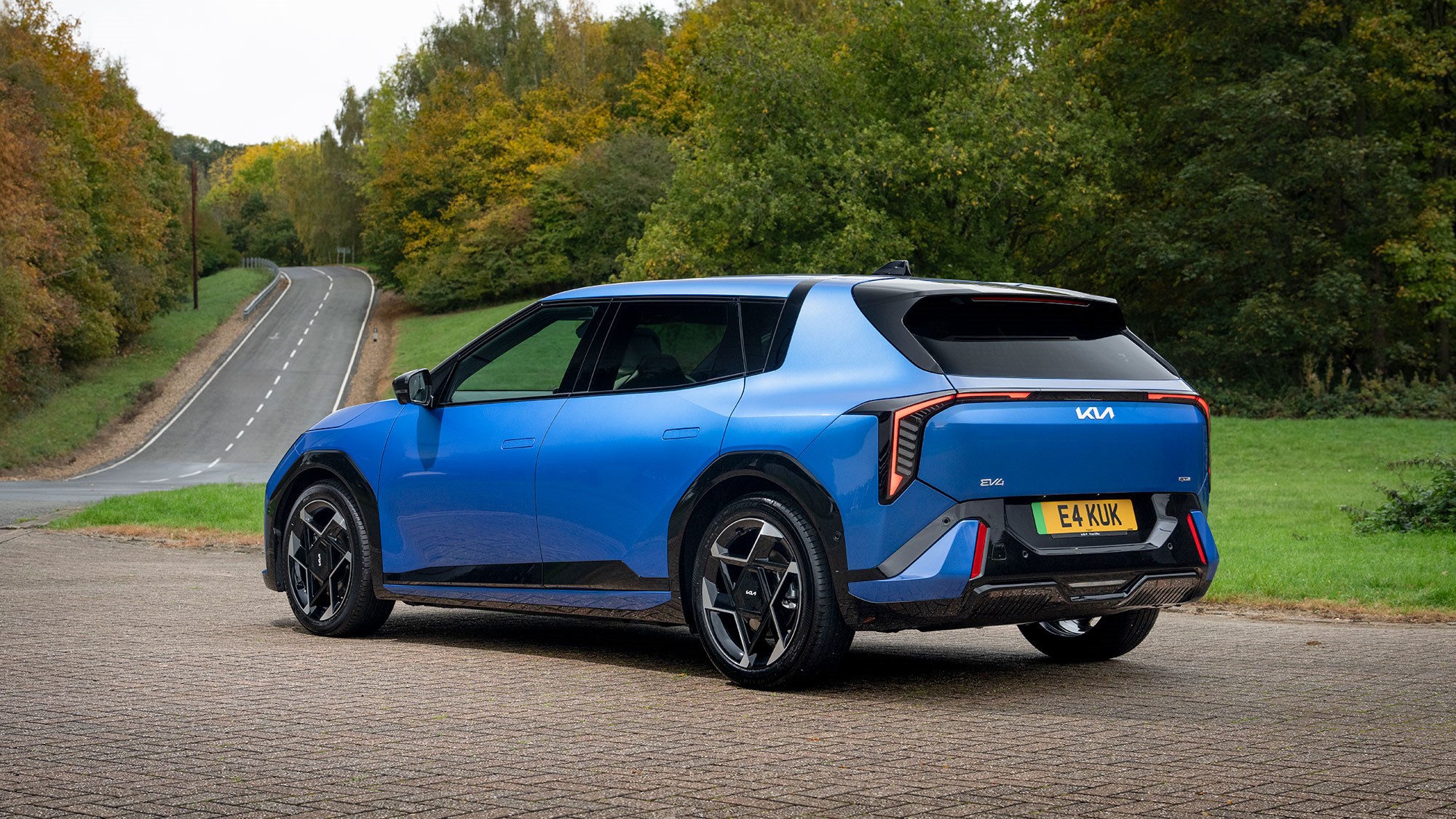
I don’t think those WLTP figures do the EV4 justice, though, because I found it to be a very efficient car. On a mixture of A-roads, city streets and motorways, I averaged 4.0 miles/kWh in the big-battery model and a scarcely believable 4.8 miles/kWh in the small-battery car.
That means, if you can maintain those efficiency figures, you should get a real-world range of 325 from the 81.4kWh version and 280 miles from the 58.3kWh variant. Crucially, that latter figure is eight miles more than the car’s official WLTP driving range – and, even more impressively, I conducted my testing on a brisk autumn day when the battery chemistry wouldn’t be operating at maximum efficiency.
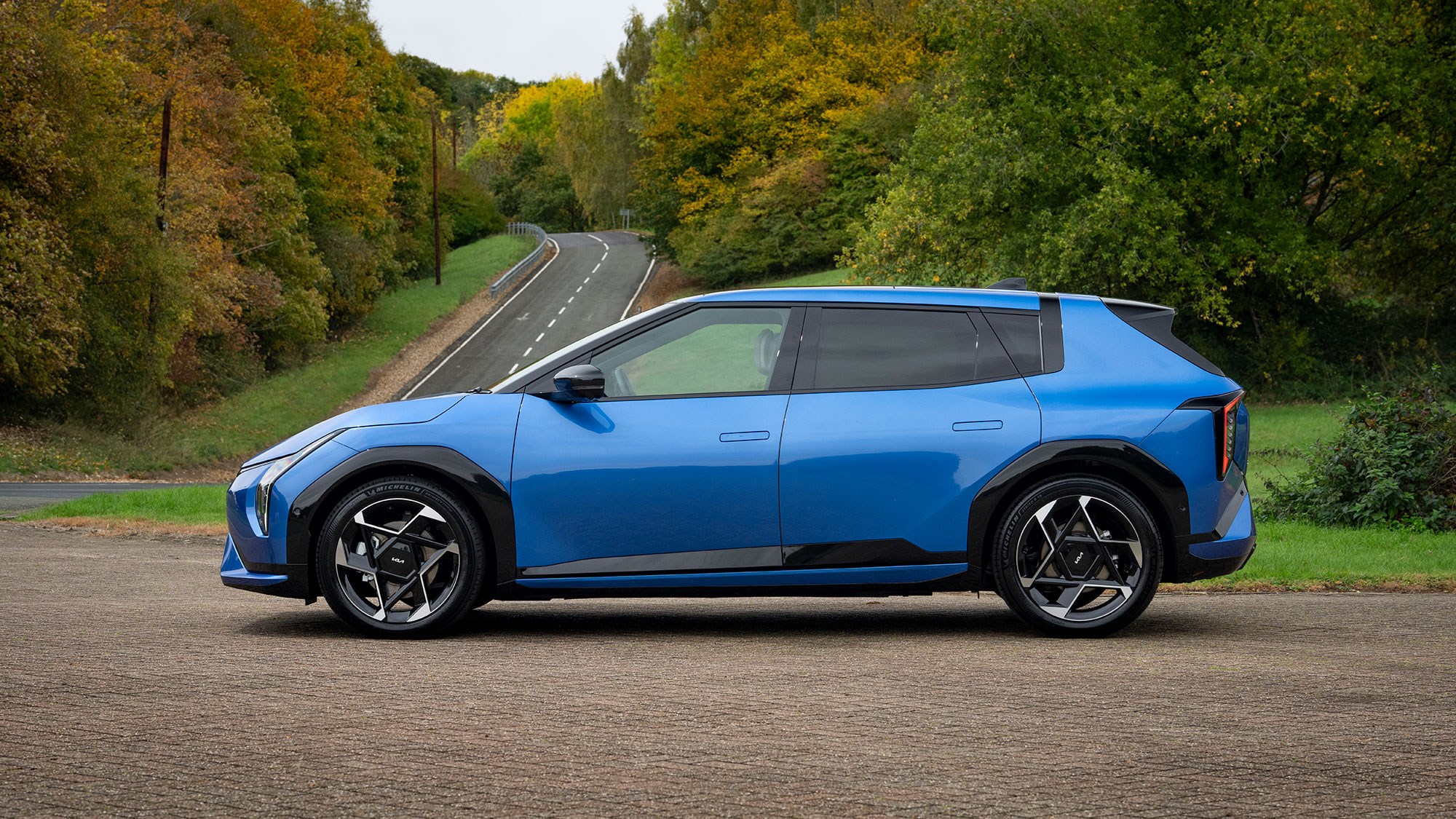
The charging tech is only disappointment where the EV4’s hardware is concerned. Unlike the EV6 and EV9, which have lightning-fast 800-volt electrical systems, the EV4 gets a 400-volt architecture. That helps to keep costs down, but it also reduces charging speeds.
The EV4’s batteries can charge from 10–80% capacity in around half an hour when connected to a 350kW DC rapid charger, but the EV6 can achieve the same state of charge in just 18 minutes under the same conditions. To be fair to Kia, you’ll be waiting around as long for an equivalent Volkswagen ID.3 or Cupra Born to recharge – but Kia’s the brand that popularised 800-volt EV architecture, so it’s shame to not have it here.
How does it drive?
It’s never going to set your hair on fire – but it doesn’t need to. At the end of the day, this is a family car that prioritises comfort and convenience over driving dynamics. I’d say Kia has pretty much nailed it, too.
Take the powertrain. Kia’s previous generation electric cars (such as the original Niro EV) had far too much torque, which made them quite lairy to drive. But the EV4’s output is expertly judged. You have just enough grunt to make overtaking easy, but not so much that you’ll spin the tyres up when exiting a junction. That’s relaxing.
I like the steering, too. It’s quite numb, but it’s very well-weighted even in normal mode, offering enough resistance to indicate where the front wheels are pointing. That sounds like basic stuff, but it’s getting harder to find in the current crop of electric cars – especially once amongst Kia’s new Chinese rivals. The Jaecoo E5’s steering is downright unpredictable by comparison.
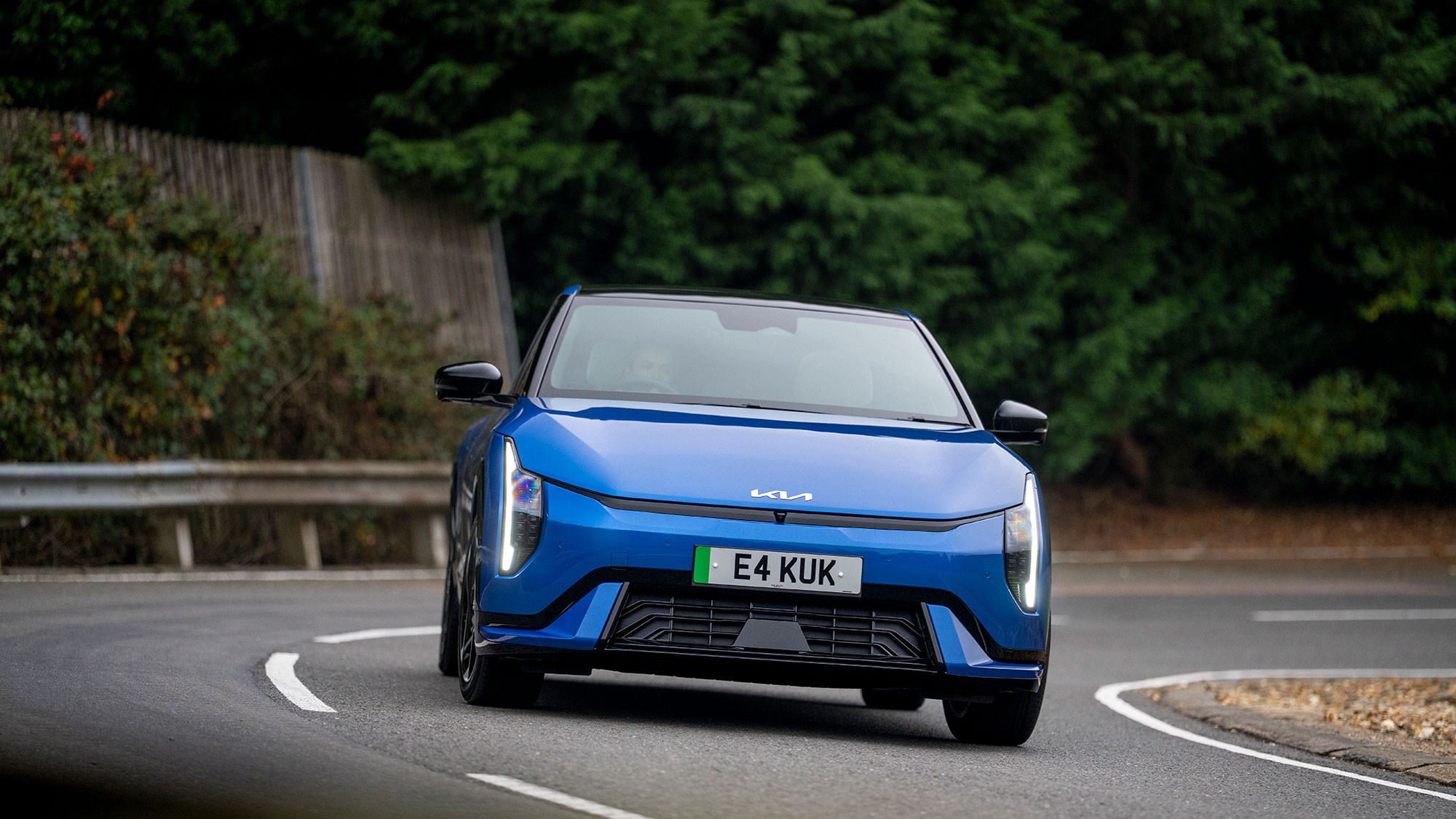
The brakes are a bit odd, too. Kia hasn’t quite sussed out how to manage the changeover from regenerative to friction braking, so there’s a cliff edge in the pedal where the motors stop dragging and the discs lock on. To be fair to Kia, every manufacturer is struggling with this same issue – and you can circumvent it by simply driving less aggressively.
The biggest issue I could find with the EV4’s mechanicals is its ride. It’s very trim dependent. GT-Line cars and above get 19-inch alloy wheels, but the cheapest Air model has 17s – and those extra two inches of tyre thickness on the base model make all the difference. They help absorb the initial impact of a pothole and remove some of the fidgetiness of the more expensive trims.
Like most new cars, the EV4’s safety technology is the most annoying aspect of its driving experience. My least favourite piece of technology is the driver monitoring system, which uses a camera mounted on the steering column to monitor where your eyes are pointing and scorn you if you’re not paying attention to the road. The trouble is, it’ll dress you down for checking your blind spots or looking at your sat-nav instructions.
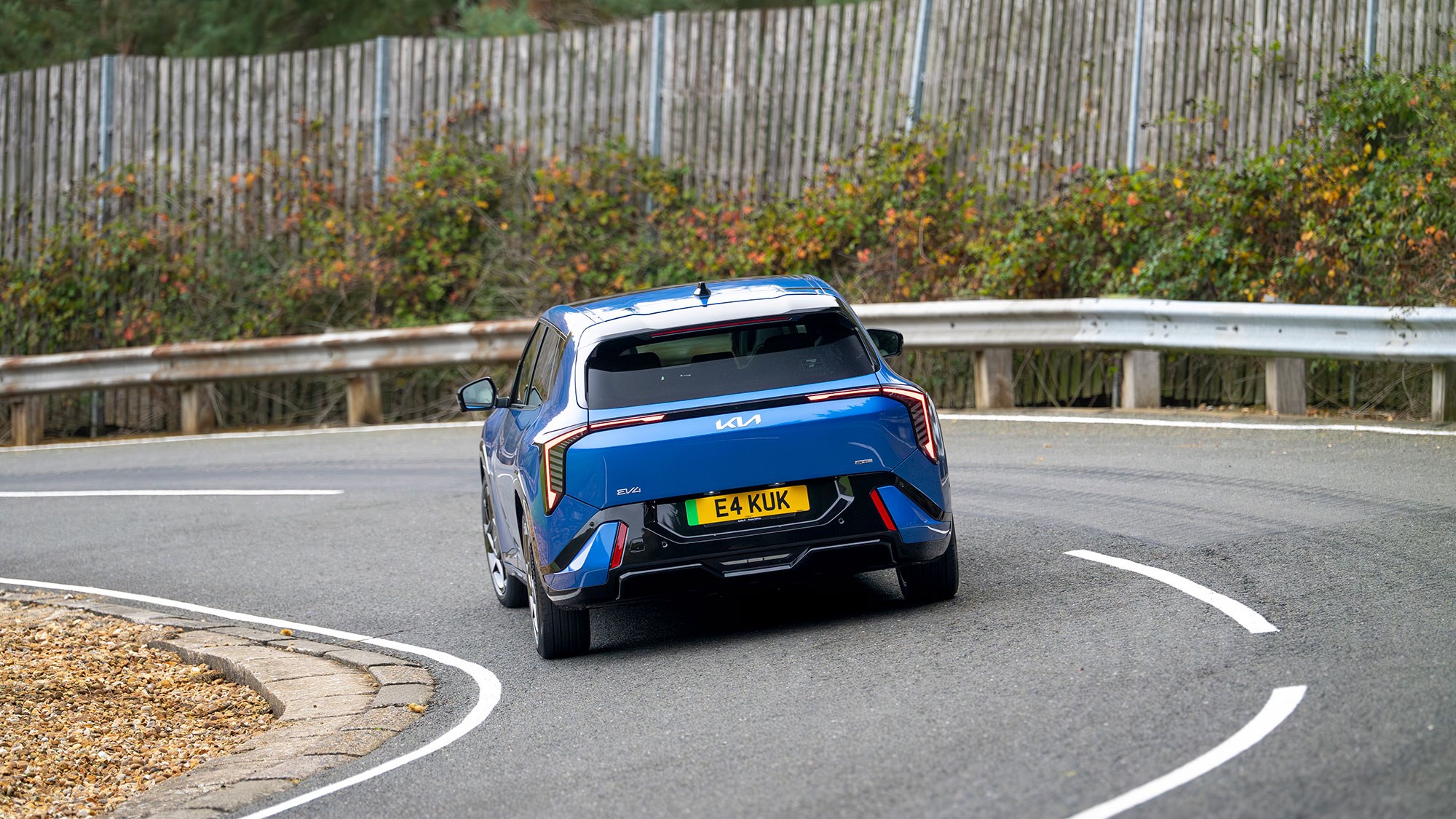
However, Kia’s lane assist system has come on in leaps and bounds. I tested the car on some narrow, winding roads on the outskirts of Windsor and it rarely tried to tug me back into line if the road was too tight for me to stay in my lane. That’s good progress.
What about the interior?
It’s great. With every model launch since the EV6, Kia has been steadily improving the quality of its electric car interiors – and now, I reckon they’re good enough to stand up to Audi’s fit and finish, let alone the brand’s equivalents from Volkswagen and Cupra.
Everything feels expensive. The steering wheel buttons are heavy, the door cards don’t creak when you shut the door and everything that hinges (like the armrest storage lid and glovebox) is solid on its mounts. If you’re cross-shopping between the EV4 and a Chinese equivalent such as the MG4 or Jaecoo E5, it’s here where you’ll notice the difference.
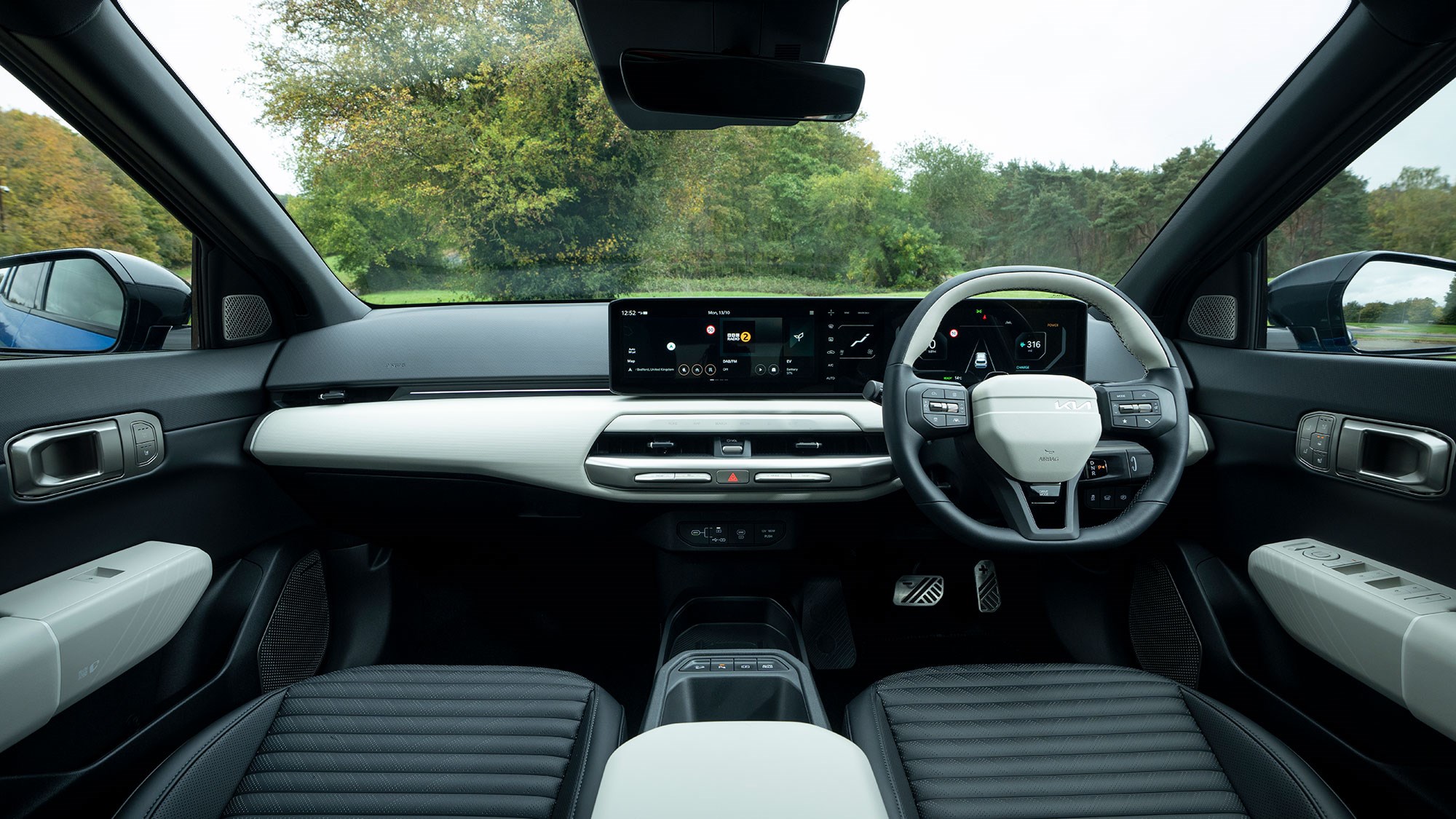
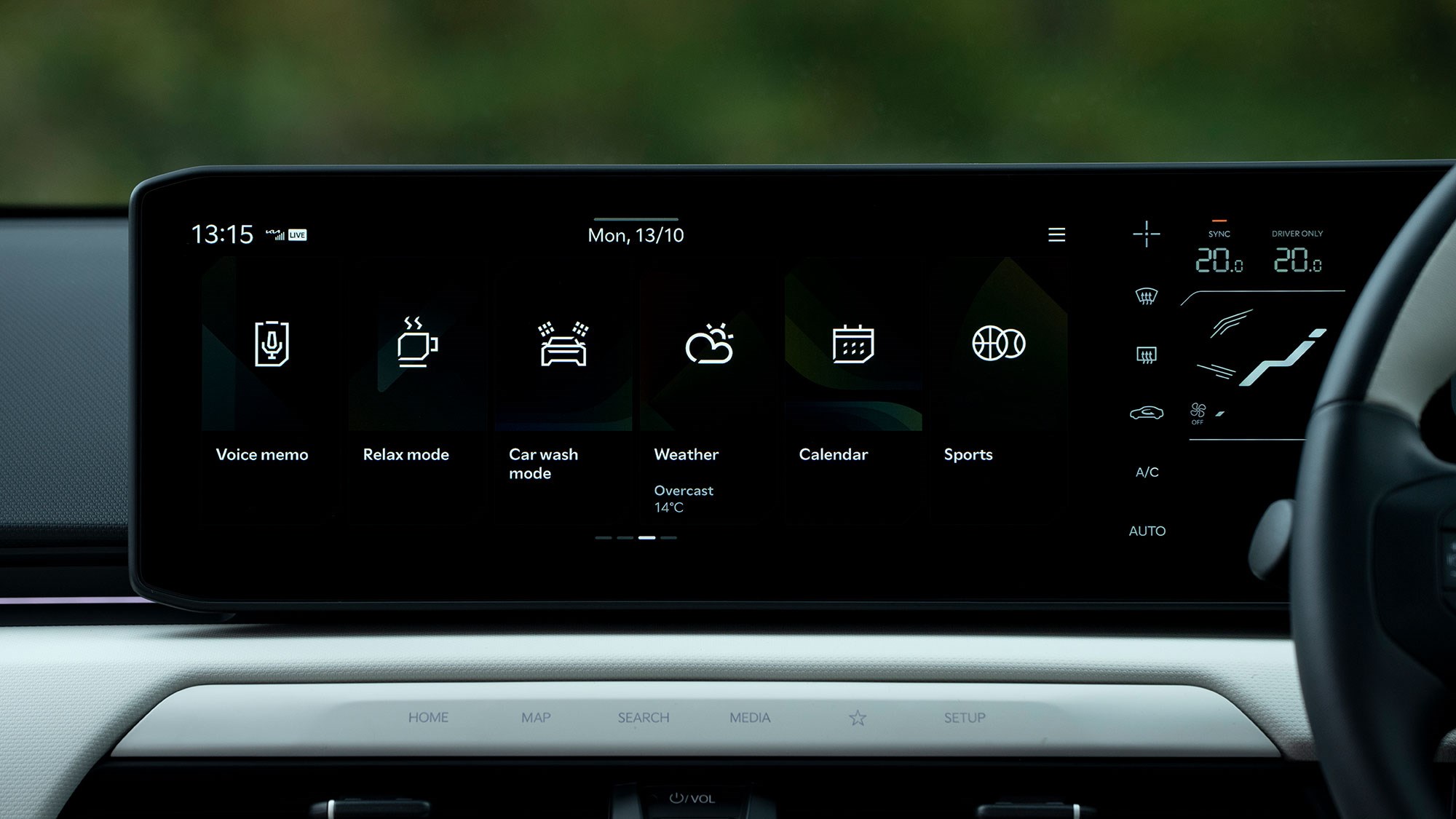
I also like how logical the EV4’s interior is. Its dashboard might be dominated by a huge 12.3-inch touchscreen, but you still get some physical climate controls and a row of shortcut buttons that allow you to jump to important functions, such as the sat-nav and media controls. That’s far safer than fiddling about with umpteen sub-menus while trying to remain focused on the road.
The cabin’s not without its quirks, though. Between the touchscreen and the gauge cluster is an 80s-inspired digital climate control panel that allows you to quickly adjust the fan direction or activate the demister. The trouble is, it’s completely obscured by the steering wheel. That’s hardly a dealbreaker, but it’s less than ideal ergonomically.
Kia compensates for this minor foible with the EV4’s practicality. You get 435 litres of boot space, which is 50 litres more than the Volkswagen ID.3 and 72 litres more than the MG 4. And even though its Fastback sister has an extra 55 litres of outright space, the hatch is more practical in the real world as it has a much larger boot opening. You can just chuck big cases into the rear rather than delicately placing them on the boot lip and sliding them underneath the rear window.
The hatchback also has more headroom than the EV4 Fastback, as the roof doesn’t taper as sharply towards the rear of the car. It doesn’t look as cool, but it’s much more useful if you regularly need to carry adults or lanky teenagers.
Before you buy (trims and rivals)
The EV4’s line-up is straightforward. There are three options – Air, GT-Line and GT-Line S, with starting prices of £34,695, £39,395 and £43,895 respectively. Air cars get 17-inch alloys, two 12.3-inch screens, front and rear parking sensors and a rear parking camera. It also has heated seats and a heated steering wheel, which is surprising for the base model.
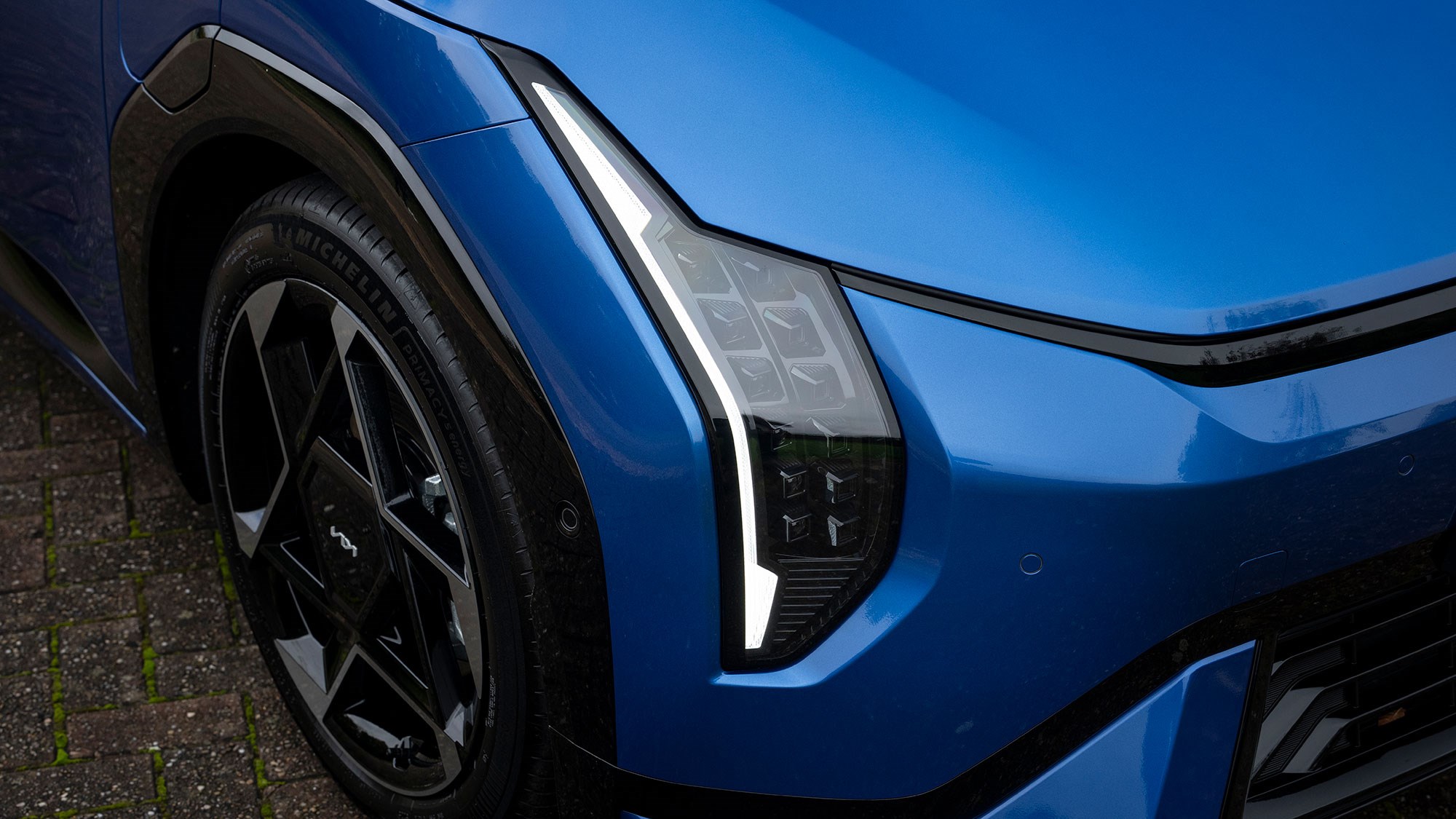
GT-Line cars build on that specification with 19-inch alloys, a sporty body kit, faux leather seats, lumbar adjustment, a wireless phone charger and rear privacy glass. GT-Line S versions get all-round heated seats, an electric tailgate, a 360-degree parking camera, a sunroof and a posh Harman Kardon stereo system.
The lure of the top-spec model’s posh gadgets might be strong, but I reckon the big-battery, basic spec EV4 Air is the car to buy. It has a far more comfortable ride and a longer driving range than either the GT-Line or GT-Line S variants, while still offering all the technology you really need.
Yes, its £37,695 asking price is £700 more than the equivalent big-battery Volkswagen ID.3, but I could easily justify such a minor increase if it meant I’d end up with a car that’s better equipped, more comfortable and far easier to cover long distances in.
Verdict
At the beginning of this review, I posed the question of whether there was any reason to not buy the Kia EV4. Having now driven it and compared its stats to its biggest rivals, I’d say it’s about as good as electric hatchbacks get right now.
It’s one of the most efficient electric cars on sale, it’s well equipped, it’s comfortable, it has a logical interior, it has a boot that’s far more practical than its key competitors and it offers enough space inside to carry your entire family in comfort.
I’ll admit its pricing looks a little steep when you compare it to dirt cheap Chinese rivals, such as the Jaecoo E5 and MG4. But I reckon paying a little extra for the security of an established brand with a solid dealer network and a seven-year warranty is worth it in the long run. And besides, you’re getting better value than the European OEMs anyway.
Kia’s done it again. The fourth album’s a success. Next stop, the Rock & Roll Hall of Fame.
*Specs for Kia EV4 GT-Line 81.4kWh*