► Kia’s first-ever electric saloon driven
► Based on the EV3, but lower and sportier
► Tesla Model 3 rival claims 380-mile range
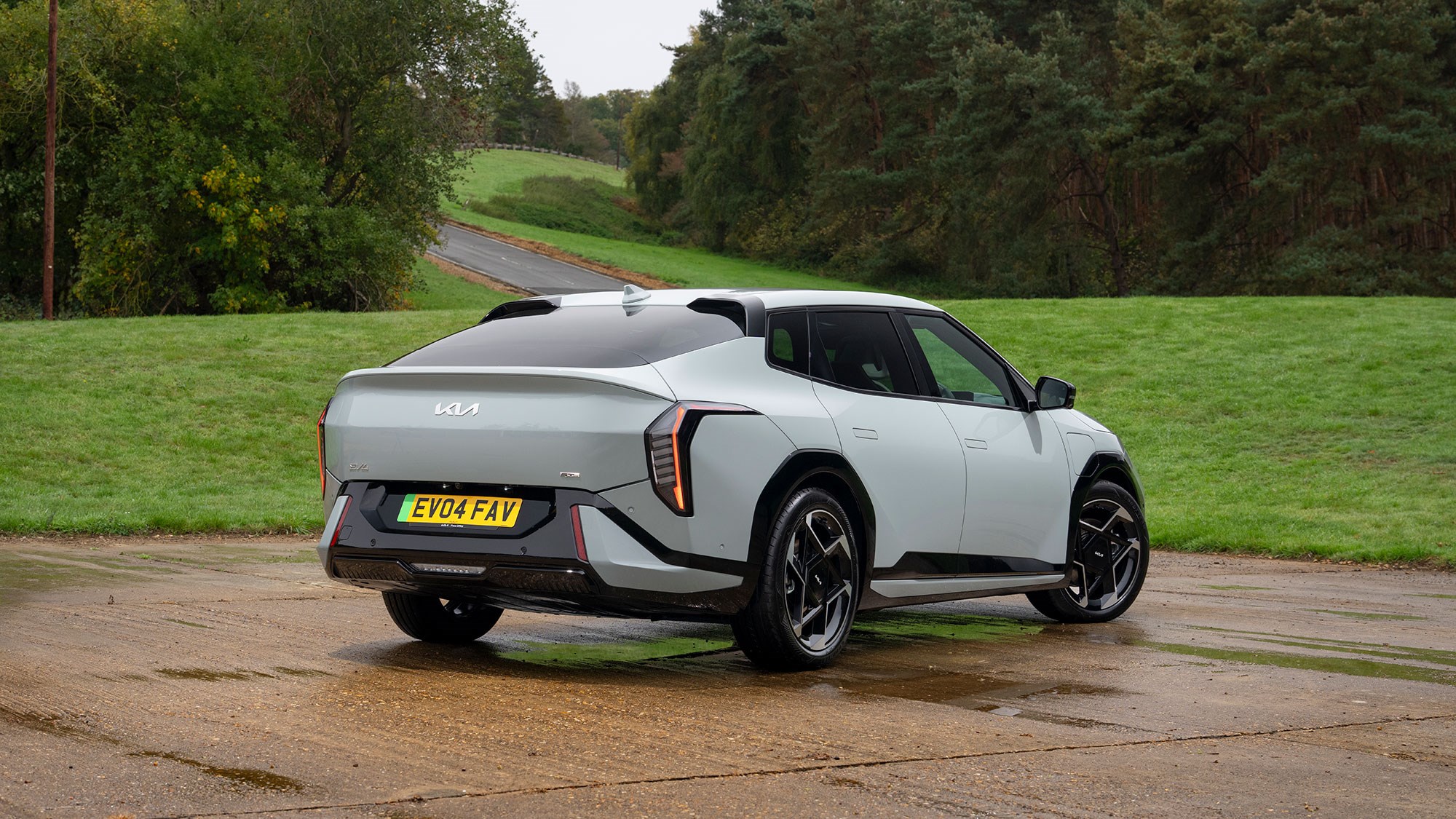
This is the Kia EV4 Fastback – and it forms part of the brand’s quest to cover every base it can in the electric car market. SUVs are already well-catered for with the likes of the EV6, EV9 and, most recently, the EV3. The hatchback market is squared off with the standard EV4, and this Fastback model is designed to appeal to those who like the idea of a good old-fashioned saloon.
Until now, your only reasonable option in the mainstream compact electric executive saloon class has been the Tesla Model 3. Unless you’re leasing one as a company car, rivals like the £45,000 Polestar 2 and the £50,000 BMW i4 have always felt a bit too expensive for what they are.
But Kia’s selling the EV4 for a shade over £40,000 which, for those playing along at home, is incredibly aggressive when you compare it to the £39,990 Tesla Model 3. And, to add insult to injury, Kia’s put its car on the market with a more generous equipment list and a longer pound-for-pound maximum WLTP driving range. Keep reading to find out whether the formula has worked.
At a glance
Pros: Excellent range, good blend of comfort and handling, generous rear-seat legroom
Cons: Average performance, average fast-charging speed, rear headroom is impacted by sloping roof
What’s new?
The EV4 is based on the same E-GMP platform as the EV3 (and indeed a few other cars under the Hyundai Motor Company umbrella) so there’s plenty of likenesses under the skin. The trouble is, it also gets the same 400-volt electrical system as the EV3, rather than the faster 800-volt tech you’ll find in the EV6 and EV9. That keeps costs down, but it also impacts charging speeds.
Inside, it’s very similar to the EV3 (even the wheelbase is the same), with the primary differences being a 40mm lower driving position for a sportier feel. In fact, the highest point of the car (in Fastback form) is 90mm lower than the EV3. Kia’s clearly keen to tap into the market of car buyers that prefer not to make the switch to a taller SUV.
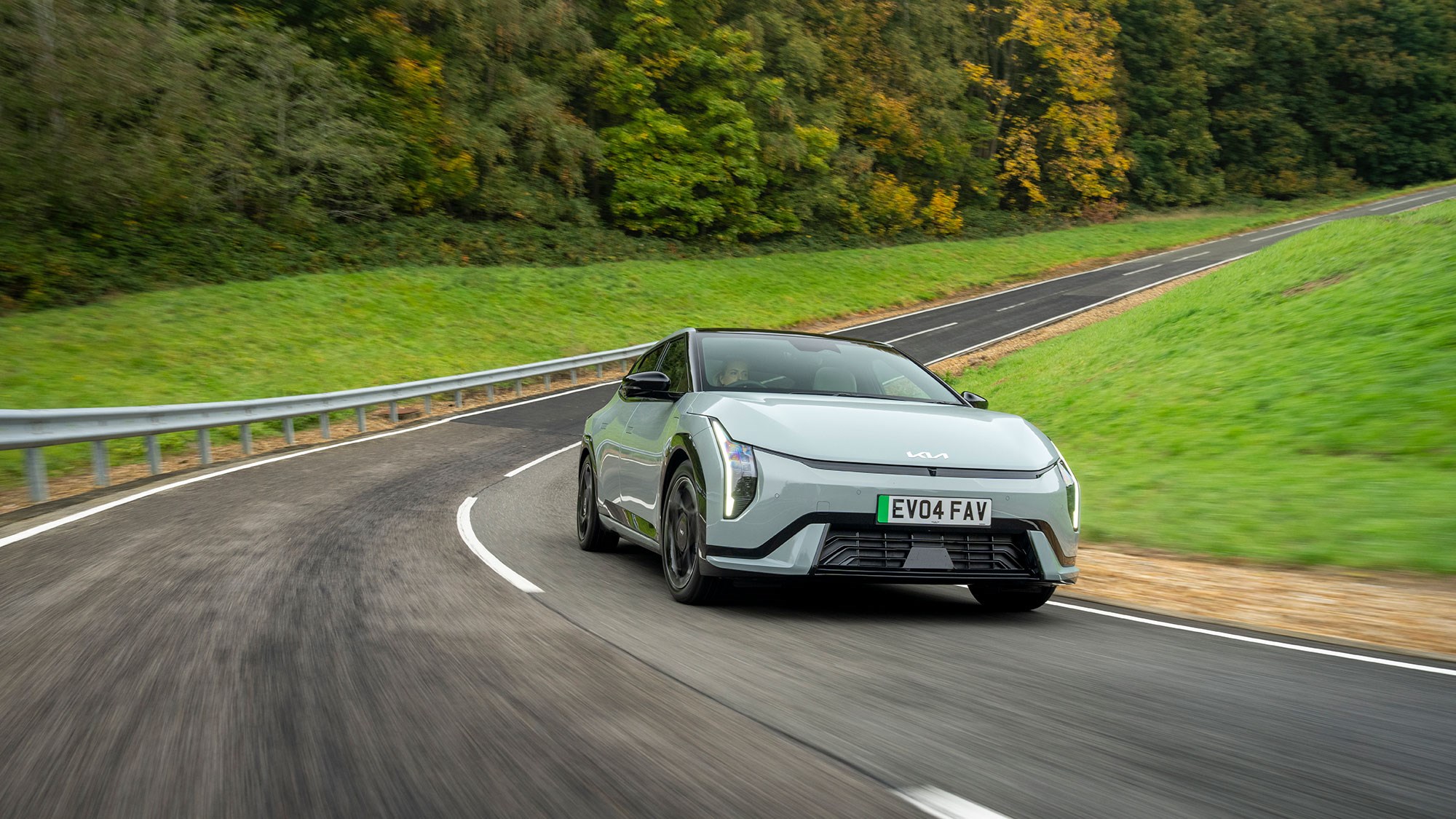
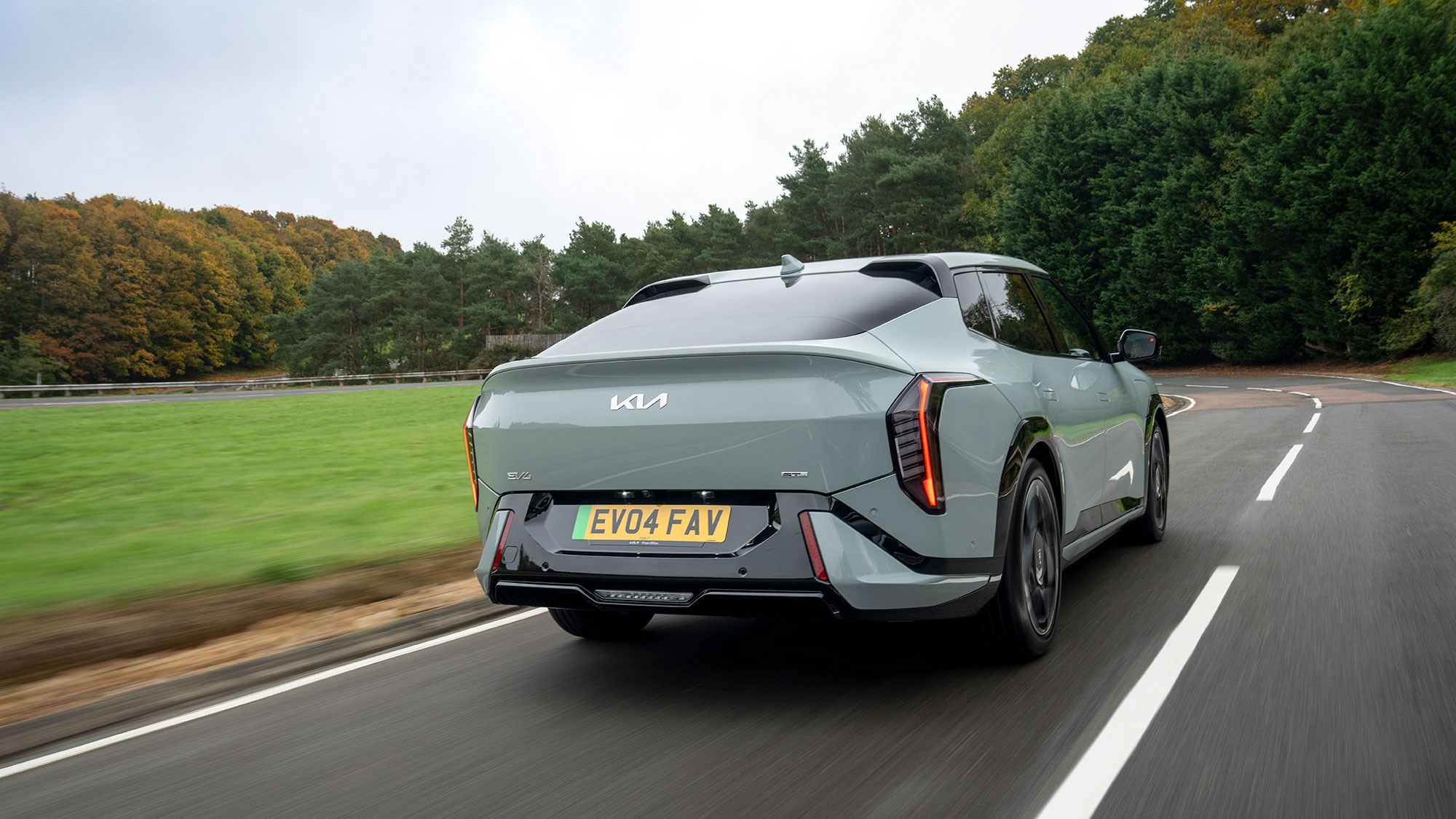
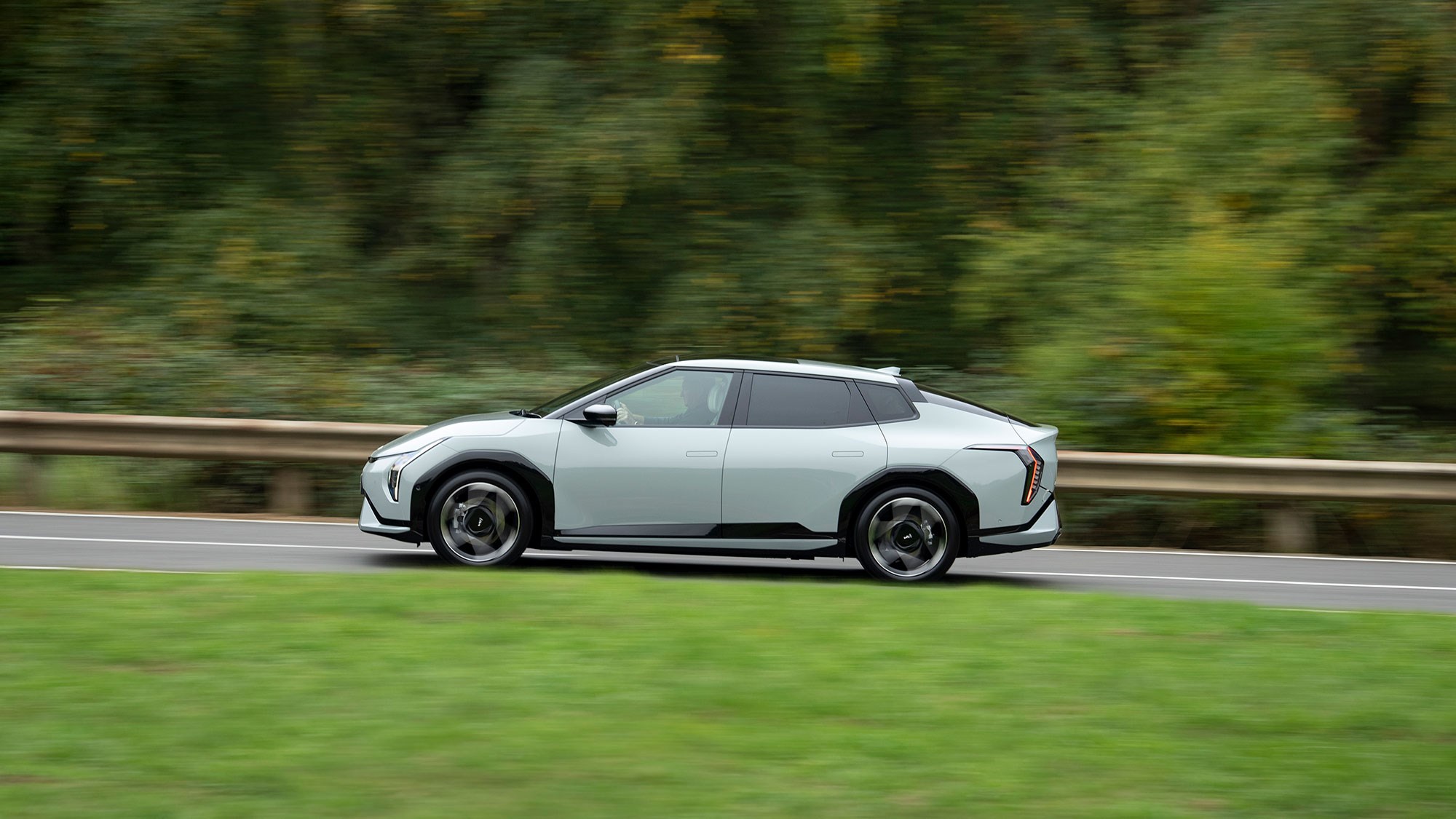
Versus the EV4 hatchback, the Fastback is 300mm longer and 5mm lower with the difference in length coming from the rear overhang needed for the swooping roofline and ‘long-tail’ side profile.
Kia is also keen to highlight the slipperiness of the EV4 (especially the Fastback model) with a drag coefficient of 0.23CD. 82.5% of the car’s underside is covered, this boosting the streamlined shape. What’s more, Active Air Flaps in the front bumper automatically open or close in order to maximise cooling efficiency or aerodynamic performance.
What are the specs?
Unlike the EV4 hatchback, (which you can have in Kia’s most affordable ‘Air’ specification), the Fastback is only available in the brand’s sporty GT-Line and GT-Line S trims. That reflects the cars positioning as the flagship model in the EV4 range.
For the same reason, you can only have it with the brand’s largest 81.4kWh battery pack. That feeds a single electric motor on the front axle, producing 201bhp and 209lb ft of torque. Kia says that’s enough for a 0–62mph time of 7.9 seconds and a top speed of 105mph, which isn’t bad considering the car’s 1.9-tonne kerb weight.
Claimed maximum range is 380 miles, which we can wholeheartedly believe. Our EV4 test cars were easily averaging 4.0 miles/kWh on a crisp autumn day, putting their theoretical real-world ranges at around 325 miles in cold weather when the battery is at its least efficient. In the summer months, it might even be possible to surpass the car’s WLTP estimates.
The issue is, charging speeds are disappointing. Because the EV4 only has a 400-volt electrical system, a 10–80% takes 31 minutes in the best-case scenario. Compared to the Model 3 (which can accept 175 miles of range every 15 minutes at a Supercharger), that looks slightly less attractive for long-distance drivers. A full charge with an 11kW AC charger taking 7hrs 15 minutes.
Standard equipment on the GT-Line model is impressive. You get heated front seats, a heated steering wheel, an electrically adjustable driver’s seat, wireless smartphone charging, a triple-screen dash layout (including two 12.3-inch displays), wireless Apple CarPlay and Android Auto plus a vast suite of safety tech. This includes blindspot monitoring, highway driving assist 2.0 and safe exit warning.
Meanwhile, top-spec GT-Line S models get a sunroof, heated outer rear seats, heated and ventilated front seats, memory function seats for the driver, an electronic tailgate, a three-pin plug in the rear and 360-degree parking camera.
How does it drive?
Kia’s tried to give the EV4 a little more of a sporty flavour than the EV3, hence the lower seating position. And although some may scoff – it is moderately powered electric hatch after all – there is some enjoyment to be found if you look hard enough. Put the drive mode in Sport and the accelerator response improves noticeably giving the car a lighter, more enthusiastic feel.
It isn’t a white-knuckle track machine by any stretch of the imagination, but the eagerness of the chassis and solid feel from the key controls (the steering weight, especially) is a welcome surprise. The hatchback comes on specifically designed Michelins, whereas the Fastback we were driving used Goodyears. Tyre squeal was plentiful, but it hung on well and body roll was nicely controlled.
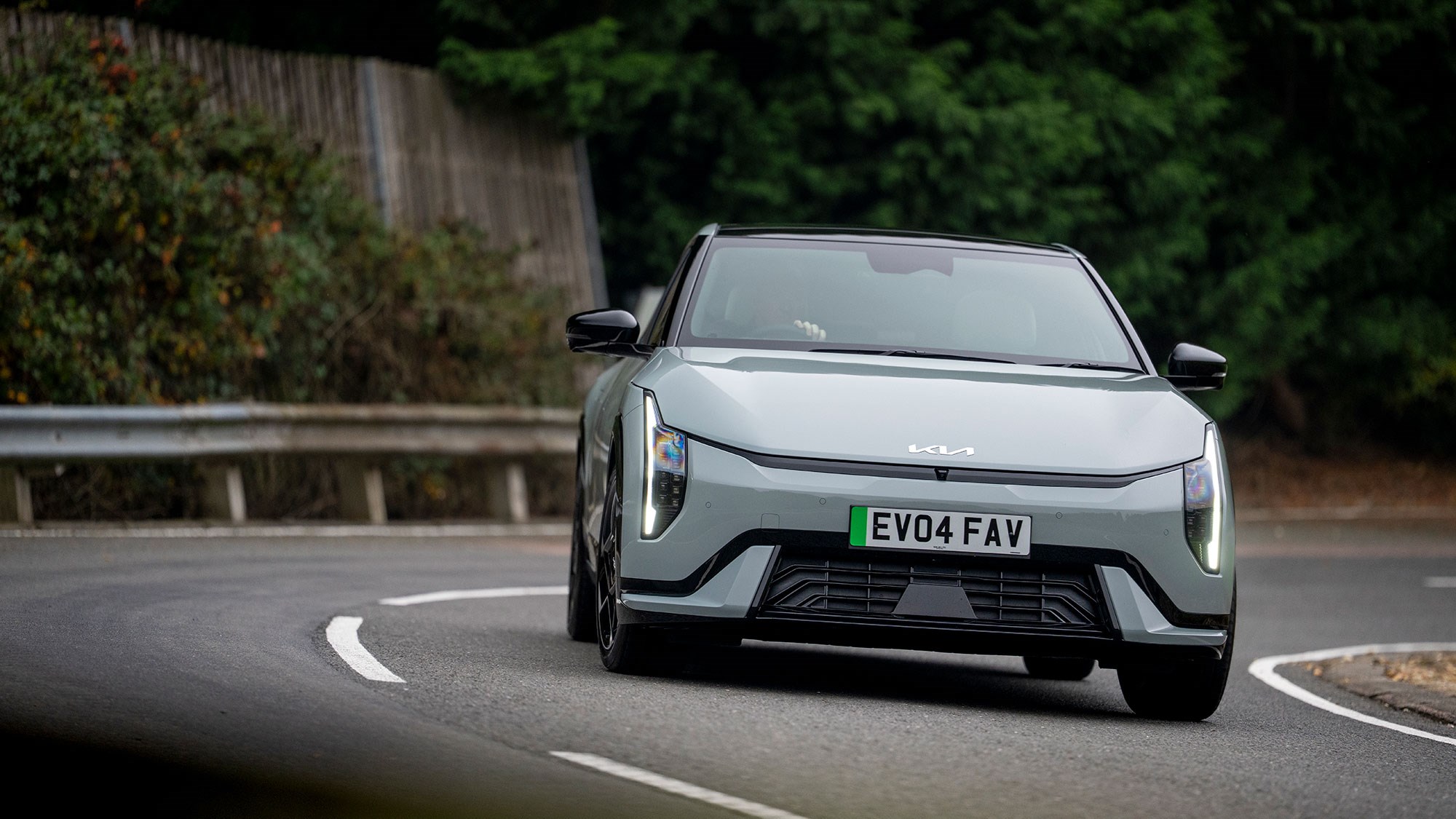
Crucially, however, the everyday driving manners are second-to-none. Our GT-Line model rode well enough on broken British tarmac, while refinement levels were also polished. If you want the very best ride from your EV4, though, you’d be better off with the hatchback. The 17-inch alloys fitted to the Air model offer a much more compliant ride, with the squidgier rubber better rounding off the initial impact from potholes.
As for performance, the Model 3 is undeniably ahead. It’s rear-wheel drive for better performance, while even the entry-level model delivers more power and a superior 0–62mph time. But outright speed really isn’t the point of the EV4 – and it’s happy with that. Unlike Tesla, which has built its entire brand on an ever-growing pile of superlatives.
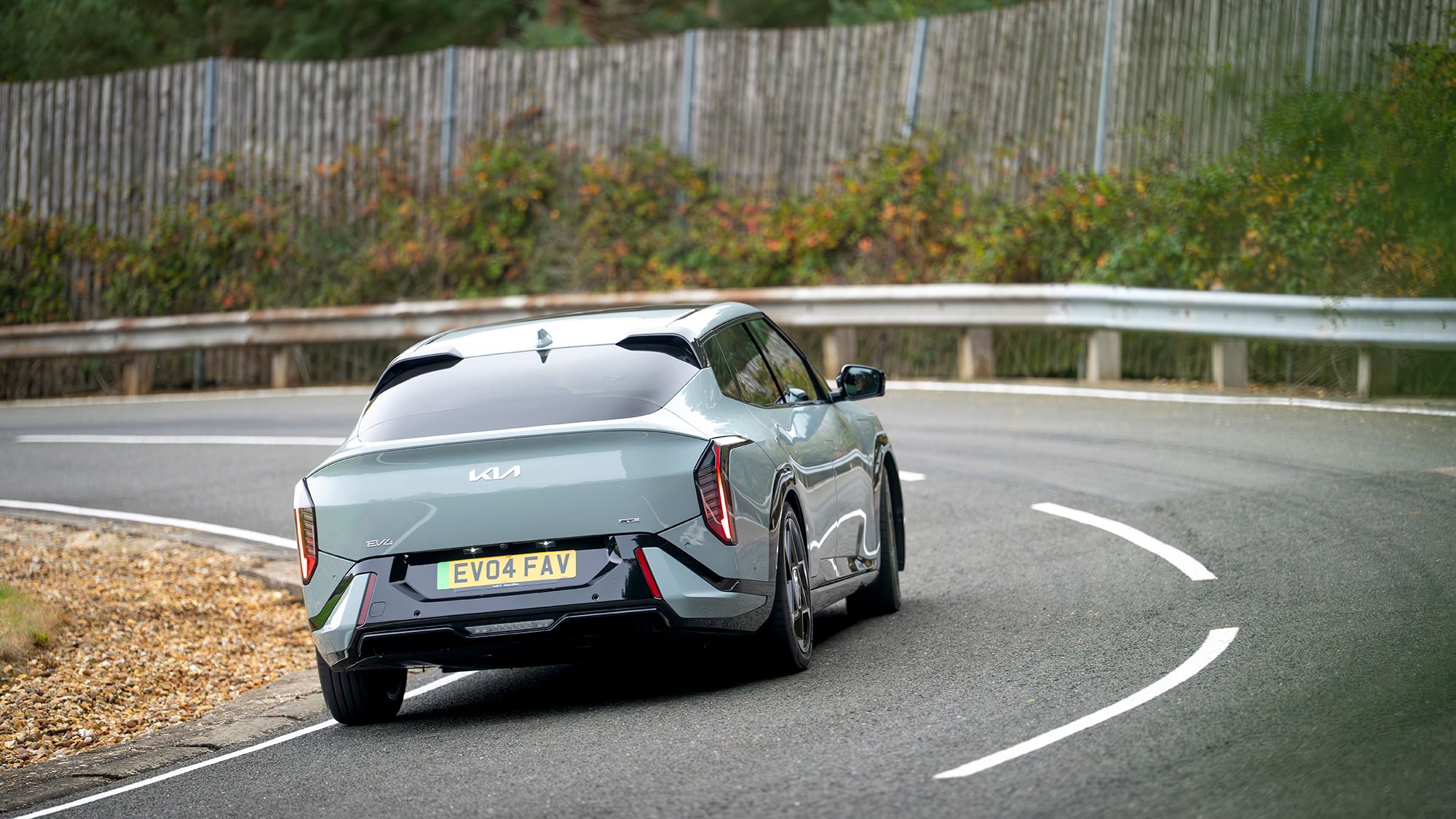
The motor’s torque is just enough to make joining a motorway slip road or overtaking a wagon easy – but it’s not overbearing enough to make the EV4 challenging to drive. Cars of this ilk really don’t need several hundred horsepower (we’re looking at you MG), as you never get the opportunity to use them in everyday driving. However, if you’re really craving some extra punch, a hot GT model is on the way.
What’s the interior like?
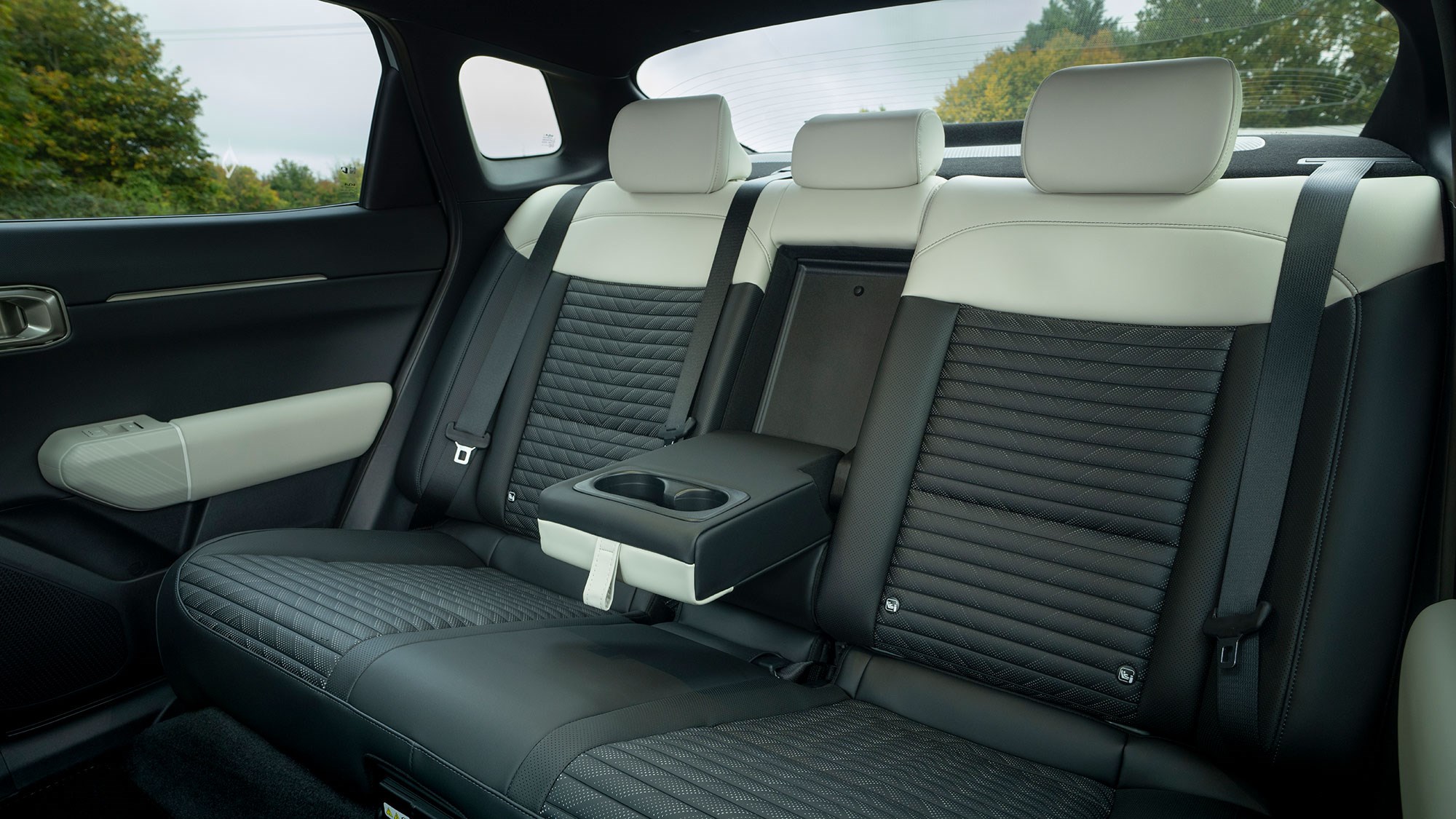
Really very similar to an EV3. That means it’s exceptionally well built and loaded with luxurious touches, such as plush, two-tone artificial leather upholstery and soft yet surprisingly supportive mesh head rests.
Kia hasn’t forgot the important stuff, though. There’s no shortage of technology and functionality. The three-screen layout (12.3-inch digital dash, 5.3-inch climate touchscreen and 12.3-inch central) obviously forms a large part of the fascia, but below that there’s still the pleasing inclusion of physical climate control toggles and some infotainment shortcut buttons.
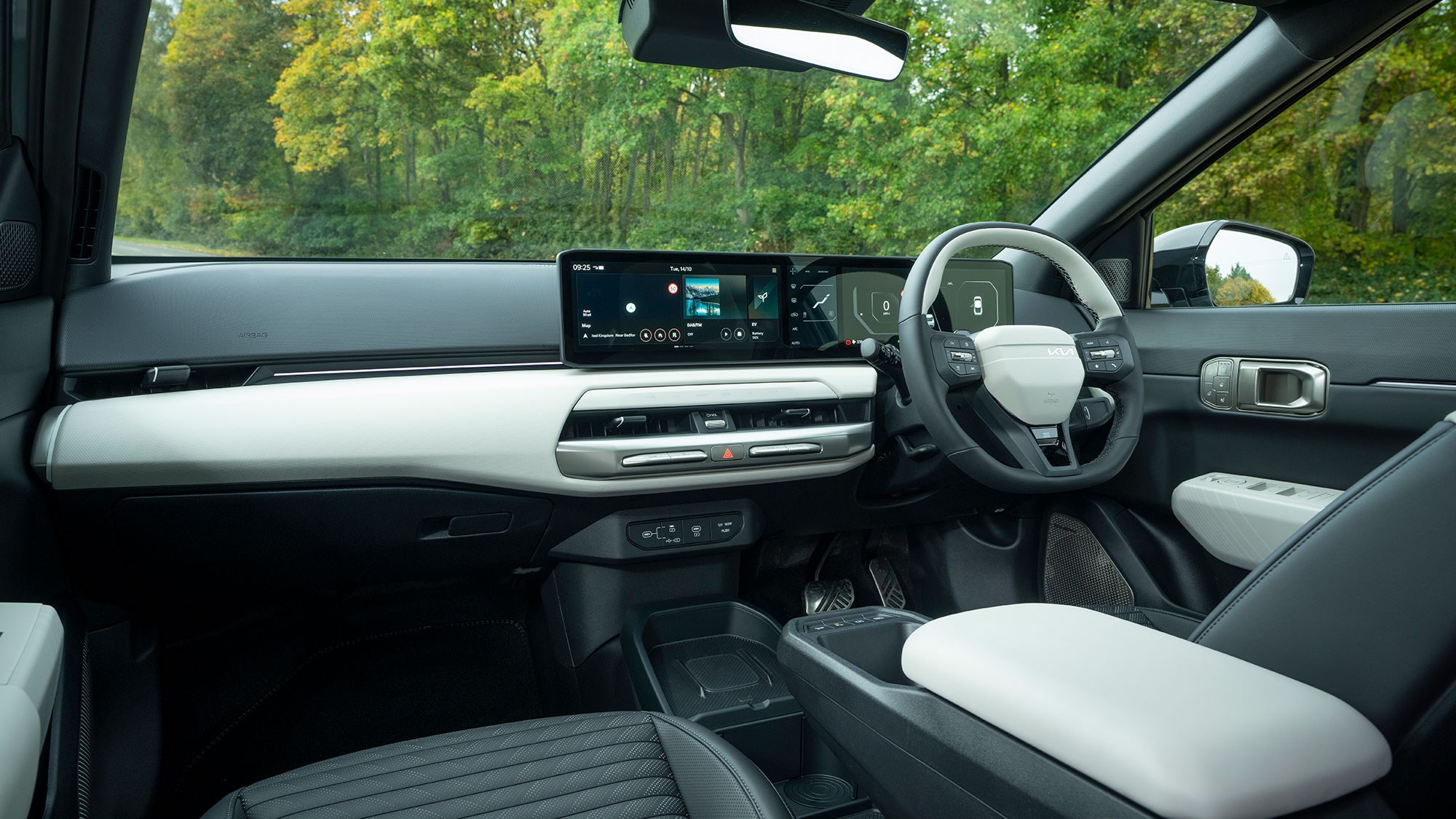
It isn’t quite perfect, though. The digital climate control panel isn’t particularly well-positioned, as it’s completely obscured by the steering wheel. That makes it more difficult than it should be to change the fan direction or activate the demister. It’s not the end of the world, but the ergonomics are less than ideal.
Wireless Apple CarPlay and Android Auto come as standard – plus wireless phone charging is included on GT-Line – while the built-in Kia infotainment system is fast and responsive with decent graphics.
Kia’s AI Assistant also uses ChatGPT to recommend restaurants, music and even tell jokes. We tried it a few times and the jokes, while varying in their degrees of quality, were at least different every time.
Also worth highlighting are the bespoke entertainment settings that make their debut on the EV4. Rest mode uses the climate control and ambient lighting to put the cabin in the best state for catching forty winks while charging, while Theatre mode utilises the Netflix, Disney+ and YouTube functionality on the central screen to turn your car into a mini movie theatre.
Before you buy
It’s worth thinking carefully about whether you need the Fastback over the hatchback. The latter has slightly better headroom in the rear (both have excellent legroom) and while the boot is smaller on paper (435 litres vs 490 litres) the larger opening of the latter means that the space is, arguably, more useable. Note that neither body style has a frunk for additional storage.
It’s also worth bearing in mind that the hatchback starts at £34,695 vs the Fastback at £40,895. That’s largely because the former is available with Kia’s smaller (and cheaper) 58.3kWh battery and the firm’s most basic Air specification, neither of which you can get with the Fastback model.
Verdict: Kia EV4
Kia’s first all-electric saloon is facing some seriously stiff competition in the form of the Tesla Model 3, but it’s not inconceivable that it could soon steal some sales away from Elon.
And while it can’t match Tesla for performance or charging speeds, the EV4’s utterly logical cabin layout, comfortable ride, efficient electric motor, generous equipment levels and seven-year/100,000-mile warranty more than make up the shortfall.
If we’re being completely sensible, the less rakish EV4 hatchback probably makes better sense in the real world as it’s cheaper, the base model is even more comfortable and it’s boot is more convenient to live with in the real world. But if you have your heart set on a saloon, you’ll find an awful lot to like in the EV4 Fastback.