► Electric Jeep Compass tested
► First version claims 310 miles
► Long range model to follow later in 2026
Jeep is going more mainstream with its latest Compass, digging into how it can make its cars more capable in ways beyond just being good off road. It’s the chunky and colourful option out of Stellantis’ medium-sized family SUVs – but is the electric Compass actually any good?
At a glance
Pros: Quiet and comfortable; good steering; roomy; feels solid
Cons: Interior’s a bit drab; slow infotainment; only four-wheel drive model is the flagship
What’s new?
The Compass is ground-up new, using a fresh platform and launching with a completely new design. The Compass name has been around for quite a while, but the previous one was largely rubbish.
This version launches using the STLA Medium platform from Stellantis, allowing for mild hybrid, plug-in hybrid and full electric versions and is designed as Jeep’s sole ‘C-segment’ offering – a huge part of the car market that’s not exactly short of competition.
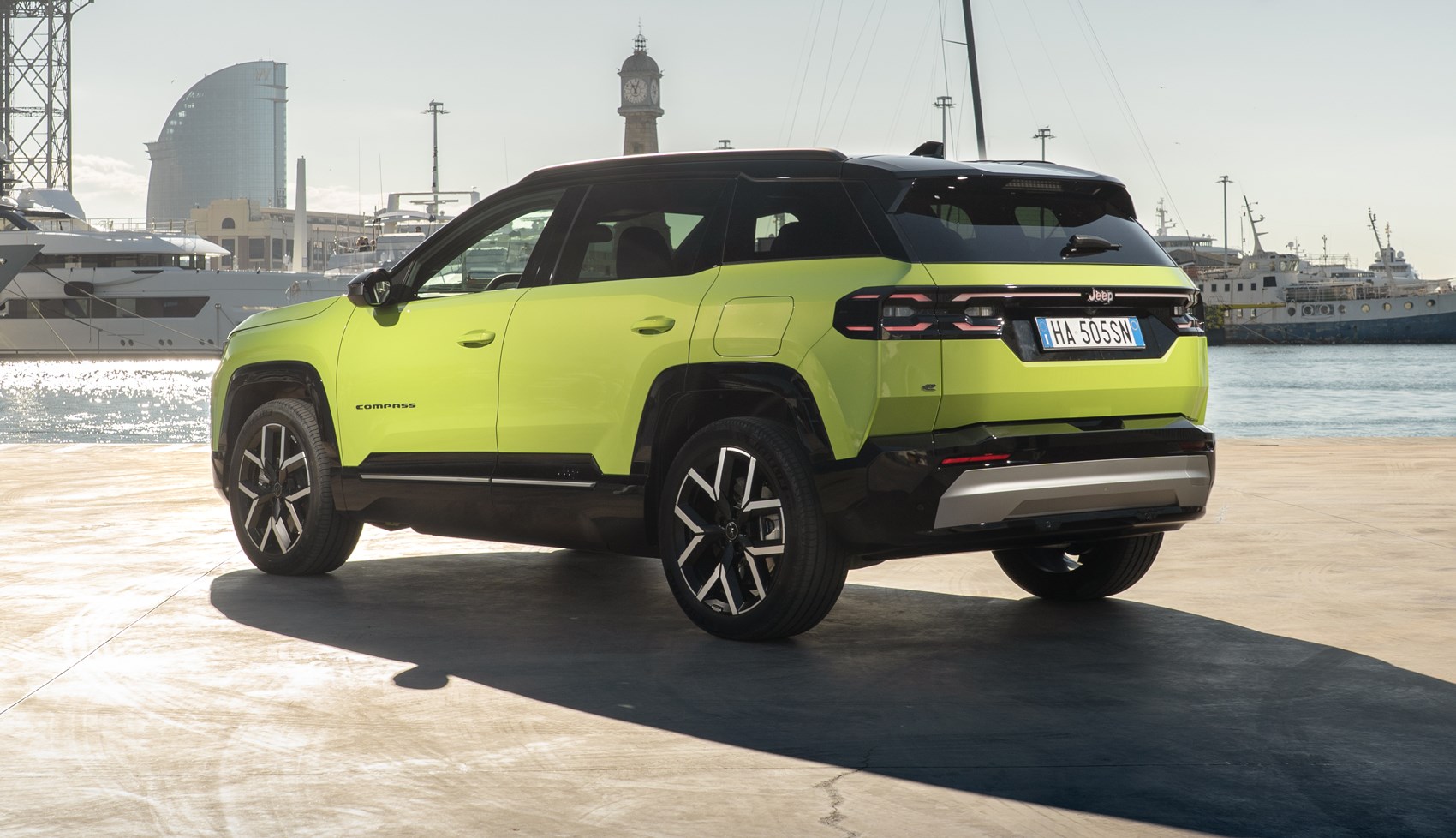
The Compass is arguably the furthest Jeep away from that traditional viewpoint of the brand being all about hardcore off-roading. The buzzword is ‘capability’, with European boss Fabio Catano telling CAR: ‘the target is to improve and then be best-in-class in terms of the capability of the vehicle. I asked a lot of people in the brand what capability meant and received a lot of answers. It’s the ability to go off road, yes, but it’s the ability to handle your screaming kids in the supermarket car park when you have loads of bags to put in the boot. We translate capability into the ability to overcome an obstacle – whether that is off-road or in life.’
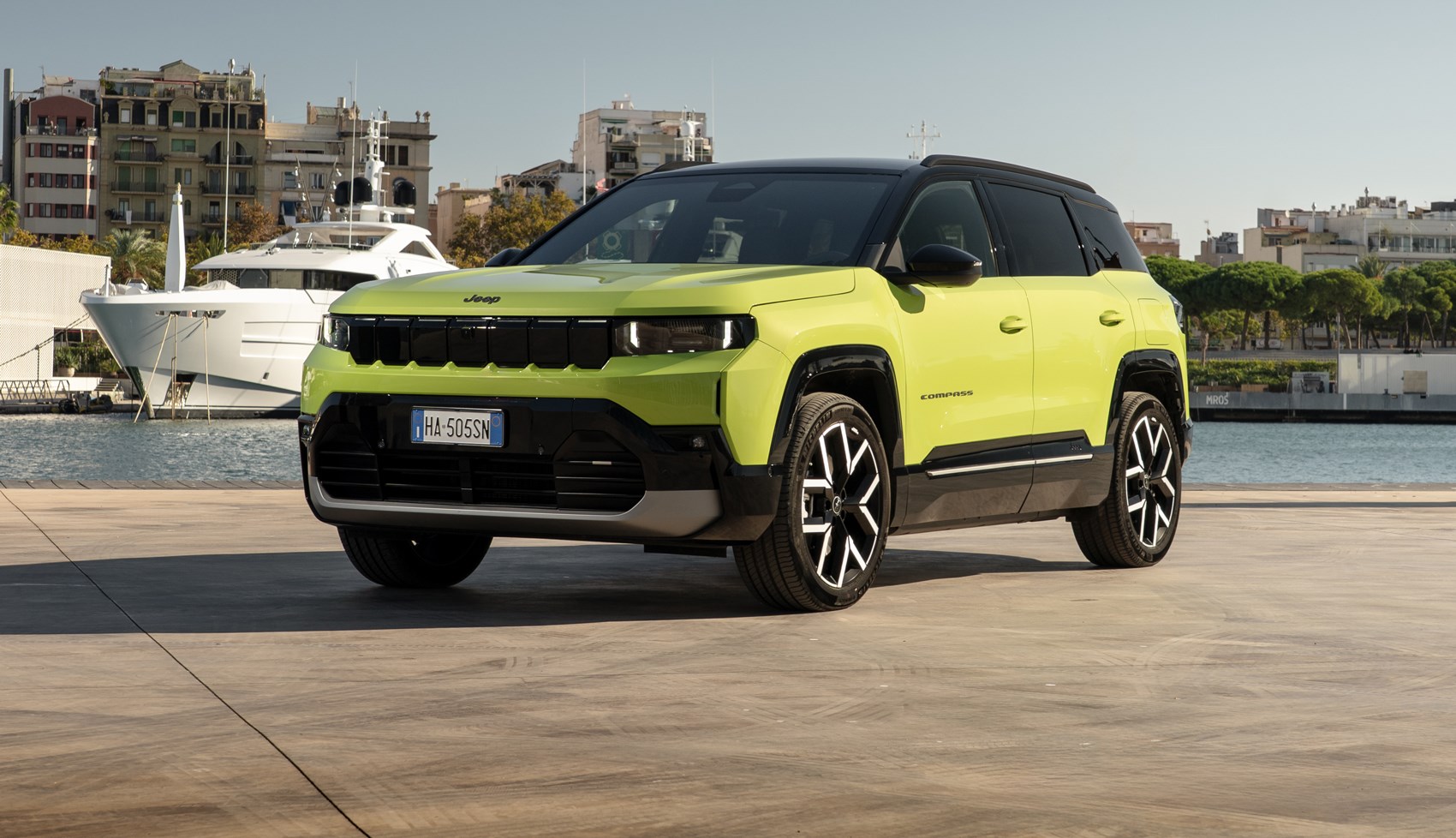
As for the look, there is pretty much no difference in how this looks compared to the hybrid versions also available – aside from an ‘e’ badge on the rear bumper.
What are the specs?
At launch, there’s only one electric version of the Compass to choose from. It uses a single 210bhp/254lb ft electric motor on the front axle, powered by a 74kWh battery pack. Jeep claims an 8.5sec 0-62mph time, a top speed of 112 mph and a WLTP claimed range of 310 miles.
The battery can be charged at up to 160kW via a DC charger, and comes with an 11kW AC onboard charger as standard that can be upgraded to a 22kW one.
The electric model’s variants will expand later in 2026 with a larger 98kWh battery version that’ll extend the range to around 403 miles WLTP. A 370bhp dual-motor option, representing the only all-wheel drive Compass in the car’s entire line-up, will also be added to the range later claiming a 372-mile range.
There are also hybrid versions of the Compass launching, too, which we’ve driven in a separate review. Initially, a MHEV model labelled ‘e-Hybrid’ launches, with a plug-in hybrid model coming later in 2026.
What’s it like to drive?
Straight from the off, this feels like a more responsive car than the 48-volt ‘e-Hybrid’ model with its buzzy three-cylinder engine. This launch version doesn’t have oodles of power, but has just the right amount with a smooth throttle response and the ability to change the amount of regen on the fly. There’s also a one-pedal driving mode for in town, accessed via an easy to find switch on the dashboard.
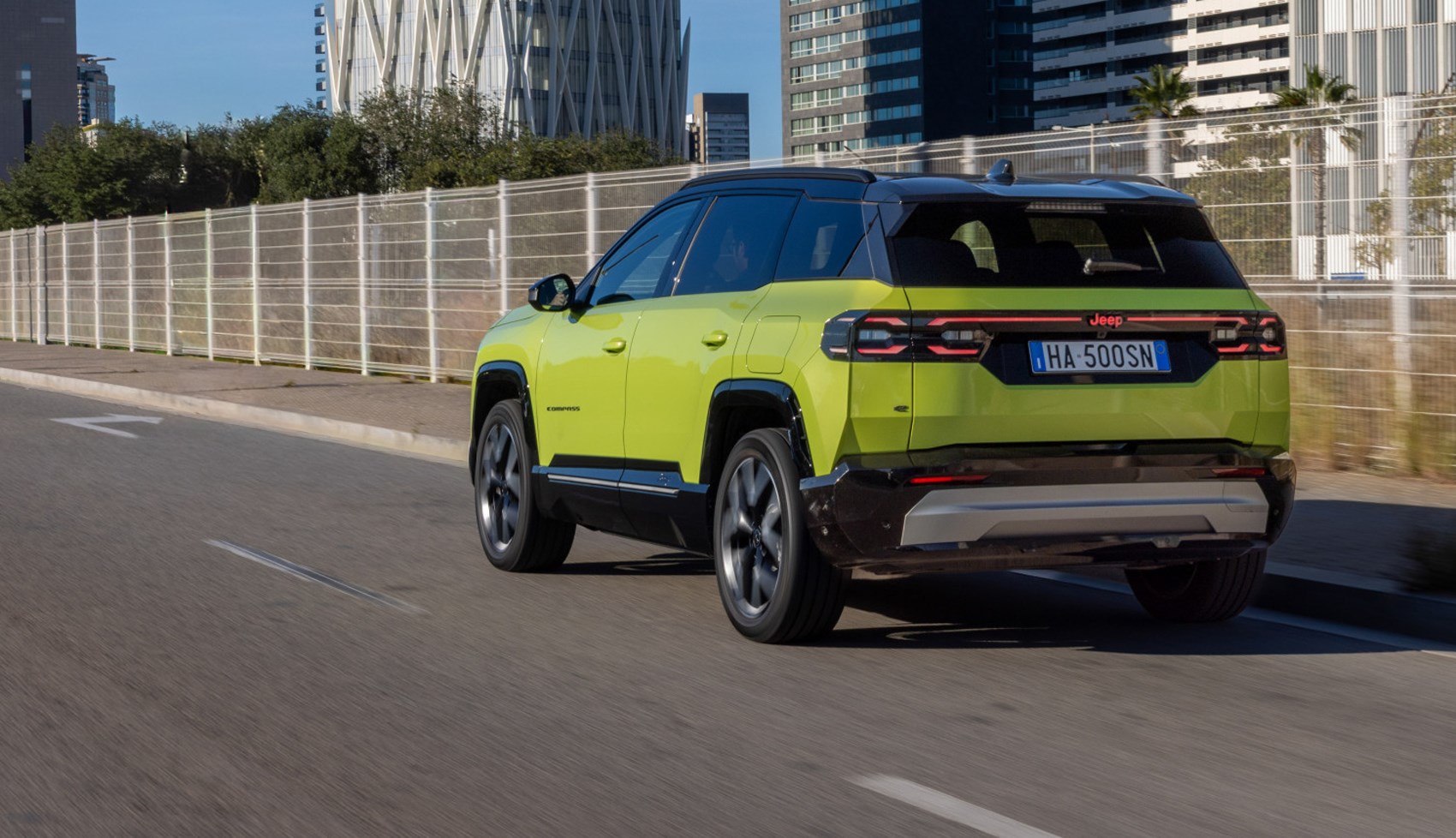
The steering is a particular highlight, as it feels like a variable rack that winds on more steering angle relative to the amount of steering applied. That means it’s quite a relaxed car at a cruise, but doesn’t require a lot of lock to get the wheels turning hard at slower speeds; there’s a nimbleness at play. Does it feel exciting? Absolutely not, but it’s rather satisfying – and sets it apart from other cars on STLA Medium.
We drove the electric Compass across various types of road in and around Barcelona and, in general, it rides well. Lumps are well damped and the Michelin e-Primacy tyres are quiet. We’d need to test one on the UK’s terrible tarmac to pass final judgement, but the Compass is a pretty refined place to spend time.
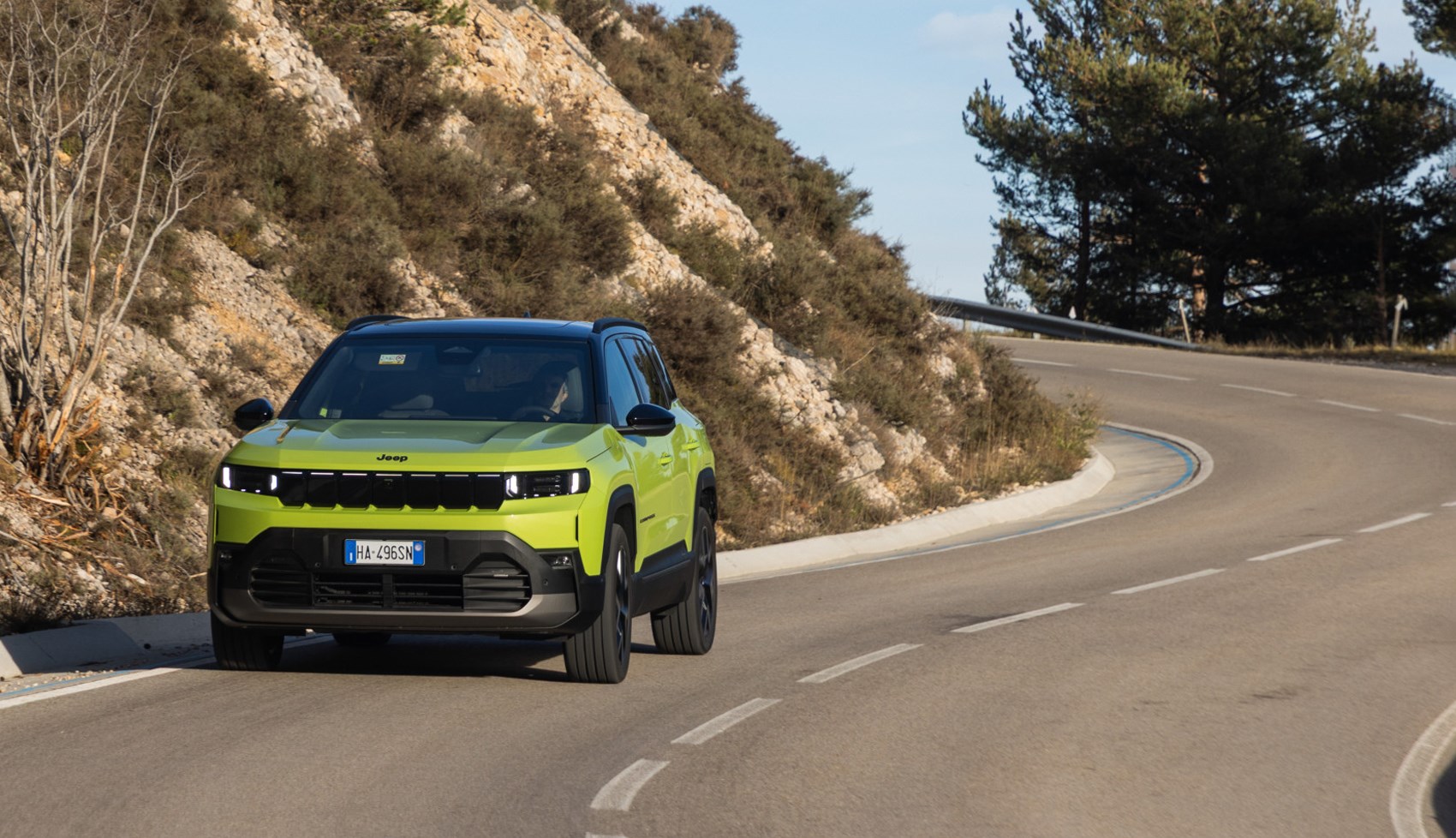
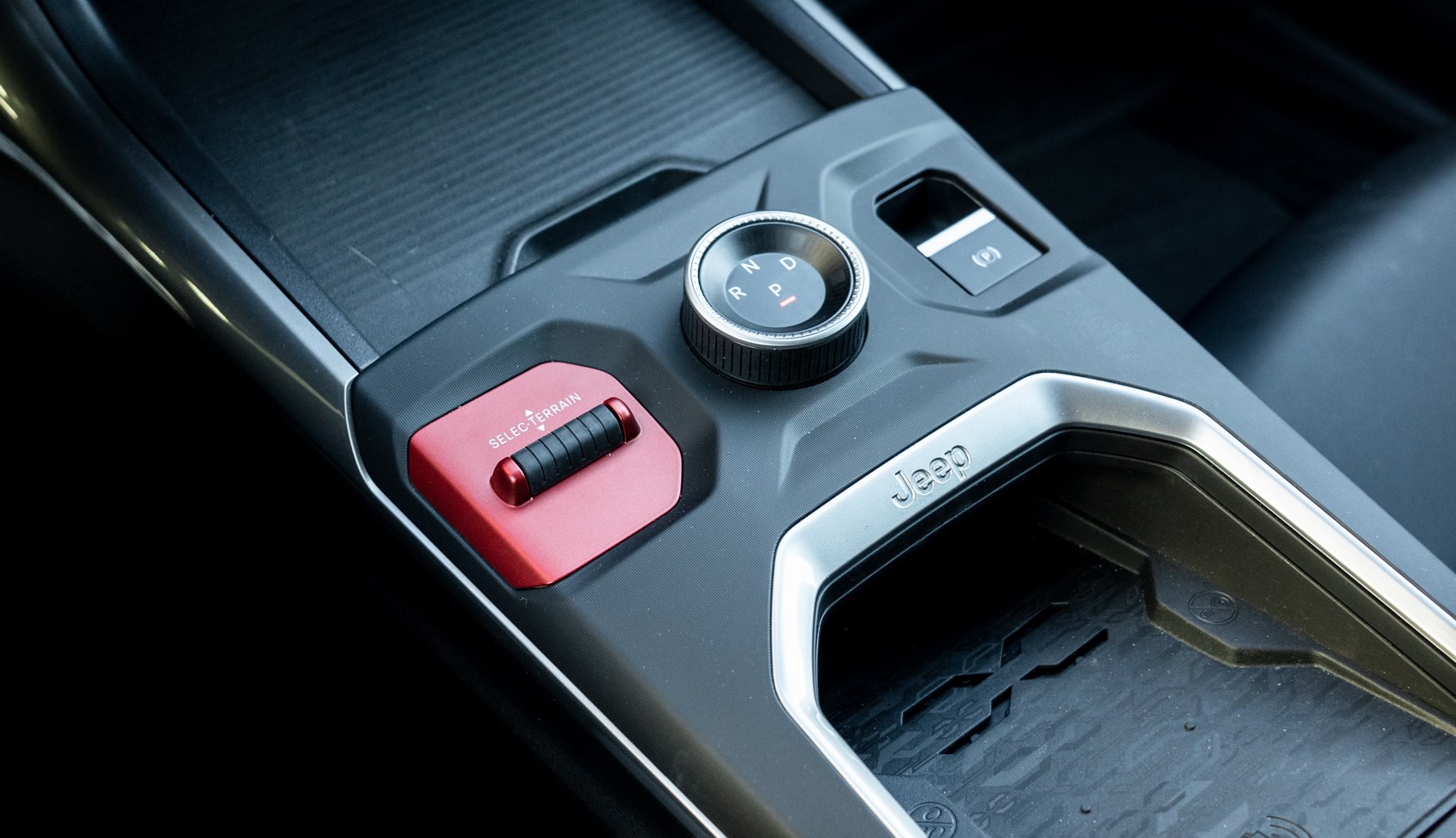
Every Compass regardless of powertrain includes the brand’s Selec-Terrain drive mode system. In reality, we barely noticed any difference between the modes, and the system feels rather neutered given this is a front-wheel drive car.
What’s the interior like?
Tough and user-friendly in the best Jeep way, even if the ambience is greyer than a Scottish raincloud. The driving position is spot on – even for tall drivers – and there’s a general feeling of solidity in here.
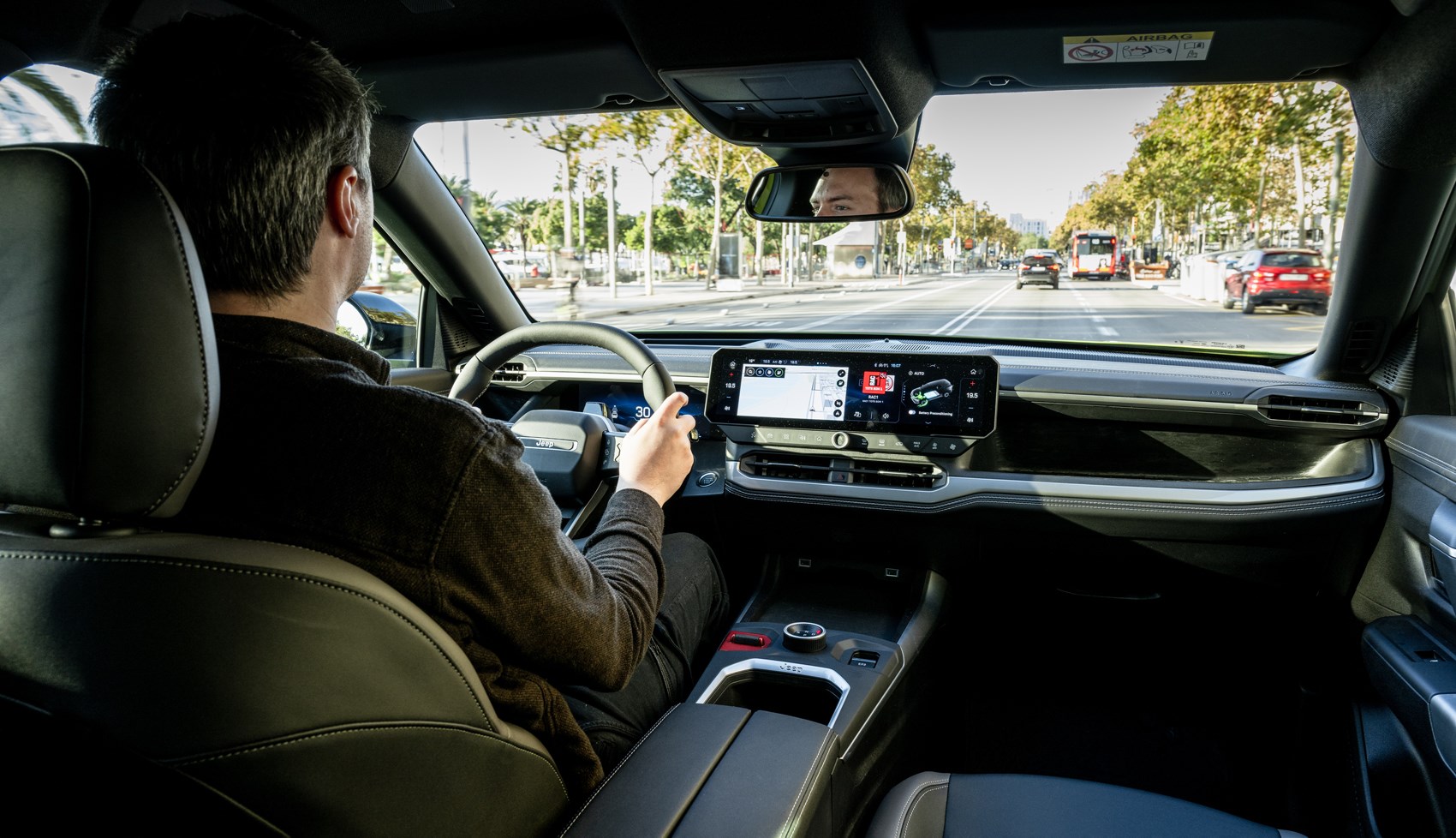
The infotainment is the same as most other modern Stellantis cars including all of the other cars that run on STLA Medium and it’s… fine. A little slow at times to operate but it’s not hugely complicated to operate, and looks clear on the Compass’ large, wide display. Digital instruments are standard, which can be configured with the info you want. The centre console has some good storage options and a satisfyingly thunky drive selector wheel in the middle, too.
As a family car, the Compass is a good one. There is plenty of rear legroom for adults sat behind adults, and headroom is good enough even in models that have a panoramic sunroof. The 550-litre boot is also a good size, split via a false floor that allows you to hide your cables.
Before you buy
For now, two Compass trims are available: Altitude (priced from £36,999) and First Edition (priced from £39,200). Altitude already has plenty of stuff included, like 19-inch alloys, auto LED headlights, power mirrors, two-zone climate control, Jeep’s Selec-Terrain traction control system, loads of safety tech, keyless entry and start and all-round parking sensors.
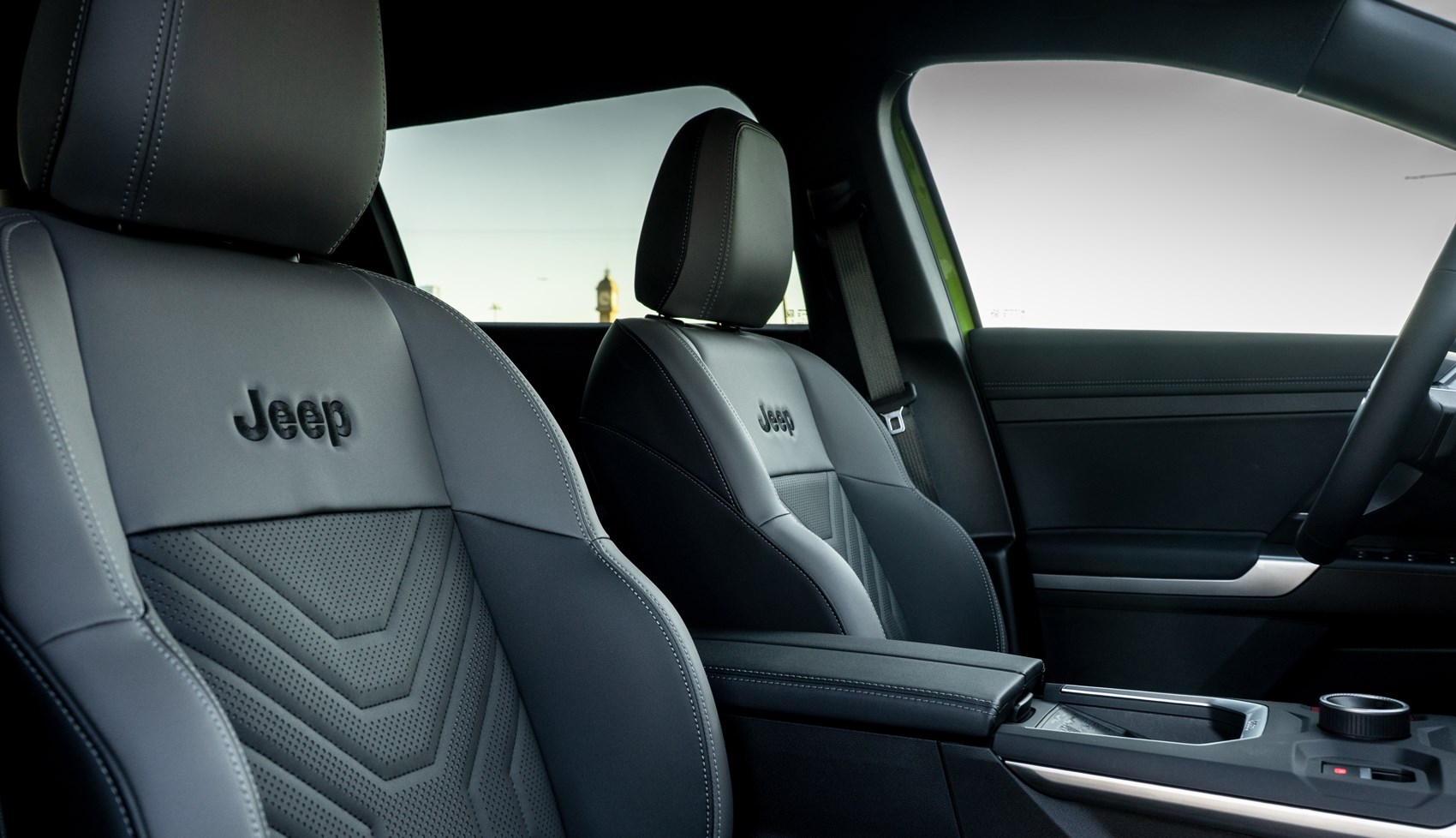
First Edition (pictured) throws in larger 20-inch alloys, matrix LED headlights, a backlit grille, wireless charger, powered tailgate, heated seats and a heated steering wheel.
At the launch event, we also saw an Overland model that would launch with the all-wheel drive version, offering more off-road credentials via better approach angles and more body cladding.
That places the Compass in a relatively competitive location among its rivals. The Vauxhall Grandland Electric and Citroën e-C5 Aircross have a slightly lower entry price, but the Compass keeps up with the amount of standard equipment. You’ll also be looking at models like the Skoda Enyaq in this class; but the Skoda isn’t as capable off road as the Compass is, and you get far more range and kit here than a base Enyaq offers.
Verdict: Jeep Compass electric
The Compass is perfectly fine with a combustion engine, but this electric model makes a little more sense given its competitive equipment and range compared to some of the competition. It’s smooth and quiet, if mostly inoffensive, to drive and it’ll handle daily life rather well. Give it a chance – you might like it.
Specs are for a Jeep Compass Altitude BEV FWD