► First EV – a 1000bhp GT – due in 2026
► 2030’s electric car split target drops to 20 per cent
► Commits to developing even more powerful engines
In 2022, Ferrari reckoned all-electric cars would account for nearly half of its sales by 2030, with a projected powertrain split of 40 per cent EV, 40 per cent hybrid and just 20 per cent internal combustion engines. The world was rushing headlong in the direction of all-electric, Porsche was selling Taycans hand over fist, and all-electric felt like a natural progression from Ferrari’s hybrid models, the first of which was 2013’s LaFerrari.
But things change, as CEO Benedetto Vigna confirmed at Ferrari’s 2025 Capital Markets Day.
‘The new E-building (pictured below) gives us the opportunity to have a lot of new technology, to become more agile, to become more compliant with the environment, and to master well our technology neutrality,’ says Vigna.
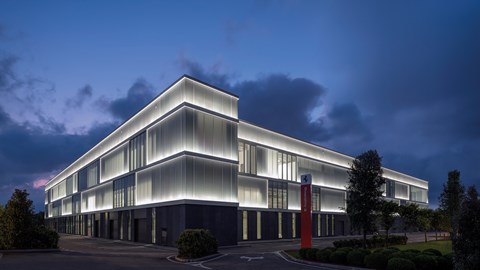
‘In 2022 we told you that by 2030 we expected 20 per cent of our offering to be ICE, 40 per cent hybrid and 40 per cent electric. Today we say those numbers have changed. The 20 per cent ICE becomes 40 per cent, that’s what we see now for 2030, and 40 per cent for electric becomes 20 per cent. We understand that it is important to increase the number of ICE models and to limit a little bit the number of electric models. This is very fine. We are an agile company. We have seen in just a few years how the world is changing. It’s important for us to have the client at the centre of what we do, and it is clear that we have clients that are telling us they will become a Ferraristi only if we have the Elettrica.’
Ferrari has also given more technical detail on its first EV, which arrives next year as a four-door grant tourer with a big 122kWh underfloor battery, active suspension and more than 1000bhp.
At the same time, Maranello also confirmed its commitment to its engine family, which includes a wide-angle turbocharged V6, a turbo V8 and the big naturally-aspirated V12. The company will continue to develop these technologies, increasing specific outputs over the rest of this decade, to 2030 and beyond, while also being ready for eFuels, should their use become more widespread.
Ferrari’s committed to launching an average of four new models per year between now and the end of the decade, but isn’t saying how many of those new models will be all-electric.